
Transporting colossal pieces of modern machinery, such as excavators the size of a small building or haul trucks that weigh hundreds of tons, involves a logistical ballet far more intricate than simply loading cargo onto a large truck and navigating an open road. The sheer scale of today’s heavy equipment creates a web of hidden challenges that transforms every move into a high-stakes, meticulously choreographed project. This complex process demands a symphony of detailed planning, specialized expertise, and agile problem-solving to successfully bridge the vast gap between a controlled factory environment and a rugged, often remote, operational site. The true narrative of heavy hauling is not found on the highway but in the countless unseen hurdles that must be overcome long before the engine ever starts. This invisible world of logistics is a testament to human ingenuity, where success is measured by the seamless arrival of machinery so large it seems impossible to move.
Beyond the Map: The Meticulous Planning Phase
Surveying Every Inch of the Route
Before a single wheel of a heavy transport vehicle turns, logistics experts embark on an exhaustive ground-level investigation known as a route survey, a critical process that identifies every potential obstacle capable of halting a colossal load in its tracks. Planners meticulously account for the precise height of every overpass, the structural integrity and weight capacity of every bridge, and the exact location of every overhead power line. Bridges represent a particularly unforgiving challenge; their maximum weight ratings are absolute engineering limits that cannot be circumvented by simply adding more axles to a trailer to distribute the load. The gross weight of the vehicle, trailer, and cargo is the final, non-negotiable determinant. In regions with especially challenging terrain, such as the narrow and winding mountain roads of British Columbia, this preliminary survey work is paramount. It determines whether a massive component, like the body of a 240-tonne haul truck, must be painstakingly disassembled before transport and then reassembled on-site—a laborious procedure requiring multiple cranes and a team of specialized welders working for extended periods.
This meticulous pre-planning phase is not merely about identifying obstacles but about formulating a comprehensive strategy to navigate them, as the consequences of inadequate surveying are severe. Encountering an unmapped low bridge or a road incapable of supporting the load can lead to catastrophic delays, substantial financial penalties, and immense logistical rework. This initial reconnaissance fundamentally shapes the entire transport strategy, influencing decisions on whether to break down shipments into smaller modules, seek alternate and often much longer routes, or even modify the components themselves for transit. The process is inherently collaborative, requiring seamless communication between logistics coordinators, engineers, transport operators, and often local municipal or provincial authorities to ensure every variable is accounted for. The resulting route plan is more than a map; it is a detailed operational playbook designed to mitigate risk at every turn, ensuring the multi-million-dollar cargo proceeds without incident from origin to destination.
Navigating the Labyrinth of Permits
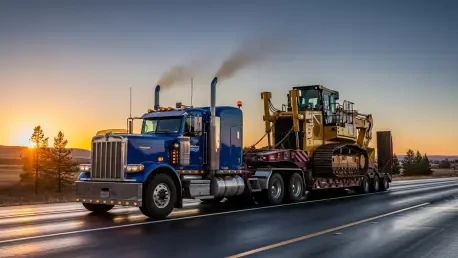
Successfully moving an oversized load through public infrastructure requires navigating a dense and often complex maze of government regulations and permits. Provincial and state transportation ministries hold the ultimate authority, issuing highly specific documents that dictate nearly every aspect of the operation. These permits are far from a simple formality; they are legally binding contracts that outline approved routes with zero tolerance for deviation, restrict travel to specific times—often the middle of the night to minimize traffic disruption and public risk—and frequently prohibit movement altogether on weekends and holidays. Furthermore, the permits specify the exact configuration of the transport equipment, with a particular focus on the number of axles required. This is based on the critical principle of weight distribution; by spreading the immense load across as many wheels as possible, the pressure exerted on any single point of the road surface remains within its designed engineering limits, which is precisely why heavy haulers can appear to have a hundred wheels.
The process of securing these essential permits is itself a significant logistical undertaking that can introduce unforeseen delays and complications. It involves submitting detailed applications that include engineering reports, route surveys, and comprehensive safety plans, which are then scrutinized by government authorities. This is not a quick rubber-stamp approval; it can involve prolonged negotiations, particularly if the proposed move crosses multiple jurisdictions, each with its own set of rules and requirements. A simple paperwork error or a missed deadline can derail the entire project timeline, forcing costly postponements. For equipment sourced internationally, this bureaucratic challenge is amplified by the need to navigate customs, tariffs, and international shipping regulations. Each layer of administration adds time and potential friction to the project, underscoring why expert-level project management and foresight are indispensable for keeping the transport on schedule and within budget.
Ensuring Safety with Escorts and Convoys
The permits issued for oversized loads almost universally mandate a convoy of support vehicles, a non-negotiable safety protocol designed to protect both the public and the valuable cargo. A standard move involves multiple pilot cars—typically one positioned ahead of the transport and another behind it—which serve to create a secure buffer zone around the massive vehicle. These escort vehicles are equipped with specialized lighting and signage to alert other motorists to the approaching wide or heavy load, advising them to slow down, provide ample space, or pull over if necessary. The lead car’s role is particularly crucial, as its driver is in constant communication with the truck operator, providing advance warning of upcoming road hazards, traffic congestion, or any other dynamic condition that could compromise safety. This escort system is the first line of defense in managing the interaction between a slow-moving, oversized vehicle and the regular flow of traffic, transforming a public highway into a controlled work zone.
For the most extreme and challenging transports, safety requirements escalate to include a “traveling police escort.” This advanced measure involves active participation from law enforcement agencies, who create a rolling closure of public roads. As the convoy moves, police vehicles travel ahead to temporarily block off intersections and on-ramps, ensuring the oversized load has an entirely clear and unobstructed path. Once the transport has safely passed a section, the road is immediately reopened behind it. This dynamic closure guarantees the highest possible level of public safety by eliminating any potential for conflict with other vehicles, but it also adds a significant layer of operational complexity and cost. Coordinating with multiple law enforcement jurisdictions, scheduling officers, and planning the precise timing of these rolling closures require an extraordinary degree of planning and communication, illustrating the high stakes involved in moving the world’s largest machinery.
Wrestling with the Elements: Nature’s Unpredictable Roadblocks
The Challenge of Seasonal Thaw
In colder climates, the cyclical transition of seasons introduces a formidable and non-negotiable obstacle for heavy haul logistics: the annual “thaw season.” Typically spanning from early spring to early summer, this period is characterized by melting ground ice, which saturates and softens roadbeds, severely compromising their structural integrity. To protect this vital and vulnerable infrastructure from potentially ruinous damage caused by heavy loads, provincial and state governments impose strict seasonal load restrictions. These regulations can be drastic, often reducing the legally permissible weight per axle by as much as 50 to 70 percent. This effectively renders the transport of fully assembled heavy equipment impossible on many key routes for several months each year, creating a major disruption that must be anticipated and strategically managed by logistics planners.
The impact of these seasonal restrictions on transport schedules and costs is profound, forcing logistics companies to develop sophisticated workarounds. One common strategy is to simply delay shipments until the bans are lifted, which requires secure and often expensive storage for massive components for months at a time. Another approach involves identifying and mapping much longer alternative routes that utilize highways built on more stable ground not subject to the same severe bans, though this can add hundreds of miles and significant fuel costs to a journey. A third option is to break a single, large shipment into multiple smaller, lighter loads that fall within the restricted weight limits, a solution that dramatically increases the number of trips required, compounding costs and logistical complexity. Each of these solutions underscores how a predictable, natural event turns the calendar into a critical planning tool and forces a delicate balance between timelines, budgets, and the unyielding forces of nature.
The Race Against Time on Ice Roads
For mining operations located in the far northern reaches of continents, the logistical challenges are magnified to an even greater extreme, as many remote sites are completely inaccessible by conventional road networks for the vast majority of the year. In these isolated environments, the only viable method for transporting massive equipment is via temporary ice roads, which are constructed over frozen lakes, rivers, and tundra during the coldest months of winter. The window of opportunity for these transports is incredibly narrow and unforgiving—often lasting just six to eight weeks—during which the ice must be thick and stable enough to support the immense weight of multi-hundred-ton machinery. This creates an intense, high-stakes race against the calendar, where missing the window means a crippling, year-long delay until the next winter freeze.
This dependency on a brief seasonal opening demands an extraordinary level of advance planning and flawless execution. All necessary equipment, components, and support personnel must be marshaled and staged months in advance, ready to move at a moment’s notice as soon as the ice roads are declared open by engineers. The entire project hinges on a precise, compressed timeline. However, this already difficult task is further complicated by the increasing frequency of unpredictable and extreme weather events. Wildfires can force widespread road closures on the approach routes to the north, floods and washouts can sever established transport corridors, and unseasonable heatwaves can weaken pavement or shorten the ice road season itself. Consequently, modern logistics planners must not only master the art of seasonal timing but also develop robust contingency strategies, including pre-approved alternate routes and modular shipment plans that allow loads to be reconfigured to navigate unexpected detours.
From Factory to Final Frontier: The Journey and Assembly
A Multi-Modal Approach to Transportation
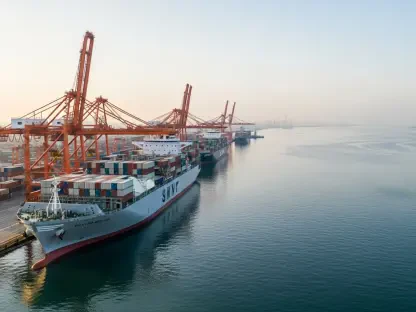
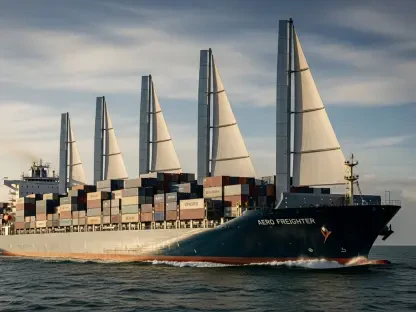
Given the immense physical and regulatory challenges associated with long-distance road transport, the heavy hauling industry fundamentally relies on a sophisticated multi-modal strategy to move equipment efficiently and economically. The core principle of this approach is to utilize the most suitable mode of transport for each distinct leg of the journey, reserving the most difficult and expensive road-based hauling for the shortest possible distance. For intercontinental movements, such as shipping a Komatsu excavator from a factory in Germany to a mine in Canada, the journey begins with ocean freight, the only practical means of crossing an ocean. Once on the destination continent, rail often becomes the preferred method for long-haul domestic travel across vast distances, offering a cost-effective and reliable way to move massive components thousands of miles closer to their final location.
This strategic layering of transport modes effectively shifts the most acute logistical challenges to what is known in the industry as the “last mile”—the final, crucial stretch from the nearest port or railhead to the remote mine site. It is here that the specialized heavy haul trucks and their escort convoys take over. In the most extreme cases, particularly for arctic mines with no connection to a public road network capable of handling the equipment’s size and weight, even this last mile by truck is not feasible. In these scenarios, the most economical solution is to transport the components via ship to the nearest accessible coastline. From that offloading point, the mining company itself will construct a short, private, heavy-duty road designed specifically to handle the extreme loads, connecting the coast directly to the mine. This illustrates the incredible lengths to which the industry will go, showcasing a seamless partnership between the logistics provider and the end customer to conquer the final frontier of delivery.
The Final Hurdle: On-Site Assembly
The successful delivery of components to the mine gate does not mark the end of the logistical puzzle; rather, it signifies the beginning of the final, critical phase: on-site assembly. This process is a complex construction project in its own right, requiring the same level of detailed planning and coordination as the transport itself. Long before the equipment even ships from the factory, the equipment dealer and the mining company must collaborate on a comprehensive site plan. This involves preparing a stable, sufficiently large, and strategically located assembly pad where the colossal machinery can be safely and efficiently built. The scale of this final task can be immense, ranging from a couple of days to attach a blade to a new bulldozer to an entire month or even six weeks for a major shovel or excavator build, which involves methodically piecing together dozens of massive, multi-ton components.
The success of this final stage is entirely dependent on having the right support infrastructure and personnel in place at what is often a very remote location. This includes sourcing and scheduling heavy-lift cranes with certified operators, arranging for a fleet of rental equipment like telehandlers and aerial work platforms, and ensuring the availability of basic but essential utilities such as light towers for round-the-clock work, generators for power, and heaters for crews working in harsh climates. Critically, it also involves ensuring that a trained and qualified workforce is available on-site and has adequate accommodation and support. The absence of any single element in this complex support system—be it the right tooling, a certified crane operator, or an available technician—can introduce significant risks and trigger a cascade of costly delays, turning the final step of the project into an unexpected and expensive bottleneck.
The Symphony of a Successful Haul
The journey of heavy mining equipment from its manufacturing origin to its operational destination was revealed to be a high-stakes discipline operating at the convergence of engineering, project management, regulatory compliance, and environmental science. Ultimate success was contingent not on a single journey but on an immense degree of foresight and proactive planning that addressed a vast array of potential disruptions, from paperwork errors at customs and political tariffs to unexpected wildfires and thawing roads. This process unfolded as a multi-stage, multi-modal endeavor that demanded seamless coordination between manufacturers, logistics providers, equipment dealers, government authorities, and the end customer at the mine. It began with meticulous route planning, adapted to unpredictable natural conditions, and culminated in a complex on-site assembly that was a major undertaking in its own right. The ability to successfully move these colossal machines across continents and rugged landscapes stood as a critical, albeit largely invisible, enabler of the entire mining industry, showcasing a remarkable tribute to collaborative planning.