
The steel tracks that have served as Ukraine’s lifeline throughout the ongoing conflict are now at the center of a contentious economic debate, with a planned tariff increase forcing a national reckoning on the true price of logistical survival. As the state-owned railway, Ukrzaliznytsia, grapples with immense financial pressures, its proposed solution threatens to destabilize the very agricultural industry that underpins the national economy. This situation presents a critical dilemmhow can the country secure its most vital transport network without simultaneously derailing its economic engine? The search for an answer will define the future of Ukraine’s logistical and economic resilience.
The Iron Artery: Ukrzaliznytsia’s Indispensable Wartime Role
Ukrzaliznytsia has proven to be far more than a transportation company; it is the backbone of Ukraine’s national logistics and a symbol of its endurance. This iron artery is indispensable for military movements, civilian evacuations, and the transport of humanitarian aid. Economically, it facilitates the flow of foundational goods that keep the country running. Its operations are a testament to remarkable resilience, continuing under the constant threat and reality of Russian missile strikes and aerial bombardment.
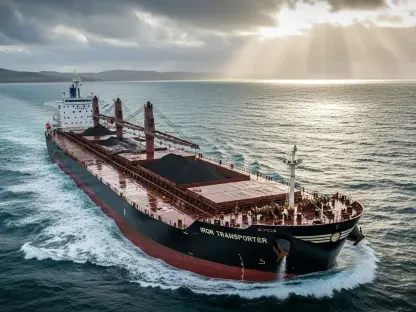
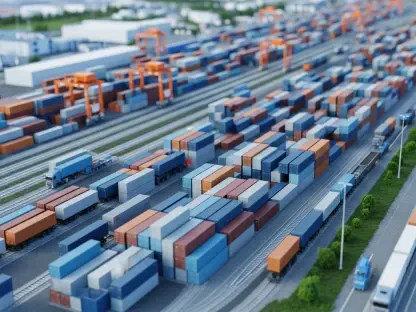
The railway’s critical functions are divided between two core segments. In freight, it is the primary mover of bulk commodities like grain and ore, which are essential for export revenue, as well as crucial energy equipment needed to repair infrastructure damaged by attacks. On the passenger side, it has been instrumental in evacuating millions from conflict zones and serves as the preferred mode of transport for official delegations and diplomatic missions. As a state-owned strategic asset, its operational capacity is directly linked to national security and economic stability.
The Tariff Impasse and Its Economic Fallout
A Collision Course: The Push for Higher Tariffs vs. Agricultural Viability
At the heart of the current conflict is the government’s plan to implement a 27% increase in freight tariffs, scheduled to take effect on January 1, 2026. This proposal has become a major market driver and a significant point of contention between state planners and the business community. While the government views the hike as an essential measure for financial solvency, agricultural producers see it as a direct threat to their viability.
The business community, led by organizations such as the Ukrainian Agrarian Council (UAC), has forcefully argued against the increase, labeling it a “hidden additional tax.” Their central argument is that logistics costs are deducted directly from the export parity price of agricultural goods. Therefore, any rise in transport fees immediately shrinks producer profits and weakens the competitiveness of Ukrainian products on the global market. This perspective frames the tariff hike not as a necessary fee for service but as an unsustainable burden on an already stressed sector.
In contrast, government officials and Ukrzaliznytsia management present the tariff indexation as an unavoidable step toward financial recovery. The railway is shouldering immense war-induced debt, compounded by rising operational costs and a significant decline in overall freight volumes. From their standpoint, the tariff is a vital tool to ensure the railway can continue to operate, repair extensive damage, and fulfill its strategic mission. They maintain that without this revenue, the system’s long-term survival is at risk.
The Great Shift: Projecting the Exodus from Rail to Road
A primary concern voiced by industry leaders is the high probability of a mass migration of freight from rail to road transport should the tariff increase proceed. If rail becomes prohibitively expensive, businesses, particularly in the agricultural sector, will be compelled to seek alternatives. This would trigger a significant logistical shift, fundamentally altering the country’s transport landscape.
Such a shift would set off a cascade of negative consequences. Ukraine’s road networks, already under strain, would face accelerated deterioration from the increased volume of heavy truck traffic, leading to a greater maintenance burden for the state. Moreover, this move would represent a significant setback for transport efficiency and environmental goals, as rail is generally a more cost-effective and sustainable method for moving bulk goods over long distances. The core data point remains simple: as logistics costs rise, the economic incentive to abandon rail grows stronger.
Navigating a Financial and Operational Minefield
Ukrzaliznytsia’s push for higher tariffs stems from a severe financial deficit. The railway’s financial health has been decimated by direct physical damage from Russian attacks, a sharp drop in pre-war industrial freight volumes, and pervasive inflation that drives up the cost of fuel, materials, and labor. This combination of factors has created a deep financial hole that existing revenue streams cannot fill, forcing the company to seek drastic measures.
The situation is further complicated by the railway’s long-standing practice of cross-subsidization. Currently, profitable freight operations, particularly the transport of grain for export, are priced to cover the losses incurred from other essential services. Many other types of cargo are moved at or below cost to support the broader economy and war effort. The UAC criticizes this model, arguing that it unfairly places the financial burden of sustaining the entire network on a single industry.
Beyond financial woes, the operational challenges are immense. Maintaining and repairing a vast network that is a primary target for aerial bombardment is a herculean task. Engineers and repair crews work under constant danger to restore damaged tracks, bridges, and power systems. These technological and logistical hurdles require a continuous and substantial flow of capital, which the current tariff structure is failing to provide.
Policy Under Pressure: Domestic Needs and European Crosscurrents
Within the domestic regulatory landscape, the government is framing the proposed tariff hike as a necessary, albeit painful, intervention for national security. The argument is that a financially stable Ukrzaliznytsia is non-negotiable for sustaining the war effort and ensuring the country’s economic sovereignty. This perspective prioritizes the railway’s institutional survival as a prerequisite for the functioning of all other economic sectors.
This internal debate is influenced by significant external factors, most notably the European Union’s “Solidarity Lanes” initiative. The EU has committed over €2.3 billion to improving alternative export routes out of Ukraine, with a strong focus on enhancing road and port infrastructure. This investment is designed to bypass blockaded sea routes and ensure Ukrainian goods, especially grain, can reach global markets.
However, this supportive EU policy has an unintended consequence. By investing heavily in road transport capacity, the initiative inadvertently strengthens the very alternative that businesses are threatening to adopt. This complicates Ukraine’s internal logistics strategy, as the improved road networks could become a more attractive long-term option, making it harder for the railway to win back freight volume even if it modifies its tariff policy in the future.
The Crossroads for Ukraine’s Logistics Future
Ukraine’s logistics sector is now at a critical crossroads, with the tariff decision poised to send ripples across the entire economy. If the hike is implemented as planned, the agricultural sector faces diminished profitability and a potential loss of global market share. Conversely, if the proposal is rejected or significantly delayed without an alternative funding solution, Ukrzaliznytsia risks sliding deeper into a financial crisis that could compromise its operational capacity at a critical time.
A major market disruption looms as the newly enhanced, EU-funded road infrastructure becomes a more viable competitor to rail. This development introduces a new dynamic to the logistics market that may outlast the current conflict. If a large volume of freight permanently shifts to trucking, it could permanently alter cost structures and transport preferences, making it difficult for the railway to reclaim its dominant position in the bulk freight market.
This complex situation has intensified the search for a consensus-based solution that acknowledges the railway’s dire financial needs while protecting the economic health of its primary users. Stakeholders from the government, the railway, and the business community are engaged in a high-stakes negotiation to find a middle ground. The outcome will not only determine freight prices but will also shape the long-term structure of Ukraine’s entire transport system.
A Fragile Balance: Securing the Rails Without Derailing the Economy
The core dilemma confronting Ukraine is how to maintain the operational integrity of its most strategic asset without crippling the agricultural sector that is vital for foreign currency earnings and food security. It is a fragile balance between securing the rails and ensuring the economy is not derailed in the process. This challenge underscores the profound interconnectedness of military, economic, and logistical survival.
The decision on freight tariffs will have far-reaching implications for the nation’s logistical framework and its capacity to sustain a prolonged war effort. An overly burdensome tariff could trigger a logistical chain reaction, weakening a key economic pillar and straining public infrastructure. On the other hand, failing to adequately fund the railway could lead to its degradation, creating bottlenecks that affect everything from military supply lines to grain exports.
Ultimately, this period was defined by the urgent need for a strategic compromise. The path forward required a solution that looked beyond a simple tariff indexation and considered a more holistic approach to funding the railway’s wartime role. Without a balanced strategy, the nation risked a self-inflicted logistical and economic crisis that would only compound the immense challenges it already faced.