
With decades of experience shaping the supply chain and delivery landscape, Rohit Laila has been at the forefront of the logistics industry’s technological evolution. Today, he shares his insights on navigating the explosive growth in global e-commerce, detailing the strategies required to manage record-breaking parcel volumes. Our conversation will explore the nuances of operating in diverse markets, the power of innovative solutions like crowd delivery, and a forward-looking vision for the future of last-mile logistics, where parcel lockers become the cornerstone of community postal services.
With global parcel volume up 11% and a notable rise in e-commerce shipments from China, what specific market trends are driving this growth? Could you detail the logistical adjustments required to manage this increased international flow into the Baltics?
The numbers truly speak for themselves. When you’re handling over 50 million parcels globally, with 36 million of those moving through the Baltics alone, you realize this isn’t just a small uptick; it’s a fundamental shift. The primary driver is, without a doubt, the continued explosion of e-commerce. What’s particularly interesting is the shift in origin. Last year, 24% of all parcels arriving in the Baltics came from China, up from 21% the year prior. This tells us that global marketplaces are more accessible and trusted than ever. To manage this, our logistical backbone had to be fortified. It meant scaling our international transit capabilities and ensuring our sorting centers, like the one in Kaunas that processed a staggering 133,000 parcels in a single day, could handle the sheer velocity and volume of this inbound flow without faltering.
Deliveries to Latvia and Lithuania showed strong growth, while Estonia’s volume remained stable due to intense market competition. How do your strategies differ across these three Baltic markets, and what specific steps are you taking to navigate Estonia’s competitive landscape?
It’s a fascinating and challenging dynamic. While we saw fantastic growth in Latvia and Lithuania, Estonia presented a different puzzle. The market there is incredibly saturated, and we also felt the pinch of economic uncertainty among local consumers, which kept volumes steady rather than growing. Our strategy can’t be one-size-fits-all. In Latvia and Lithuania, we focus on scaling our operations to meet rising demand. In Estonia, the game is about differentiation and customer loyalty. We have to fight for every parcel. This means doubling down on service quality and convenience. We’re not just competing on price; we’re competing on proximity and ease of use, which is precisely why our network expansion is so critical there. We have to be the most convenient and reliable option in a sea of competitors.
You successfully managed a record-breaking holiday peak, partly through an innovative crowd delivery model. Can you walk us through how this model works in practice? Please describe the key metrics for success and how it impacted your permanent employees during that intense period.
The holiday peak is always a formidable challenge, a true test of any logistics network. This year, with record volumes flooding in from E-Monday through Christmas, we leaned heavily on our crowd delivery model. Essentially, we tap into a flexible network of local couriers who are interested in the work and can be onboarded quickly. In a city like Tallinn, for instance, these crowd couriers were handling about 3,500 parcels a week. The ultimate metric for success was simple but powerful: we promised that every parcel in our system by December 20th would be home for Christmas, and we delivered on that promise. But just as importantly, this model transformed the experience for our permanent staff. They avoided the crushing overload that typically defines the peak season, allowing them to work efficiently and without the burnout that can come from such intense periods.
The plan to deploy hundreds of smaller, battery-powered “community lockers” is a significant investment. How did you identify the ideal locations for these new units, and what is the anticipated impact on both last-mile delivery efficiency and customer convenience?
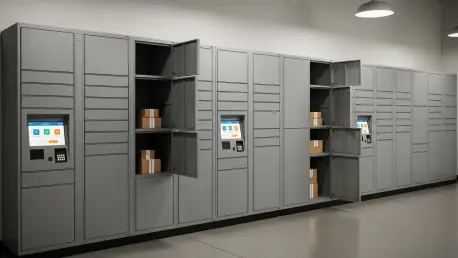
This initiative is all about listening to our customers and embedding our service into the fabric of their daily lives. The strategy for placing these new community lockers is driven by a simple goal: get as close to people’s homes and daily routes as possible. We’re not just looking at major shopping centers anymore. We’re targeting residential areas, placing these smaller, battery-powered units near apartment buildings, bus stops, local villages, and even gas stations. The impact is twofold. For customers, it’s about ultimate convenience—no more going out of your way to pick up a package. For our operations, it creates incredible last-mile efficiency. A courier can make a single stop and deliver dozens of parcels, drastically reducing drive time, fuel costs, and our carbon footprint.
You’ve envisioned using parcel lockers as digital postal points for letters and periodicals. What are the primary operational challenges to making this transition, and what specific benefits do you foresee for both postal service sustainability and the customer experience?
Pivoting lockers into digital postal points is the logical next step in their evolution. The biggest operational challenge is adapting a system built for bulky parcels to securely handle thin letters and periodicals, which requires new sorting processes and locker module designs. We also need to build a user interface and notification system that is seamless for these new item types. However, the benefits are immense. For customers, it means their important mail is secure, tracked, and protected from the weather, with an instant digital notification upon arrival. For the postal service itself, this model is a lifeline. With traditional mail volumes declining, consolidating deliveries into a dense locker network makes the entire system more sustainable and economically viable for the long term.
What is your forecast for the evolution of last-mile delivery over the next five years?
Over the next five years, last-mile delivery will become hyper-localized and deeply integrated into our communities. The trend of bringing services closer to the consumer will accelerate, with dense networks of automated parcel lockers becoming the standard. These won’t just be for parcels; they will evolve into multi-service hubs for postal mail, returns, and perhaps even local merchant exchanges. We will see a greater blend of delivery models, combining traditional couriers with flexible crowd-sourced fleets to manage fluctuating demand. Ultimately, success will be defined not by who is biggest, but by who is closest, most convenient, and most responsive to the customer’s daily life.