
The rhythm of a nation’s economy often depends on the quiet, tireless efforts of those working behind the scenes to keep the tracks clear and the signals green. In Greater Manchester, this vital mission has received a significant boost with the unveiling of a state-of-the-art facility that redefines how railway upkeep is managed. The opening of the Guide Bridge maintenance depot represents far more than just a new building; it is a strategic investment in the reliability of a regional network that serves thousands of passengers and freight carriers every single day.
This project signals a major shift in how infrastructure leaders approach the welfare of their workforce and the efficiency of their operations. By replacing outdated, temporary setups with a permanent powerhouse of engineering and logistics, Network Rail has set a new benchmark for regional hubs. The significance of this site lies in its ability to bridge the gap between traditional maintenance and modern technological demands, ensuring that the rail spine of Northern England remains resilient against the pressures of high-traffic demands and unpredictable weather.
From Temporary Hub to Permanent Powerhouse: The Origin of the Project
The history of the Guide Bridge site was long characterized by a sense of transience, as four distinct track maintenance teams spent years operating out of makeshift temporary cabins. While these structures served their immediate purpose, they were never intended to support the long-term logistical needs of a modernizing rail network. The fragmented nature of these workspaces often led to communication gaps and slowed the deployment of essential resources during critical track failures.
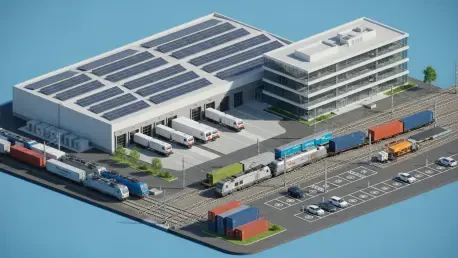
Recognizing these limitations, the project was conceived to transform a decentralized collection of sheds into a unified command center. This evolution was born out of a necessity to provide a professional environment that could match the high-stakes nature of railway engineering. By establishing a permanent footprint on this 2.3-acre site, the organization has solidified its commitment to the region, moving away from “quick-fix” accommodations toward a legacy of industrial excellence.
Strategic Features and Operational Milestones
The successful completion of the depot is marked by several key achievements that highlight the effectiveness of the planning and execution phases. Beyond the physical structure, the project serves as a testament to what can be achieved when operational needs are aligned with disciplined project management. The facility now stands as the primary nerve center for maintenance across a wide swath of the regional network.
Streamlined Team Consolidation
By bringing more than 120 staff members together under one roof, the facility has eliminated the physical barriers that once separated specialized maintenance units. This consolidation allows for a unified command structure where supervisors and engineers can coordinate in real time, sharing insights and equipment without the lag of traveling between different locations. This synergy is already showing results, as teams can now respond to infrastructure faults with greater speed and a more collaborative mindset.
Exceptional Fiscal Management
One of the most remarkable aspects of this development is the financial precision with which it was delivered. The project reached completion at a total cost of $12.7 million, which represents a staggering $7.6 million saving against the original projected budget. In an industry where large-scale construction often struggles with cost overruns, this achievement highlights a rigorous procurement strategy and meticulous oversight. These saved funds can now be redirected toward other essential infrastructure upgrades across the country.
Future-Proof Sustainability and Green Energy
Environmental responsibility was woven into the architectural fabric of the depot from the very beginning. The installation of 60 solar panels on the roof allows the building to generate nearly half of its own electricity, while a surplus buy-back scheme permits the facility to contribute energy back to the National Grid. Additionally, the inclusion of ten electric vehicle charging stations prepares the site for a full transition to a zero-emission maintenance fleet, ensuring the depot remains relevant as automotive technology advances toward 2030 and beyond.
Setting a New Standard: What Makes Guide Bridge Unique
What distinguishes the Guide Bridge depot from its predecessors is a profound focus on the human element of railway maintenance. The building was designed with modern accessibility and inclusivity at its core, moving beyond the bare-minimum requirements of industrial sites. Featuring a spacious mess room that can hold over 100 people and dedicated, gender-specific locker rooms with high-quality facilities, the site acknowledges the diverse nature of the modern workforce.
Furthermore, the integration of advanced logistics with sustainable technology creates a hybrid model for future developments. The facility does not just house people; it serves as a self-sustaining utility that minimizes its carbon footprint while maximizing its operational output. This holistic approach—combining worker welfare with environmental stewardship—makes it a unique template for industrial architecture in the United Kingdom.
Current Operations and Implementation at the Site
Today, the depot is a hive of activity, functioning as the primary dispatch point for rapid-response teams. The transition from the old cabins to the new building has been seamless, with staff utilizing the upgraded diagnostic tools and expanded storage areas to manage complex track repairs. The centralized layout has simplified the tracking of inventory and the deployment of heavy machinery, making the morning “roll-out” more efficient than ever before.
In addition to day-to-day maintenance, the site is currently hosting training sessions aimed at familiarizing staff with the new green technologies integrated into the facility. The solar energy systems are being monitored in real-time to optimize energy consumption, and the electric vehicle chargers are already in use by the first wave of low-emission support vans. This active implementation phase demonstrates that the depot is not just a finished project, but a living laboratory for modern rail operations.
Reflection and Broader Impacts
The impact of the Guide Bridge facility extends far beyond the perimeter of its 2.3-acre plot. It serves as a physical manifestation of the broader effort to revitalize the infrastructure of Northern England, aligning with larger regional growth plans and high-speed rail initiatives. By investing in the “back office” of the railway, the project ensures that the high-profile passenger improvements seen elsewhere are supported by a sturdy, well-maintained foundation.
Reflection
The success of this project reveals that the primary challenge of modern infrastructure is not just the construction itself, but the integration of disparate teams and technologies. While the transition to a centralized hub required significant cultural adjustment for the workforce, the resulting boost in morale and coordination has been undeniable. The strength of the depot lies in its balance of high-tech features with basic human comforts, though maintaining this level of efficiency will require ongoing commitment to the site’s sustainable systems.
Broader Impact
Looking ahead, the Guide Bridge model provides a clear roadmap for how existing rail land can be repurposed to meet the demands of the mid-21st century. As other regions look to modernize their maintenance networks, the lessons learned here—particularly regarding fiscal discipline and green energy integration—will likely influence future policy and design. This project proves that industrial facilities can be both neighbors to the environment and pillars of economic reliability.
Building a Resilient Future for British Rail
The opening of the Guide Bridge maintenance depot marked a turning point for Network Rail, proving that high-quality infrastructure could be delivered with both social and financial responsibility. By prioritizing the consolidation of talent and the adoption of renewable energy, the project established a new standard for the industry. This facility ensured that the workforce had the tools and environment necessary to keep the region moving safely and efficiently.
As the industry moves forward, the focus must now shift toward replicating this success across other key nodes of the national network. Stakeholders and planners should look to the Guide Bridge model as a blueprint for balancing immediate operational needs with long-term environmental goals. Continued investment in such localized, high-tech hubs will be essential to maintaining the pace of national rail modernization.