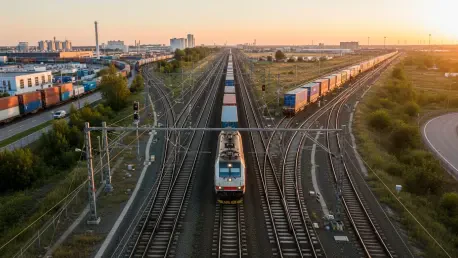

The arteries of American commerce depend heavily on the fluid and predictable movement of goods by rail, a system overseen by a regulatory body now facing a critical test of its own efficiency. In a decisive effort to enhance administrative performance and bolster public accountability, the Surface Transportation Board (STB) has unveiled a comprehensive strategy to resolve its backlog of outstanding cases. According to a detailed progress report issued on February 9, 2026, by STB Chairman Patrick Fuchs, the agency is set to adjudicate thirteen significant proceedings within the next several months. This initiative is a direct extension of the STB’s broader commitment to promoting transparency, continuing a series of progress reports from the previous year. The ambitious timeline addresses a wide spectrum of complex regulatory matters, including contentious railroad abandonments, intricate trackage rights disputes, crucial post-merger oversight, and necessary updates to environmental policies, signaling a period of intense activity for the nation’s chief railroad regulator.
A Flurry of February Decisions
Addressing Abandonment and Trail Use
Among the first cases slated for resolution is the highly watched petition from the Great Redwood Trail Agency concerning a 40-mile segment of rail line owned by Mendocino Railway in California. This proceeding, initiated in April 2024, seeks an “adverse abandonment” authorization, a rare regulatory action that would compel the railroad to relinquish the line against its will. The likely outcome would be the conversion of the corridor into a recreational trail, a process that often pits local community interests and environmental groups against the property rights of rail operators. The fact that Chairman Fuchs has already prepared and circulated a draft action for the full Board’s consideration suggests that the deliberative process is well advanced. This decision will not only determine the future of this specific line between Fort Bragg and Willits but could also set a significant precedent for how the STB balances public interest in trail development with the rights of private railroad owners in similar disputes across the country.
Another case steeped in history and local controversy involves Consolidated Rail Corporation’s (Conrail) long-standing effort to abandon the 1.36-mile Harsimus Branch in Jersey City, New Jersey. This proceeding highlights the complex financial and legal hurdles associated with repurposing historic urban rail infrastructure. A pivotal moment occurred in May 2025 when the STB’s Office of Proceedings rejected an Offer of Financial Assistance from the City of Jersey City, which sought to purchase the line to preserve it. That rejection was subsequently appealed to the full Board, escalating the matter for a final determination. The forthcoming decision in February 2026, based on a draft action submitted by Chairman Fuchs, will bring a conclusion to this protracted battle. It will clarify the standards for financial assistance offers in abandonment cases and ultimately decide whether this historic rail corridor will be dismantled or preserved for potential future use by the city, impacting urban planning and transportation initiatives in a densely populated area.
Clarifying Jurisdiction and Modernizing Policy
In a matter central to the balance between federal and local authority, the Great Walton Railroad Company’s petition for a declaratory order is also scheduled for a February 2026 decision. The Georgia-based railroad is asking the Board to formally confirm that a specific segment of its runaround track in Hart County is a rail line subject to the STB’s exclusive federal jurisdiction under the Interstate Commerce Act. This proactive measure is designed to preempt any potential challenges from local or state entities that might seek to regulate or restrict the railroad’s operations on this track. Such rulings are critical for maintaining a uniform national rail network, as they prevent a patchwork of local regulations from impeding the flow of interstate commerce. Chairman Fuchs has affirmed his intent to provide a draft action for the full Board’s review, and the resulting decision will reinforce the scope of federal preemption, providing greater certainty for railroads operating across multiple jurisdictions.
Simultaneously, the STB is advancing a significant internal reform by updating its environmental regulations. This proceeding, titled “Improving STB Environmental Regulations,” was initiated to align the agency’s policies with Executive Order 14154, “Unleashing American Energy,” and subsequent guidance from the Council on Environmental Quality. The goal is to streamline the environmental review process for railroad projects without compromising statutory obligations, potentially accelerating infrastructure development and modernization. Chairman Fuchs has already submitted a draft action for the Board’s consideration, signaling a proactive approach to regulatory modernization. The anticipated February 2026 decision will likely result in revised rules that could affect how environmental impacts are assessed for everything from new line construction to abandonment proceedings, reflecting a broader governmental push toward greater efficiency in federal oversight while still addressing environmental concerns.
Resolving Operational and Rulemaking Disputes
A long-running and technically complex operational dispute involving trackage rights over the crucial Tehachapis Line in California is also set for a February 2026 resolution. In this case, Union Pacific (UP), as the successor to Southern Pacific, successfully petitioned in May 2023 to reopen the proceeding to amend the conditions under which BNSF operates over the 67.8-mile UP-owned line between Kern Junction and Mojave. This corridor is a vital artery for rail traffic moving in and out of California. Following a discovery dispute that required a procedural restart in February 2025, the case is now ready for a final decision. The Chairman’s intent to present a draft action indicates that the Board will soon issue a ruling that redefines the terms of this shared access, impacting operational efficiency, costs, and service for two of the nation’s largest railroads on one of the busiest and most geographically constrained mainlines in the West.
The February agenda is further rounded out by the National Association of Reversionary Property Owners’ petition for rulemaking, which directly addresses the legal framework for converting abandoned rail lines into recreational trails. Filed in August 2025, the petition requests that the STB initiate a new rulemaking to revise its regulations that implement the National Trails System Act. This federal law is the foundation for the popular “rails-to-trails” movement but has also been the source of extensive litigation over property rights and reversionary interests. The petitioners seek changes that could potentially alter how these conversions are approved and how landowner rights are treated in the process. Chairman Fuchs plans to offer a draft action for a February decision, which will determine whether the STB will open a formal rulemaking proceeding to reconsider these foundational rules, a move that would be closely watched by property owners, local governments, and trail advocacy groups nationwide.
Post-Merger Oversight
The Board’s rigorous oversight of the landmark Canadian Pacific Kansas City (CPKC) merger, approved in March 2023, remains an active and critical part of its docket. As part of its approval, the STB established a seven-year oversight period to monitor the merger’s effects on competition and service, a commitment that has now been put to the test. In September 2025, both Norfolk Southern and Union Pacific filed letters with the Board expressing significant concerns about CPKC’s adherence to service commitments related to the vital Meridian Speedway corridor. This key route between Mississippi and Louisiana is a critical interchange for traffic moving between the Southeast and the West, and any service disruptions could have far-reaching impacts on the national rail network. The concerns raised by rival carriers have triggered a formal review by the STB.
In response to these developments, Chairman Fuchs has indicated his intent to offer a draft action specifically addressing these oversight concerns, with a decision expected in February 2026. This action will be one of the first major tests of the STB’s post-merger monitoring authority and will signal how proactively the agency intends to enforce the conditions it imposed as part of the merger approval. The Board’s decision will not only address the immediate service issues on the Meridian Speedway but will also set a precedent for how it will handle future complaints and monitor compliance throughout the remainder of the seven-year oversight period. This proceeding underscores the STB’s role not just as an arbiter of mergers but as a long-term guardian of a competitive and fluid rail environment, ensuring that the public benefits promised by such massive consolidations are fully realized.
Spring 2026: Tackling Preemption, Control, and Compensation
March: Rulings on State Law and Property Rights
As the calendar turns to March 2026, the Board is scheduled to rule on a critical petition involving federal preemption and state law. The Ohio Rail Development Commission (ORDC) filed a petition in December 2024 seeking a declaratory order from the STB on several key issues concerning its 43.2-mile rail line from North Warren to Ashtabula. Specifically, the ORDC is asking the Board to affirm that the line remains under its exclusive federal jurisdiction, that any state-level adverse possession claims against the line are preempted by federal law, and that the line was legally railbanked for future rail use. The Board instituted a formal proceeding in March 2025 to consider these questions, which lie at the heart of the federal government’s authority to preserve the national rail network against encroachment by local property disputes. A decision affirming the ORDC’s position would strengthen protections for rail corridors nationwide.
Also in March, the STB is expected to render a decision in a complex property and jurisdiction dispute in Pennsylvania. In its July 2023 petition, Richmond Waterfront Industrial Park, LLC (RWIP) requested a declaratory order stating that a purported railroad easement held by the Philadelphia Belt Line Railroad across its property is not, and never has been, under the STB’s jurisdiction. This case delves into the historical basis of railroad easements and the criteria that determine whether a piece of trackage is part of the interstate rail network subject to federal oversight. After the parties requested several extensions to develop the record, the matter is now ripe for a decision. The Chairman intends to offer a draft action for the Board’s consideration, and the outcome will clarify the jurisdictional boundaries for industrial trackage and easements, providing important guidance for property owners and short-line railroads operating in complex industrial areas.
April: Decisions on Corporate Control and Financial Rules
The docket for April 2026 includes a notable acquisition-of-control case involving Norfolk Southern Corporation (NS) and the Norfolk & Portsmouth Belt Line Railroad Company. In February 2025, NS sought formal Board approval to acquire control of the Class III carrier, a move that formalizes a relationship in which NS has already held effective control for 42 years. Despite the long-standing relationship, the Board deemed the transaction “significant,” triggering a more thorough review process. After NS filed a complete application, a procedural schedule was adopted in July 2025, paving the way for a final decision. This case is important as it examines the regulatory implications of formalizing long-term de facto control and will provide clarity on how the Board assesses such transactions, even when they may not appear to alter the competitive landscape on the surface.
In a separate matter with significant financial implications for the industry, the Board is expected to act on a petition from the Railway Supply Institute (RSI) concerning the Code of Car Hire. Filed in March 2024, RSI’s petition asks the Board to reopen a proceeding to review Rule 25, a regulation governing the process for setting car-hire rates that was originally approved in 1992. Car-hire is essentially the rent that railroads pay to each other or to private car owners for using their freight cars. After a period of abeyance to allow for private negotiations between industry stakeholders, the matter is now before the Board for a decision. Chairman Fuchs intends to offer a draft action for the Board to consider, and a decision to reopen the proceeding could lead to the first major overhaul of these financial rules in over three decades, potentially altering the economic dynamics for car owners, lessors, and railroads.
May: Finalizing Policy and Long-Standing Disputes
In May 2026, the Board plans to issue a formal Policy Statement on Preemption, a move prompted by a September 2025 letter from a broad coalition of six railroad and shipper organizations. The groups requested formal guidance from the STB on the scope and application of federal preemption under the ICC Termination Act of 1995. This law grants the Board exclusive jurisdiction over most railroad operations, but the precise boundaries of this authority are a frequent source of litigation with state and local governments. By issuing a comprehensive policy statement, the Board aims to provide clarity and reduce legal uncertainty for all stakeholders. Chairman Fuchs intends to offer a draft policy statement for the Board’s consideration, a document that will be scrutinized by the industry as a definitive guide on the balance between federal and local authority.
The month is also set to bring a long-awaited resolution to a contentious dispute between BNSF Railway and Kansas City Southern over terminal trackage rights on the Rosebluff Lead near Lake Charles, Louisiana. This case centers on the compensation and terms for BNSF’s use of a short but critical track segment needed to serve a key industrial facility. The proceeding has been protracted, involving extensive briefing, a technical conference, and supplemental data analysis to determine a fair arrangement. The final decision will not only resolve this specific conflict but will also provide valuable precedent for how the Board calculates compensation in similar terminal access disputes, which are crucial for ensuring competitive rail service to shippers served by a single railroad. Chairman Fuchs plans to submit a draft action to finally set the terms, bringing a decisive end to the matter.
A Renewed Commitment to Regulatory Finality
The Surface Transportation Board’s concerted effort to resolve this slate of thirteen cases marked a significant step toward enhanced administrative clarity and public accountability. By setting and adhering to a rigorous schedule, the agency demonstrated a renewed commitment to providing timely decisions on matters critical to the nation’s rail infrastructure and economy. The resolutions spanned a wide range of complex issues, from establishing clear jurisdictional lines and modernizing environmental policies to overseeing major merger commitments and settling long-standing operational disputes. This period of focused adjudication not only cleared a substantial portion of the agency’s backlog but also provided the railroad industry and its stakeholders with much-needed certainty, reinforcing the Board’s essential role in maintaining a fluid and competitive national transportation network.