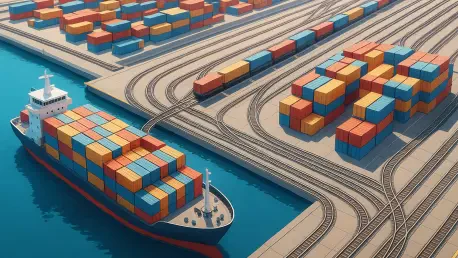

By leveraging the synergy between terminal operators and the International Longshore and Warehouse Union, the Port of Los Angeles is scaling up to manage an influx of diverted trade. As geopolitical instabilities persist across major maritime arteries, cargo owners are increasingly seeking the relative predictability of West Coast gateways. The sustained unrest in the Red Sea has forced a massive reconfiguration of traditional East-West routes, pushing vessels away from the Suez Canal toward longer, more expensive journeys. Consequently, importers who previously favored East Coast or Gulf ports are rerouting goods through the San Pedro Bay to avoid the volatility of trans-Atlantic and Indian Ocean corridors. This shift represents a fundamental change in logistics strategy, moving away from just-in-time arrivals toward a model that prioritizes lane security and infrastructure reliability. By capitalizing on its deep-water berths and extensive rail networks, the port is reclaiming market share that had migrated elsewhere over the last several years.
Strategic Adaptation to Shifting Maritime Routes
Mitigating Geopolitical Disruptions: A Global Perspective
The persistent threat to commercial vessels in the Red Sea has effectively neutralized the Suez Canal as a viable primary route for time-sensitive goods bound for North American markets. Shipping lines have been compelled to circumnavigate the Cape of Good Hope, which adds significant transit time and fuels consumption costs. To minimize these delays, many logistics managers have opted to discharge Asia-originating cargo at the Port of Los Angeles rather than wait for vessels to complete the arduous journey to the Atlantic seaboard. This redirection has created a surge in volume for California terminals, which are now handling goods that were originally destined for Savannah or New York. The reliability of the Pacific route, despite its own complexities, offers a buffer against the unpredictability of the Middle Eastern corridors. This influx is not merely a temporary spike but a strategic pivot as companies reassess the vulnerability of their global supply chains to regional conflicts.
Compounding the Suez crisis are the ongoing operational constraints at the Panama Canal, where fluctuating water levels have historically limited daily vessel transits and draft depths. While engineering efforts continue to address long-term water management, the current limitations still pose a risk to the massive Neo-Panamax ships that serve the East Coast. Rather than risking delays or weight restrictions in the locks, carriers are increasingly utilizing the Trans-Pacific route to Los Angeles, where the infrastructure is purpose-built for the largest container ships in the world. This trend highlights the Port of Los Angeles as a critical relief valve for the global maritime network. By providing a stable alternative to the drought-prone and conflict-affected canals, the San Pedro Bay gateway ensures that the flow of consumer electronics, automotive parts, and retail goods remains uninterrupted. The ability to handle these diversions without creating a localized bottleneck has solidified the port’s standing as a premier hub.
Enhancing Infrastructure: The Drive for Capacity
To handle the increased volume effectively, the Port of Los Angeles has accelerated the deployment of digital twin technology and advanced cargo tracking systems. These tools provide real-time visibility into container movements, allowing terminal operators to optimize gate movements and reduce dwell times for trucks. The integration of the Port Optimizer platform has been instrumental in synchronizing data across the entire supply chain, from ocean carriers to rail providers and warehouse managers. This digital infrastructure allows for better predictive modeling, ensuring that the port can anticipate surges weeks before vessels arrive. By reducing the friction at the point of entry, the facility has managed to increase its throughput capacity without expanding its physical footprint. This technological edge is a significant factor in why cargo owners are choosing Los Angeles over competing ports that may still rely on more fragmented communication methods. Efficiency gains serve as a magnet for high-value shipments.
Strengthening the link between maritime terminals and the national rail network has also played a pivotal role in absorbing redirected trade. Direct on-dock rail access allows containers to be loaded immediately onto trains bound for the Midwest and beyond, bypassing the need for local drayage and off-site transloading. This seamless transition is crucial for maintaining the speed of delivery that modern e-commerce demands. The Class I railroads serving the port have increased their frequency and capacity to meet the rising demand, ensuring that the surge in imports does not lead to congestion in the harbor. Furthermore, the massive concentration of warehousing space in the nearby Inland Empire provides a vital storage buffer that East Coast ports often lack. This ecosystem of rail, road, and storage capacity creates a comprehensive logistics solution that can scale rapidly in response to global events. The strategic investment in intermodal infrastructure has turned a potential challenge into a competitive advantage.
Economic Resilience: The Power of Diversified Logistics
The Role of Labor: Balancing Workforce and Automation
A renewed era of labor stability has been fundamental to the Port of Los Angeles’s ability to capture and retain diverted cargo volumes. The long-term agreements between the maritime industry and labor unions have provided the necessary certainty for shipping lines to commit to the West Coast for their long-range planning. This cooperative environment has facilitated more flexible shift scheduling and improved crane productivity, which are essential when managing the arrival of multiple ultra-large container vessels simultaneously. Skilled longshore workers have demonstrated an impressive ability to scale operations during peak periods, proving that a well-trained workforce is the most valuable asset in a high-pressure environment. The lack of labor unrest, which previously plagued many major ports, now stands as a beacon of reliability for international shippers. This partnership ensures that the port remains operational even when other global hubs face disruptions. The synergy has created a resilient model.
Beyond human expertise, the strategic implementation of semi-automated terminals has significantly boosted the port’s operational ceiling. These facilities utilize automated stacking cranes and guided vehicles to move containers with a level of precision and consistency that manual operations cannot always match. This modernization reduces the likelihood of accidents and equipment downtime, contributing to a safer and more predictable environment for all stakeholders. Automation also allows the port to operate effectively during nighttime hours and in adverse weather conditions, maximizing the utilization of every acre of terminal space. As global turmoil continues to disrupt traditional schedules, the ability to process cargo around the clock becomes a decisive factor in port selection. The Port of Los Angeles has successfully balanced the adoption of these technologies with the needs of its workforce, creating a hybrid model that maximizes both throughput and social responsibility. This lowered the per-container handling cost.
Strategic Directions: Building a Sustainable Trade Future
Sustainability initiatives have also emerged as an unexpected driver of volume as shipping lines prioritize ports that support their carbon reduction goals. The Port of Los Angeles has led the way in establishing green shipping corridors, particularly with major partners in Asia, to encourage the use of low-emission vessels. By providing shore power at every berth and investing in zero-emission drayage trucks, the port helps carriers minimize the environmental footprint of their entire supply chain. This commitment to green logistics is increasingly important for multinational corporations that must report on their Scope 3 emissions. Companies are finding that rerouting through Los Angeles allows them to meet their environmental targets while maintaining efficient delivery schedules. The port’s focus on clean air and renewable energy sources has created a virtuous cycle, where environmental leadership attracts the most modern and efficient vessels in the global fleet. This ensures the port remains a preferred destination for future commerce.
The Port of Los Angeles successfully navigated the complexities of the current year by transforming geopolitical challenges into opportunities for growth and modernization. It proved that a combination of deep-water infrastructure, labor harmony, and digital innovation was the most effective defense against global supply chain volatility. Stakeholders realized that reliance on a single trade route was a risk that could no longer be ignored, leading to a permanent shift in how cargo was distributed across the continent. Decision-makers prioritized the hardening of logistics corridors against external shocks, ensuring that the flow of essential goods remained consistent regardless of regional conflicts or environmental constraints. The lessons learned during this period emphasized the necessity of proactive investment in both human capital and technological tools. Moving forward, the industry adopted a more decentralized approach to shipping, where flexibility and real-time data sharing became the standard for all global trade hubs.