
The silent hum of electric scooters and the frantic rhythm of urban delivery routes have transformed city streets into the front lines of a multi-billion-dollar economic experiment that is currently reshaping how humanity consumes everyday essentials. As the retail landscape shifts under the weight of heightened consumer expectations, the concept of the dark store has emerged not merely as a convenience but as a structural necessity for modern commerce. This localized fulfillment model, designed exclusively for the digital shopper, sits at the intersection of high-stakes robotics and the raw agility of urban labor. The current climate reveals a profound divergence in how different global markets approach the problem of last-mile efficiency, moving away from a one-size-fits-all solution toward a more nuanced, economically grounded strategy.
The Divergent Evolution of Localized Fulfillment
Market Dynamics and Adoption Statistics
The global expansion of micro-fulfillment centers (MFCs) continues to accelerate, with projections indicating a sustained compound annual growth rate through 2030 as urban density increases. These facilities, often tucked into existing urban basements or converted retail storefronts, represent a significant departure from the massive, centralized warehouses of the previous decade. By bringing inventory closer to the end user, operators are attempting to solve the expensive riddle of the final mile, which historically accounts for more than half of total shipping costs. However, the adoption curve is no longer uniform across the globe, as regional economic pressures dictate vastly different technological priorities.
Investment patterns demonstrate a clear divide between established Western markets and the rapidly growing economies of Asia. In the United States and Europe, the primary driver is the skyrocketing cost of warehouse labor, leading to a massive infusion of capital into automated storage and retrieval systems. Conversely, the quick-commerce models in Asia focus on operational expenditure, leveraging vast networks of manual pickers to maintain a high degree of flexibility. While the Western model bets on long-term depreciation of expensive hardware, the Asian model relies on the immediate scalability of a human workforce, creating a fascinating tension between capital-heavy and labor-heavy philosophies.
Performance benchmarks for these facilities often highlight the staggering potential of automated “pick” processes, which theoretically offer up to a four-fold increase in efficiency compared to traditional supermarket shopping. In a controlled environment, a robotic arm or a shuttle system can process hundreds of items per hour without the fatigue or error rates associated with manual picking. This promise of mechanical perfection has lured many retailers into aggressive automation schedules, hoping to achieve a unit-economic profile that makes rapid delivery sustainable. Yet, the gap between theoretical speed and real-world throughput remains a persistent challenge for even the most advanced operators.
The financial landscape for these ambitious programs underwent a significant shift following a series of high-profile reckonings in late 2025. Several multi-billion-dollar impairments were recorded as large-scale automated grocery programs failed to meet their aggressive return-on-investment targets. These financial reports revealed that while the technology was capable of moving goods, the overhead costs of maintaining complex robotic grids often outpaced the savings generated by reduced labor. This has forced the industry into a period of introspection, where the focus has moved from the sheer speed of automation to the actual cost per order delivered.
Real-World Applications and Global Models
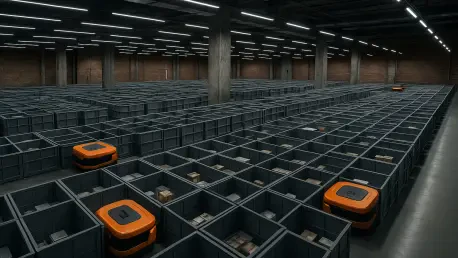
The Western mechanized model is perhaps best exemplified by companies that integrated heavy robotics directly into their existing retail footprints or dedicated urban hubs. These operators utilized massive, fixed grids where robots traverse a hive-like structure to retrieve bins of groceries for human or robotic packers. This approach was designed to maximize every square inch of expensive urban real estate, essentially turning the dark store into a high-density vertical machine. However, the rigidity of these installations means that they are often unable to adapt to sudden changes in product assortments or unexpected shifts in consumer demand patterns.
In stark contrast, the Asian quick-commerce surge has produced a model that favors sheer network density over individual store complexity. Companies like Zepto, Blinkit, and Swiggy Instamart have built networks exceeding 6,000 stores, often achieving valuations above $11 billion by focusing on a hyper-local presence. These stores are frequently low-tech, relying on organized chaos and human speed to fulfill orders in under ten minutes. The economic advantage here lies in the low cost of entry for each node, allowing these companies to flood a city with locations and ensure that a delivery rider is never more than a few minutes away from a customer.
The most difficult challenge for many operators has been the “hybrid failure” that occurs at the consolidation choke point. In many real-world environments, a single order might consist of machine-picked dry goods and hand-picked perishables, such as fresh produce or chilled dairy. The logistical friction of merging these two streams often negates the speed gained by the automation in the first place. When a high-speed robotic system has to wait for a human to finish selecting a specific bunch of bananas, the overall system efficiency drops toward the level of the slowest component. This synchronization problem has become a primary hurdle for retailers attempting to balance automation with the diverse requirements of a full-service grocery shop.
Expert Perspectives on Economic Viability
The Fallacy of the Pick Rate
Industry experts increasingly argue that the traditional focus on “units per hour” or “pick rate” is a vanity metric that often hides the true cost of operations. While a machine might be able to pick an item every few seconds, the hidden costs of replenishment—loading the goods into the machine—and the frequent need for manual intervention can quietly erode the profit margins. Logistics architects point out that if it takes three humans to keep one robot running at peak capacity, the labor savings are largely illusory. The economic focus is therefore shifting from how fast a machine can move to how little human assistance it requires throughout its entire lifecycle.
A more critical metric emerging in professional circles is “Coordination Density,” which measures how effectively a system manages the interplay between storage, retrieval, and final packaging within a small footprint. In a dark store, space is the most expensive resource, and any system that requires wide aisles for robots or large “dead zones” for maintenance is fundamentally flawed. Experts suggest that the next generation of successful dark stores will prioritize the orchestration of movement over the absolute speed of the hardware. This means the software governing the flow of goods is becoming more valuable than the physical rails and motors that carry them.
The Limits of Human Agility
Quick-commerce leaders who once championed purely manual models are now recognizing a “physical ceiling” to human labor as order density continues to rise. When a dark store reaches a certain volume of orders per hour, the facility becomes congested with human pickers, leading to a law of diminishing returns where adding more people actually slows down the process. This congestion not only increases the time it takes to find an item but also leads to higher error rates and safety concerns. Consequently, even the most labor-intensive operators are beginning to view automation as a necessary tool for maintaining order in a high-traffic environment.
Furthermore, sliding on-time delivery rates are forcing manual-first operators to reconsider the role of technology as a stabilizer rather than just a cost-cutter. In a manual store, a sudden surge in demand can lead to a total system collapse, as pickers fall behind and the backlog becomes insurmountable. Automation offers a level of predictable reliability that is difficult to achieve with a fluctuating human workforce. The emerging consensus is that some level of mechanization is required to “smooth out” the volatility of urban demand, ensuring that the promise of ten-minute delivery remains credible even during peak hours.
Future Projections and Strategic Shifts
Moving Toward Redeployable Technology
The industry is currently witnessing a significant transition from fixed, permanent installations to modular, “plug-and-play” automation that can be easily relocated. In the past, the high cost of tearing down and moving a robotic grid meant that if a specific dark store location became unprofitable, the investment was effectively lost. New systems are being designed with a “portable asset” mindset, allowing operators to treat their automation as a flexible resource that can be shifted from a failing neighborhood to a high-demand area within days. This modularity reduces the long-term risk of urban real estate investments and allows for a more agile deployment strategy.
Next-generation systems are also being engineered specifically to handle the “spiky” demand that currently paralyzes fixed-capacity machines. Rather than being optimized for a steady flow of orders, these newer architectures are designed to surge during peak hours and remain energy-efficient during lulls. This is achieved through smarter battery management for mobile robots and software that can dynamically reallocate storage based on the time of day. By solving the volatility problem, technology providers are making automation more attractive to smaller operators who cannot afford the luxury of a predictable, high-volume order stream.
Software is rapidly evolving to become the primary engine of the dark store, acting as an orchestration layer that treats the entire facility as a single, coordinated mechanism. This shift means that the different subsystems—refrigeration, shelving, and retrieval—are no longer independent silos but are managed by a unified intelligence. This level of integration allows for advanced predictive stocking, where the system anticipates which items will be ordered together and moves them into a “ready zone” before the customer even completes their purchase. The focus is no longer on individual machines, but on the holistic flow of data and physical goods.
Long-Term Industry Implications
The long-term evolution of the dark store points toward a “disposable box” concept, where these facilities are viewed as temporary, high-speed nodes rather than miniature versions of 20th-century warehouses. In this future, a dark store might exist in a parking garage for six months to serve a seasonal surge in a specific neighborhood before being packed up and moved elsewhere. This flexibility will allow retailers to follow the pulse of the city, deploying fulfillment capacity exactly where and when it is needed most. This represents a total departure from the traditional model of fixed, long-term retail assets.
Operators will continue to balance the risk of over-automating too early against the risk of labor-driven inefficiency as they navigate this new reality. The most successful strategies will involve a phased approach, where a site is first established with manual labor to prove the local demand before modular automation is introduced to handle the scaling. This risk-mitigation framework allows companies to grow sustainably without the crushing weight of unrecouped capital expenditures. The era of the massive, experimental automated gamble is being replaced by a more disciplined, incremental approach to urban logistics.
Synthesis of Dark Store Economic Realignment
The analysis of the dark store sector demonstrated a fundamental shift from the pursuit of absolute scale to the mastery of throughput density and operational modularity. The industry moved away from the rigid, multi-billion-dollar investments that characterized the early part of the decade, recognizing that the volatility of urban demand required a more flexible technological response. It became clear that the successful integration of automation depended not on the speed of the robots alone, but on the software’s ability to coordinate complex, hybrid workflows that merged human agility with mechanical precision.
The strategic value of the dark store was reaffirmed as a vital component of the modern supply chain, provided that the economic models accounted for the hidden costs of consolidation and replenishment. The transition toward redeployable assets allowed operators to mitigate the risks associated with volatile urban real estate, turning what was once a sunk cost into a mobile advantage. The data indicated that the most profitable nodes were those that prioritized coordination density, ensuring that every square foot of the facility contributed to the speed and accuracy of the final delivery promise.
Moving forward, the industry adopted a “density before scale” philosophy, ensuring that the underlying unit economics were sound before introducing complex mechanization. This approach encouraged technology providers to build for mobility and rapid deployment, creating a new market for flexible automation that could adapt to the changing needs of the city. As these systems matured, they transformed the dark store into a highly efficient, temporary node that could be activated or relocated with minimal friction. Ultimately, the competition was won by those who recognized that the true power of automation lay in its ability to provide reliability and coordination in an increasingly unpredictable urban environment.