The ancient Chinese military axiom “兵马未动,粮草先行,” which translates to “Before the troops and horses move, provisions and fodder must go first,” has for centuries underscored the absolute necessity of logistical superiority for strategic success. In the modern era, the People’s Liberation Army (PLA) is reimagining this timeless principle through a massive technological undertaking: the creation of a nascent “smart logistics system.” This ambitious initiative leverages artificial intelligence, the Internet of Things (IoT), and autonomous platforms to forge a resilient and predictive supply chain capable of sustaining forces under the intense pressures of a future high-tech conflict. Spearheading this transformation is the Joint Logistic Support Force (JLSF), an entity established in 2016 with the explicit mandate to unify the sustainment networks of the Army, Navy, Air Force, and Rocket Force into a single, cohesive, and intelligent operational web.
A New Foundation of Digital Visibility
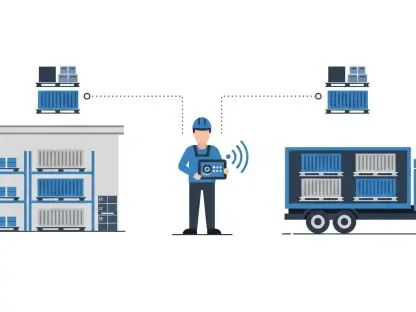
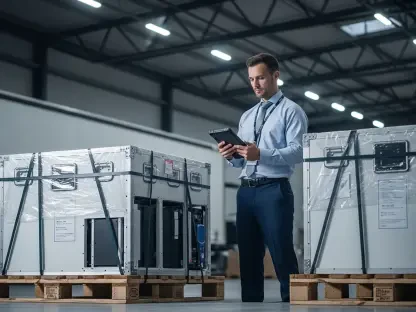
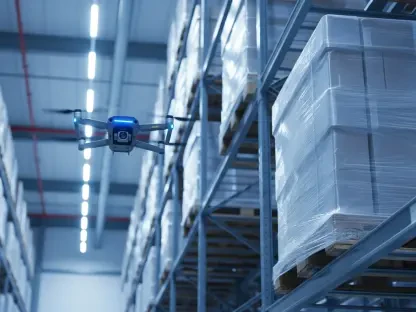
The foundational layer of this intelligent network is dedicated to achieving total, real-time visibility over supplies and needs across the entire force, representing a paradigm shift from periodic manual reporting to constant automated monitoring. Critical equipment, from combat vehicles to power generators, is being systematically retrofitted with sensors that provide continuous status updates directly to the network. Concurrently, the PLA is overhauling its storage infrastructure by developing “smart depots” where every key item, from a missile to a box of rations, is assigned a unique item identifier (UID) like a barcode or QR code. This allows logisticians to have a precise, live picture of what assets are available, where they are located, and their current condition. The JLSF is driving the development of these advanced facilities, which incorporate automated storage and retrieval systems designed to dramatically accelerate the process of issuing and receiving critical supplies, turning warehouses into dynamic hubs rather than static storage points.
A significant innovation within this framework is the establishment of a network of shared “public warehouses,” which creates a common pool of non-specialized equipment such as tents, generators, and camouflage nets. Instead of individual units transporting this bulky gear for every deployment or training exercise, they can now pre-order the necessary items and draw them from a local public warehouse upon arrival in a new operational area. This model, which is already being prototyped and implemented in key regions like Xinjiang and Liaoyang, is designed to lighten the logistical burden on combat units, reduce transportation costs, and ensure that idle stocks are efficiently reintegrated into the wider supply chain. Early prototypes have demonstrated the ability to manage over one hundred thousand distinct items, proving the concept’s scalability and its potential to make PLA units more agile and less encumbered by their own logistical tail as they move across vast distances.
The Brains of the Operation an AI-Driven Core
The second layer of the smart logistics system acts as the digital brain, processing the immense volume of data gathered by the sensing layer to make intelligent and optimized decisions about resource allocation. Once a need is identified by the network, the system employs artificial intelligence and advanced algorithms for the rapid and efficient matching of that requirement with available storage and transportation assets. The ultimate goal is a seamless, automated process of real-time data acquisition, rapid transmission, and intelligent decision support that minimizes delays and maximizes efficiency. A prime example of this system in practice is the “Xueyu” delivery app, which is currently being tested by PLA field units in the challenging terrain of Tibet. This system allows units to submit supply requests online to a centralized platform that aggregates demands in real time, generates a coordinated distribution plan, and enables the dynamic dispatch of assets while applying priority rules to ensure the most critical needs are met first.
A critical component of this optimization layer is the deep and unprecedented integration of China’s vast civilian logistics capabilities into the military’s operational network. The PLA is actively wiring major commercial logistics firms into its system, treating their immense fleets of trucks, aircraft, and nationwide warehouses as a direct extension of its own organic capacity. This deliberate strategy of civil-military fusion is intended to create a logistics system that can flexibly “fight in wartime, respond in emergencies, and serve in peacetime.” Formal agreements are in place with industry giants like JD Logistics, SF Express, and Deppon, granting the military access to immense capacity in heavy freight, cold-chain logistics, and multimodal transportation that far exceeds its own resources. This integration provides military planners with a vast pool of assets to draw upon, dramatically enhancing their ability to aggregate orders, allocate stock, and route supplies under the extreme time pressures of a major conflict.
Automating the Final and Most Dangerous Mile
The final and most technologically advanced layer of the system addresses the perennial challenge of delivering supplies directly to frontline units, a phase often referred to as the “last mile.” To solve this problem, especially in difficult or highly contested environments, the PLA is actively experimenting with and deploying a growing fleet of unmanned and autonomous platforms. This includes the widespread use of cargo drones to transport essential items like rations, ammunition, and spare parts to high-altitude outposts or isolated coastal units where rugged terrain or severe weather makes traditional ground routes unreliable or impossible. These aerial platforms extend the reach of the supply chain deep into contested territory while reducing the risk to human-crewed aircraft and convoys, ensuring that forward-deployed units remain supplied even when cut off from conventional support lines. This approach provides novel solutions for sustaining forces in otherwise inaccessible areas.
In addition to aerial drones, the PLA has demonstrated the use of tracked unmanned ground vehicles (UGVs), such as the “Mule-200,” designed to haul ammunition and other heavy loads alongside dismounted infantry units. These autonomous systems serve as robotic beasts of burden, reducing the physical strain on soldiers and, more importantly, minimizing the exposure of logistics personnel to enemy fire along predictable and vulnerable supply routes. This entire three-layered model is exemplified by the “Military Oil Internet-of-Things (IoT) Platform,” which transforms fuel management from a process of infrequent manual checks to one of continuous, automated monitoring. Networked sensors in fuel depots constantly track stock levels and tank conditions, uploading data that gives commanders real-time visibility (Layer 1) and allows for more precise distribution plans (Layer 2), ultimately ensuring fuel reaches the autonomous systems (Layer 3) that depend on it at the front.
Strategic Implications for Modern Conflict
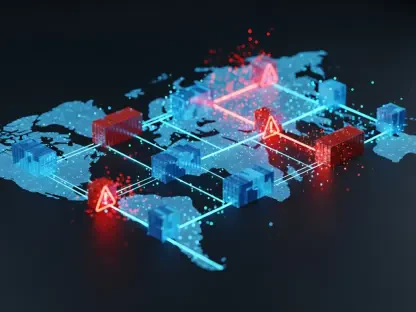
The development of this comprehensive smart logistics system revealed profound strategic implications, particularly when viewed through the lens of a potential conflict over Taiwan. PLA planners had long identified logistics as a critical vulnerability in a complex cross-strait invasion scenario, and this intelligent logistics web was their direct answer to that challenge. The system was designed to fuse dispersed military stockpiles, civilian public warehouses, and commercial logistics partners into a single, resilient, and self-healing network. The intended outcome was a more robust and adaptive force where frontline units would face fewer surprise shortages and commanders would possess more options to reroute supplies around damaged ports, cratered airfields, and disrupted data links. This logistics network was built to sustain high-intensity combat operations far from mainland China by leveraging the nation’s total logistical power.
For U.S. and allied planners, the analysis of this emerging capability yielded two critical takeaways that necessitated a re-evaluation of long-held assumptions. First, it became clear that they must fundamentally update their models of how the PLA is supplied and sustained, recognizing that advanced sensing, AI-driven decision support, and autonomous delivery were becoming core components of its modern logistical doctrine, not just experimental concepts. Second, the very interconnectedness that made this smart logistics network so responsive also created a new set of high-value targets. The shared data hubs, critical civil-military pipelines, and centralized software platforms that enabled its remarkable efficiency were also identified as critical nodes whose disruption could have a cascading effect across the entire system, presenting new opportunities for interdiction in a potential conflict.