
The modern grocery landscape demands a level of logistical precision that was once considered a mathematical impossibility for high-volume retailers. As consumer expectations for freshness and rapid delivery intensify, the traditional warehouse has transitioned from a simple storage box into a high-speed data processing hub. The collaboration between Axfood and the Witron Group exemplifies this shift, moving beyond mere mechanization to a state of total logistics integration. By merging complex digital oversight with massive physical infrastructure, this technology seeks to solve the persistent fragmentation that has plagued food distribution for decades.
Evolution of Highly Automated Logistics Systems
Traditional logistics once relied on siloed facilities where dry, fresh, and frozen goods were managed as separate entities, often leading to inefficient transportation and redundant handling. This fragmented approach has become obsolete in the face of the omnichannel era, where a single inventory must simultaneously feed both brick-and-mortar shelves and e-commerce baskets. The emergence of these integrated systems marks a shift toward a holistic supply chain philosophy, where the goal is no longer just moving pallets, but orchestrating a continuous flow of data and products.
In this context, the integration of automation into food retail is not just a technological upgrade but a strategic necessity. The system evolved to address the labor-intensive nature of manual picking and the high error rates associated with complex multi-category orders. By automating the most taxing physical tasks, retailers can achieve a level of consistency and speed that manual operations cannot match, particularly when dealing with the volatile demand patterns of the current market.
Technical Architecture and Core Logistics Modules
Multi-Temperature Zone Integration
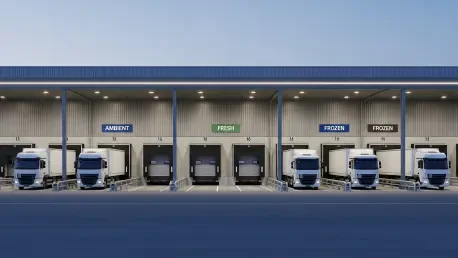
The true technical achievement within these facilities is the ability to maintain three distinct climate zones—ambient, fresh, and frozen—under a single 90,000-square-meter roof. Managing a range from +18 °C down to -26 °C requires more than just insulation; it necessitates a sophisticated thermodynamic strategy to prevent temperature leakage while ensuring seamless product transition. This integration ensures that a single delivery truck can be loaded with a full spectrum of products, significantly reducing the carbon footprint of the distribution process.
Advanced Picking and Order Machinery
At the heart of the operation lies the Order Picking Machinery (OPM) and Case Order Machines, which redefine the concept of efficiency. Unlike traditional systems that pick items randomly, these machines utilize “store-friendly” logic to build pallets based on the specific layout of the receiving retail store. This means that when a pallet arrives, employees can restock shelves in a linear path, drastically cutting down on labor time at the retail level. This localized optimization demonstrates how warehouse technology provides value far beyond the distribution center’s walls.
Automated Storage and Conveyance Infrastructure
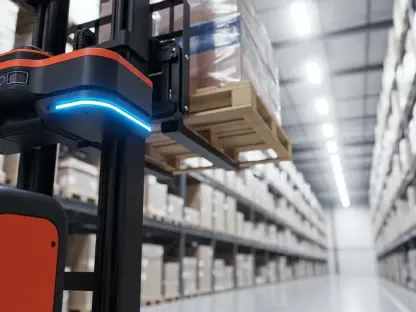
To sustain a throughput of over 560,000 cases daily, the facility utilizes an expansive network of 111 stacker cranes and 16 kilometers of conveyor belts. This high-density storage environment maximizes every cubic inch of vertical space, allowing for over 500,000 storage locations. The physical scale is supported by a robust warehouse management system (WMS) that acts as the brain of the facility, calculating the most efficient path for every item from the moment it enters the loading dock until it is staged for shipping.
Modern Trends in Total Logistics Integration
The current trajectory of logistics is moving away from specialized “dark stores” or “e-commerce hubs” toward multifunctional centers that serve all sales channels. This consolidation allows companies to leverage a single pool of inventory for different customer needs, reducing the risk of overstocking or stockouts. By bringing dry, fresh, and frozen goods together, retailers can streamline their entire transportation network, ensuring that every truck leaving the facility is utilized to its maximum capacity.
Moreover, the integration of AI-driven optimization tools allows these facilities to predict demand spikes and adjust picking priorities in real time. This adaptability is crucial in a market where consumer preferences change rapidly. The trend toward total integration also supports sustainability goals, as consolidated shipping routes and energy-efficient automated systems significantly lower the overall environmental impact of the supply chain.
Real-World Applications in Modern Food Distribution
The partnership in Kungsbacka serves as a premier case study for this technology in action, specifically targeting the complex needs of the Swedish market. By utilizing an automated shipping buffer, the facility can organize pallets into precise delivery sequences for just-in-time loading. This capability ensures that trucks spend less time idling at the dock and more time on the road, which is vital for maintaining the cold chain and ensuring product quality.
Furthermore, the system’s ability to handle over 22,000 different items across various temperature zones makes it an ideal solution for large-scale retailers like Axfood. The success of this implementation proves that high-level automation is not just for small-scale e-commerce niche players but is fully capable of supporting the massive, diverse inventory required by national grocery chains. This real-world application validates the reliability of automated systems in high-stakes environments.
Operational Challenges and Maintenance Requirements
Despite the impressive throughput, the technical complexity of these systems introduces significant operational risks. A single mechanical failure in a conveyor loop or a software glitch in the WMS can halt the entire flow of goods, which is catastrophic in the perishable food industry. Operating 24/7 across multiple shifts leaves very little window for traditional maintenance, necessitating a proactive and preventative approach to system health.
To mitigate these risks, the deployment of OnSite service teams has become a standard requirement. Having over 60 specialists dedicated to a single facility ensures that technical issues are addressed before they escalate into downtime. This requirement highlights a shift in the labor force; while manual picking jobs decrease, the demand for highly skilled technicians and automation engineers increases, representing a fundamental change in the logistics talent landscape.
Future Outlook for Omnichannel Automation
As we look toward the next stage of evolution, the focus will likely shift toward even deeper integration between the warehouse and the supplier’s production lines. Future advancements in AI may allow these distribution centers to autonomously adjust inventory levels based on hyper-local weather patterns or social media trends. Additionally, the development of more flexible robotics could enable the automation of odd-shaped or fragile items that currently still require human intervention.
The long-term impact of this technology will be a more resilient and responsive global retail market. Companies that invest in these total logistics hubs will be better positioned to handle future disruptions, whether they are economic or environmental. As sustainability regulations tighten, the energy efficiency and waste reduction provided by highly automated centers will become a baseline requirement rather than a competitive advantage.
Summary of the Technological Assessment
The implementation of integrated omnichannel automation has fundamentally altered the efficiency metrics of the retail supply chain. By successfully merging diverse temperature zones and implementing store-friendly picking logic, these facilities have proven that automation can handle the extreme complexity of modern grocery demands. The shift toward consolidated, high-performance hubs has effectively bridged the gap between physical retail and digital commerce, creating a more cohesive operational model.
Looking forward, the industry must prioritize the cultivation of technical expertise to manage these complex environments. The success of future logistics will depend not only on the machinery itself but on the seamless orchestration of software and human oversight. Retailers should focus on scaling these automated solutions to smaller regional hubs to further localize distribution and minimize transit times. Ultimately, the move toward total logistics integration has set a new standard for global competitiveness, ensuring that the supply chain remains robust in an increasingly unpredictable market.