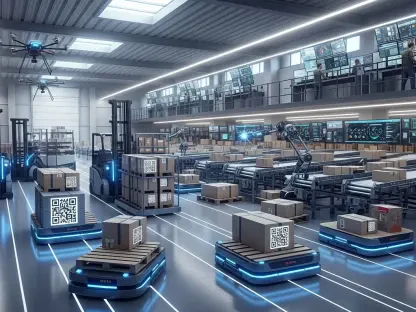

The Transportation Management System (TMS), once a straightforward tool for executing shipments, now stands at the center of a technological revolution, evolving into the intelligent command center for the entire supply chain. This review will explore the evolution of TMS technology, dissecting its key features, analyzing performance drivers, and examining the impact it has on modern logistics. The purpose of this analysis is to provide a comprehensive understanding of the platform’s current capabilities and map its trajectory toward a more automated, strategic, and unified future.
The Evolution from Execution Tool to Strategic Hub
The transformation of the Transportation Management System is no longer a gradual shift but a fundamental redefinition of its purpose within the enterprise. Initially designed for tactical functions like load planning and carrier selection, the TMS has expanded its scope to become a strategic hub for end-to-end network orchestration. This evolution is driven by a confluence of powerful forces: shippers demand systems with sophisticated yet intuitive interfaces, artificial intelligence is moving from a marketing buzzword to a deeply embedded operational asset, and the platform’s role is broadening to encompass inbound logistics and predictive network simulations.
These converging themes are forcing a maturation across the entire vendor landscape. User expectations, now set by consumer-grade technology, have raised the bar for usability and analytical power, compelling developers to prioritize user experience alongside functional depth. Simultaneously, the practical integration of AI is unlocking new levels of automation and insight, enabling systems to not only execute commands but also to anticipate challenges and recommend strategic actions. This technological infusion allows the TMS to provide a single, unified view of the entire transportation ecosystem, cementing its position as the intelligent core of the modern supply chain.
Analysis of Core Technological Drivers
The Infusion of Artificial Intelligence
The integration of artificial intelligence into TMS platforms is progressing from surface-level features to deeply embedded, autonomous capabilities. While many providers have marketed “AI-powered” solutions that often amounted to basic machine learning or guided help functions, the technology is now maturing into more sophisticated forms. Generative AI (GenAI) is becoming a standard feature, streamlining tasks such as summarizing complex shipping data, answering natural-language queries, and accelerating employee onboarding by providing instant, conversational support.
Beyond responsive tools like GenAI, the industry is witnessing the dawn of agentic AI. This more advanced form of artificial intelligence operates proactively, capable of planning multi-step tasks, gathering information from disparate systems, and executing complex workflows without constant human intervention. As these agentic capabilities become native features within core TMS platforms, they promise to elevate logistics management from a reactive discipline to a proactive one. These systems will increasingly orchestrate intricate processes with unprecedented automation, freeing human operators to focus on strategic oversight and exception handling.
Enhanced Connectivity and Platform Unification
The “API-fication” of logistics technology has dramatically expanded the capabilities of the modern TMS, enabling seamless integration with other critical enterprise systems. Vendors now offer a wide array of pre-built connectors and standardized data flows, making it far simpler and more cost-effective to link a TMS with Enterprise Resource Planning (ERP) and Warehouse Management Systems (WMS). This improved interoperability eliminates data silos and creates a cohesive digital ecosystem where information flows freely, providing a holistic view of supply chain operations from procurement to final delivery.
This trend toward greater connectivity is also fueling market consolidation, as technology providers in adjacent areas acquire TMS companies to create unified, end-to-end supply chain platforms. This consolidation offers shippers the convenience of a single-vendor solution that combines planning, execution, and visibility tools under one roof. However, it also reshapes the competitive landscape, with major ERP providers re-entering the TMS space with more robust native modules. This gives organizations new and compelling options but also necessitates careful evaluation of how mergers and platform unification will impact long-term product innovation and support.
Redefined User Experience and Strategic Scope
A significant market shift is underway, driven by elevated user expectations that hold all TMS providers to an exceptionally high standard of performance and usability. Shippers now demand sophisticated, intuitive dashboards that consolidate vast datasets and present actionable insights for quick, informed decision-making. The expectation is no longer for a system that merely executes commands but for one that proactively guides users, offering recommendations on optimal shipping times or how to navigate volatile spot markets.
This demand for a more strategic tool has pushed TMS platforms to become proactive learning systems. They are increasingly designed to integrate real-time carrier performance metrics and dynamic market signals to automate routine decisions and provide forward-looking guidance. The scope of the TMS is also expanding beyond its traditional outbound focus, with a growing number of organizations leveraging it for comprehensive inbound logistics management and advanced network simulations. This shift reflects a broader strategic push toward total network orchestration, where the TMS is used to manage the entire web of interconnected transportation activities.
Emerging Trends and Innovations in 2026
The most significant innovation shaping TMS technology is the transition from responsive, user-commanded systems to proactive, intelligent platforms. These next-generation systems are designed to anticipate needs rather than simply react to inputs. By leveraging continuous streams of real-time data from carriers, market indices, and IoT sensors, the TMS is evolving into a predictive engine. It can now forecast capacity constraints, identify potential disruptions, and recommend alternative strategies before an issue impacts the supply chain.
This proactive capability is enabling a new level of operational automation. Routine decisions, such as carrier selection for standard lanes or mode shifts based on cost-benefit analysis, are increasingly handled by the system without human intervention. The TMS guides users by flagging anomalies, presenting optimized scenarios, and automating the execution of complex, data-driven decisions. This shift frees logistics professionals from tactical minutiae, allowing them to focus on strategic planning and managing the exceptions that require human expertise and judgment.
Expanding Applications and Strategic Use Cases
Driving Supply Chain Sustainability Initiatives
The TMS has become an indispensable tool for organizations committed to reducing their environmental footprint. As regulatory pressures and consumer expectations for sustainability intensify, companies are leveraging TMS platforms to capture, analyze, and report on their carbon emissions with a high degree of accuracy. The system provides the structured framework necessary to gather clean transportation data, which is essential for consistent and credible environmental performance tracking.
Beyond mere data collection, the TMS actively enables greener logistics operations. Its advanced routing algorithms can optimize journeys to minimize fuel consumption, and its carrier management modules allow shippers to select partners based on their sustainability credentials. For many organizations, these capabilities are no longer a “nice-to-have” but a critical component of their corporate social responsibility strategy and a key differentiator in the market. The ability of a TMS to translate sustainability goals into measurable operational outcomes has become a primary driver of its strategic value.
Enabling End-to-End Network Orchestration
The strategic role of the TMS has expanded far beyond its original function of managing outbound freight. Leading organizations now use their TMS platforms for comprehensive, end-to-end network orchestration, applying the same rigor and visibility to inbound logistics as they do to outbound shipments. This holistic approach provides tighter control over costs, improves inventory predictability, and creates a more resilient and synchronized supply network.
Furthermore, the growing demand for advanced simulation capabilities is transforming the TMS into a powerful strategic planning tool. Shippers can model various “what-if” scenarios to test their network’s resilience against potential disruptions, such as port closures, carrier failures, or sudden demand spikes. By running these simulations, companies can proactively develop contingency plans and design more robust, agile transportation networks capable of withstanding market volatility. This evolution marks the final transition of the TMS from a purely operational tool to a strategic asset for long-term network design and risk management.
Navigating Challenges and Market Considerations
Differentiating AI Hype from Tangible Value
One of the primary challenges for shippers is navigating the often-inflated claims surrounding artificial intelligence. With nearly every vendor marketing “AI-powered” features, it has become crucial to distinguish between genuine intelligent automation and more basic functionalities. Shippers must adopt a critical perspective and conduct thorough due diligence, pressing vendors for concrete examples of how their AI drives tangible value in complex areas like procurement optimization, dynamic routing, and predictive data analysis.
Successfully harnessing AI requires moving beyond the marketing hype to understand its practical application. The key is to identify solutions that leverage network-wide data to automate complex decisions, not just those that offer simple guided workflows. This involves evaluating how a vendor’s technology defines and utilizes AI, how deeply it is integrated into core workflows, and whether it can deliver measurable improvements in efficiency, cost reduction, and service levels. Only through this level of scrutiny can organizations ensure they are investing in true intelligence rather than just a sophisticated label.
Responding to Market Pressures and Consolidation
TMS providers face immense pressure from two directions: the unrelenting demand for sophisticated, user-friendly technology and the ongoing wave of market consolidation. The high expectations of shippers force vendors into a rapid and continuous development cycle, where they must innovate quickly to deliver the deep automation and intuitive interfaces of established market leaders. This intense competition benefits buyers but creates significant technical and business hurdles for providers, especially smaller or newer players.
Simultaneously, the trend of mergers and acquisitions is reshaping the vendor landscape. As larger technology companies acquire TMS providers to build unified platforms, it introduces uncertainty for existing customers regarding product roadmaps, the pace of innovation, and future support models. Shippers must closely monitor these market shifts, as the consolidation that promises the convenience of a single-vendor solution could also lead to slower development or a shift in focus away from core transportation functionalities.
The Future Trajectory of Transportation Management
The trajectory of TMS technology points toward a future of increasingly autonomous logistics orchestration, driven by the continued maturation of agentic AI. In the coming years, these systems will evolve to manage entire segments of the supply chain with minimal human oversight, proactively optimizing networks, negotiating with digital freight brokers, and automatically resolving minor disruptions. This will elevate the role of the logistics professional to that of a strategic architect, responsible for designing the rules and goals that govern the autonomous system.
This move toward autonomy will be supported by the continued convergence of logistics technologies into unified platforms. The distinctions between TMS, WMS, and supply chain planning systems will continue to blur, leading to single, cohesive solutions that offer unprecedented visibility and control over the end-to-end flow of goods. As a result, the strategic importance of the TMS will only grow, solidifying its position as the intelligent, data-driven core of the fully integrated and increasingly autonomous supply chain of tomorrow.
Conclusion: The New Paradigm in TMS
The review of next-generation Transportation Management Systems revealed a technology undergoing a profound identity shift. What was once a functional tool for freight execution has decisively evolved into a strategic, AI-powered hub essential for orchestrating complex, global supply chains. Key technological drivers, including the deep infusion of multi-faceted AI, enhanced API-driven connectivity, and a user experience redefined by heightened expectations, have reshaped the platform’s capabilities and purpose.
Ultimately, the analysis demonstrated that the modern TMS is now defined by its intelligence and expanding scope. Its application has broadened to enable critical sustainability initiatives and facilitate end-to-end network orchestration through advanced simulations. This evolution established a new paradigm where the TMS functions not merely as a system of record but as the central nervous system of logistics operations, providing the predictive insights and automated decision-making power required to navigate the challenges of today’s market.