
The intricate dance of machinery within a modern automotive factory represents a marvel of engineering, but it also presents immense challenges in safety, maintenance, and efficiency that can bring production to a grinding halt. In a significant move to address these complexities, Jaguar Land Rover is pioneering a sophisticated drone program as a cornerstone of its “factories of the future” vision, aiming to redefine how industrial environments are managed. This initiative, currently in a trial phase at the company’s Electric Propulsion Manufacturing Centre (EPMC) in Wolverhampton, leverages autonomous technology to perform tasks that are traditionally dangerous, time-consuming, and prone to error. By deploying advanced drones for infrastructure inspection and, eventually, logistics management, JLR is not only enhancing operational uptime but also fostering a safer and more digitally skilled workforce, setting a new precedent for the integration of robotics in high-stakes manufacturing environments. This strategic implementation demonstrates a commitment to innovation that extends beyond the vehicles themselves and into the very processes that create them.
A New Era of Factory Maintenance
Enhancing Safety and Precision
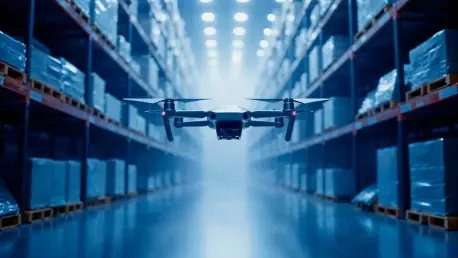
The initial phase of the drone pilot program directly targets one of the most persistent challenges in industrial maintenance: the safe and accurate inspection of large-scale machinery and infrastructure. By introducing Flyability’s Elios 3 drone, JLR has effectively created a new paradigm for its maintenance teams. Operated safely from the factory floor with a tablet interface, the drone can navigate complex and hard-to-reach areas, such as high ceilings and enclosed machinery, without requiring personnel to use cumbersome elevated platforms or scaffolding. This immediately mitigates the significant risks associated with working at height, a leading cause of workplace injuries. The drone’s advanced capabilities are powered by lidar sensors that generate live, high-resolution 3D maps of its surroundings. This “digital twin” provides an unprecedented level of detail, allowing engineers to diagnose potential structural issues or mechanical faults with pinpoint accuracy from a safe distance. This shift from physical inspection to remote digital analysis not only enhances safety but also fundamentally improves the quality and speed of diagnostics, minimizing the potential for human error and reducing unplanned operational downtime.
Driving Efficiency and Sustainability
The operational impact of this technological shift has been immediate and profound, with initial trials demonstrating a staggering reduction in inspection times by as much as 95%. This dramatic increase in efficiency allows maintenance cycles to be completed faster, enabling production lines to maintain optimal performance with minimal interruption. Beyond speed, the drone is equipped with a thermal camera that adds another layer of diagnostic capability. This tool is instrumental in proactive maintenance, allowing teams to identify overheating components, electrical faults, or insulation deficiencies long before they escalate into critical failures. Detecting these thermal anomalies early not only prevents costly equipment damage and subsequent downtime but also aligns directly with JLR’s broader sustainability objectives. By pinpointing areas of energy loss, the company can implement targeted improvements to enhance the factory’s overall energy efficiency. This data-driven approach supports the company’s overarching Reimagine strategy, which includes a firm commitment to achieving carbon net-zero status across its supply chain, manufacturing, and operations by 2039, proving that operational excellence and environmental responsibility can be mutually reinforcing goals.
Revolutionizing Supply Chain and Logistics
Automating Inventory Management
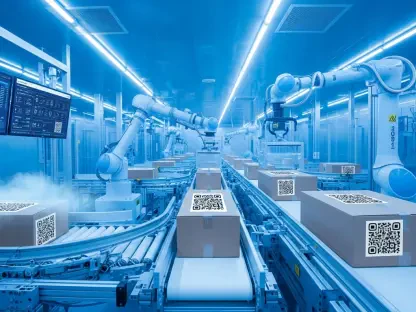
Building on the success of the initial trials, JLR is planning an ambitious expansion of the drone program to its vast Logistics Operations Centre (LOC) in Solihull, where the technology will be adapted to tackle inventory management. In this new application, the drones will be outfitted with high-speed barcode scanners to automate the laborious process of stocktaking. The current manual method requires employees to physically access high storage racking, a time-consuming and potentially hazardous task that is susceptible to human error. The automated drone system promises to transform this process, enabling rapid and continuous inventory checks across the massive facility without disrupting daily operations or endangering staff. This will lead to significantly faster and more accurate inventory records, providing a real-time snapshot of available parts and materials. The resulting benefits are manifold, including a sharp reduction in counting errors, better-informed decisions regarding warehouse space utilization, and a more resilient and responsive supply chain. By ensuring data accuracy, JLR can optimize its entire logistics pipeline, from procurement to final assembly.
A Strategic Investment in People and Technology
This drone initiative is far more than a simple technological upgrade; it represents a key pillar of JLR’s comprehensive corporate strategy and its £3.8 billion annual investment in industrial transformation. The project is being actively explored through the company’s Open Innovation program, which is designed to identify and collaborate with innovative technology start-ups to accelerate the adoption of cutting-edge solutions. Importantly, the program is intrinsically linked to the JLR Future Skills initiative, a forward-thinking plan to upskill 29,000 employees for a future centered on digital integration and electrification. Rather than replacing human workers, the drones are positioned as tools that augment their capabilities, shifting roles from manual labor to higher-value positions such as drone operators, data analysts, and maintenance strategists. This focus on workforce development ensures that the company’s employees are equipped to thrive in the “factories of the future.” Ultimately, these intertwined investments in technology and people are critical components of the Reimagine strategy, driving JLR toward its goal of becoming a more agile, efficient, and sustainable leader in the modern luxury automotive sector.
Forging the Future of Automotive Manufacturing
The successful pilot of this advanced drone program marked a pivotal moment in JLR’s operational evolution. By integrating autonomous technology into core factory functions, the company fundamentally reimagined its approach to maintenance, safety, and logistics. The initiative did more than just improve efficiency metrics; it established a new, safer standard for industrial work and provided a powerful blueprint for how human capital and robotics could collaborate effectively. This strategic deployment demonstrated that targeted technological investments, when paired with a commitment to upskilling the workforce, could yield transformative results across the entire value chain. The project stood as a tangible expression of the company’s Reimagine strategy, proving that the path to a carbon-neutral and digitally-driven future was built upon practical, innovative solutions implemented on the factory floor.