
Rohit Laila stands at the intersection of old-school grit and new-age silicon, bringing decades of deep-trench experience in the logistics and supply chain sectors to the modern technological revolution. Throughout his career, he has witnessed the industry transition from paper manifests to digital dashboards, but he argues that the current shift toward artificial intelligence is fundamentally different from any previous upgrade. Rather than just another tool in the shed, Laila views AI as a catalyst for a new breed of operator—one that prioritizes data-driven intelligence over traditional physical assets. Our conversation explores the transition from “bolt-on” technology to AI-native operations, the nuances of agentic learning, and a future where the logistics landscape is reshaped by drones and even extraterrestrial resource management. We delve into how route optimization is achieving threefold gains, why the “human in the loop” remains a non-negotiable safeguard, and how a company’s culture, rather than its capital, determines its success in this high-velocity era.
Traditional haulage companies often add technology to existing fleets, but a new generation of operators is emerging. How do you see AI fundamentally restructuring the DNA of a logistics company from day one?
The real shift we are seeing is the move away from the “bolt-on” mentality that has characterized the industry for the last few decades. In the past, you bought your trucks, hired your drivers, and then found a software package to help manage the chaos, but the new breed of operator is building from the data out, much like Amazon did with the book industry. These organizations don’t see technology as an administrative burden; they see it as the very foundation of their existence, allowing them to bypass the fragmented systems and manual workarounds that plague legacy hauliers. When you build around AI from day one, every decision—from capital investment to route density—is informed by predictive insights rather than historical guesswork. This approach eliminates the baggage of traditional industry norms and creates a leaner, more responsive entity that can maximize margins in a way a traditional company simply cannot. It is a total disruption of the haulage hierarchy, where the competitive edge is no longer just the size of the fleet, but the sophistication of the intelligence directing it.
You’ve spoken about the shift toward “agentic” AI in the transport sector. Can you walk us through how a system actually learns from a human planner’s decisions rather than just offering static suggestions?
The leap to agentic AI is essentially the difference between a tool that follows instructions and a system that understands consequences. Think of it like a power saw: if you accidentally put your hand under the blade, the saw doesn’t stop because it doesn’t know it’s cutting flesh; it just knows it is cutting what is in front of it. Current AI is often the same, providing a route without knowing the real-world fallout of that choice, but agentic systems change this by incorporating a feedback loop where we “teach” the AI the results of its recommendations. If the system suggests a specific route and the human planner overrides it because of a known local bottleneck, the AI observes that choice, analyzes the outcome, and self-learns for the next iteration. This constant interaction creates a living system that matures alongside the human experts, eventually reaching a point where it can anticipate those nuances before the planner even has to intervene. We are moving toward a reality where the software isn’t just a map; it’s a partner that understands the ripple effects of every turn and every delay.
Many operators worry about the high cost of entry for advanced tech, but you’ve noted significant gains in specific areas. Where are the most immediate, tangible victories for a haulier integrating AI right now?
The most immediate and “dazzling” victories are actually found in the most mundane tasks, particularly in route planning and optimization where we are seeing threefold gains. This isn’t just about finding the shortest path on a generic map; it’s about the AI understanding the specific dimensions of the vehicle, the weight of the load, and the legal restrictions of the roads in real-time. For instance, a generic GPS might send a heavy truck down a road with a low bridge or a weight limit, leading to costly detours or accidents, whereas AI-driven routing filters those risks out entirely. We are also seeing massive value in real-time adjustments—if a fleet is running 20 minutes behind schedule due to traffic, the system can instantly pivot the schedule. Instead of a driver sitting in a stagnant queue at a site like John Lewis in Manchester, the AI can reroute them to a Tesco drop-off first, ensuring the wheels keep turning and the margins stay protected. It’s about making fewer bad decisions every single day, which, in an industry with such razor-thin margins, is the difference between thriving and failing.
There is a lot of buzz around general AI tools like ChatGPT, but you’ve expressed some healthy skepticism regarding their use in heavy logistics. Why is specialized operational data more valuable than a generic prompt?
The danger with general AI like ChatGPT is that if you ask it the same complex logistics question twice, you are almost guaranteed to get two different answers, which is a recipe for disaster in a high-stakes transport environment. These general models are fantastic for back-office tasks—anything analytical, number-crunching, or the type of work you might typically assign to an intern—but they lack the grounding of real-world operational data. In haulage, you need an AI that lives and breathes your specific telemetry, your driver hours, and your fuel consumption rates, not one that is just predicting the next likely word in a sentence. While general AI can certainly help draft a report or summarize a meeting, it cannot be trusted to manage the intricate dance of a distribution network without a specialist framework. I always recommend that a human reviews and questions anything generated by these models because the “hallucinations” of a general AI can lead to very real, very expensive mistakes on the road. Specialist transport technology is built to be consistent and grounded in the physical reality of the fleet, which is something a generic prompt simply cannot replicate.
The industry often sees a divide between massive fleets and small, agile operators. How does the “attitude of adoption” play a bigger role than the size of the balance sheet?
There is a common misconception that AI is a “big player” game, but the reality is that adoption is more about business culture than the size of the budget. I often see the leaders of large organizations paralyzed by the scale of their operations, claiming they are too busy hitting targets to implement new tech, while small operators claim they don’t have the capital that the big guys have. In truth, the smaller guys are often more agile and can pivot to new technologies much faster than a massive corporation bogged down by legacy systems and layers of bureaucracy. It really comes down to a willingness to embrace a new era of technology rather than fearing it or viewing it as a secondary concern. Those who view AI as a multimillion-dollar transformation project are looking at it the wrong way; it starts with the jobs people would happily stop doing themselves, like repetitive administration and spreadsheet work. Whether you have five trucks or five hundred, the ability to utilize data to reduce empty miles and improve vehicle utilization is available if the culture of the company allows for it.
Looking at the cab and the warehouse, how do technologies like drones and real-time route optimizers change the daily physical reality for drivers and retail spaces?
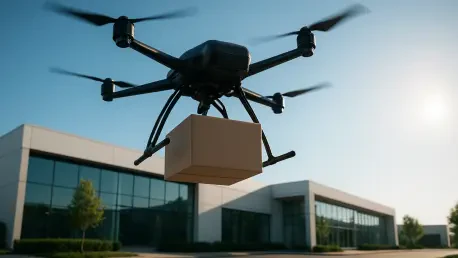
The physical landscape of logistics is going to shrink and speed up simultaneously, particularly as drones begin to handle a larger portion of the last-mile delivery load. Imagine a retail store in a high-cost area like Manchester that can drastically reduce its footprint because it no longer needs to hold massive amounts of inventory on-site. Instead, they can rely on constant, instant deliveries from a warehouse 25 miles away, perhaps in a location like Knowsley, using drones to bypass road congestion entirely. This shifts the burden of storage to the logistics provider and allows retail spaces to become more about the customer experience and less about being a mini-warehouse. For the drivers, the technology makes life in the cab significantly less stressful by handling the heavy lifting of compliance and safety checks. Even something as simple as an AI knowing a driver’s preference for a specific coffee shop or service station and timing a mandatory break to coincide with that location makes the job more human-centric. It’s about using technology to remove the friction from the day, allowing the driver to focus on the road while the AI handles the complex choreography of the schedule.
Looking five years ahead, how will the roles of transport managers and drivers evolve as we reach a “critical mass” of autonomous systems?
Within the next five years, we are going to see a dynamic shift where route planning becomes almost entirely autonomous, and the management of a fleet moves from reactive to predictive maintenance. This doesn’t mean the transport manager disappears; rather, their role evolves into that of a high-level strategist and an “exception handler” for the big calls that AI isn’t equipped to make. As a technologist, I can see a path to full automation, but as a realist, I know that the human element is vital for understanding the social and ethical consequences of certain operational decisions. We will eventually reach a “critical mass” point where there are more automated planners and autonomous vehicles than human ones, and at that stage, the systems will start learning from each other at an exponential rate. Drivers will become more like flight engineers, overseeing sophisticated systems while focusing heavily on health, safety, and specialized compliance. The best-run businesses will be those that lean into this power, using data to ensure that every movement is purposeful and every risk is mitigated before it manifests.
You’ve touched on some truly futuristic concepts, like mining in space for minerals to power our infrastructure. How do these macro-level challenges influence the way we should be thinking about supply chain sustainability?
It sounds like science fiction, but the reality is that the sheer amount of computing power and battery technology we are deploying requires an astronomical amount of raw materials like magnesium and copper. If we continue at our current pace, we face a choice between destroying our own planet to extract these elements or looking toward the lumps of ice and mineral-rich asteroids floating in space. This macro-level reality should force us to rethink sustainability not just as a “green” initiative, but as a resource-management necessity. In the logistics sector, this means we must become obsessed with efficiency—eliminating every single empty mile and maximizing the life of every vehicle and battery we use. We are in danger of becoming “monkeys at typewriters” with this technology if we don’t apply human creativity to solve these larger resource problems. The transition to a high-tech, AI-driven world is only sustainable if we find ways to power it that don’t bankrupt our natural environment, and that starts with the radical optimization of how we move freight today.
What is your forecast for the next “Amazon of transport”?
My forecast is that the next dominant force in transport will not be a company that started with a fleet of trucks, but an AI-first organization that views freight as a data problem to be solved. We are rapidly approaching a moment where people will turn to their AI app of choice to navigate the world and move goods, much like they turned to Google for information two decades ago. This “next Google” or “next Amazon” of the logistics world will likely be a company that has no legacy baggage, allowing them to leverage routes, data, and autonomous assets to achieve margins that are currently unthinkable. They will move freight with a level of fluidity that makes today’s consolidation and hub-and-spoke models look ancient. Existing operators have a choice: they can either use these tools to evolve their current operations into something more resilient, or they can wait for a data-native newcomer to build the operation of tomorrow right over the top of them. The technology is no longer a “future” prospect; it is the current reality, and the next industry giant is likely being built in a data center right now, not a truck depot.