
Walking across a massive warehouse floor just to move a single empty cart is a subtle but devastating drain on industrial productivity that most facilities have simply accepted as an unavoidable cost of doing business. For over sixty years, HOJ Innovations built an ironclad reputation as a titan in inventory control, but a recent strategic shift toward a physical presence on the floor has signaled a new era for the Salt Lake City-based company. By launching a dedicated Autonomous Mobile Robot (AMR) division, the firm is no longer just optimizing digital workflows through screens and databases; it is physically moving the products it once only tracked. This evolution from a software-centric powerhouse to a comprehensive automation integrator marks a significant turning point in the logistics landscape, blending decades of institutional knowledge with cutting-edge robotic hardware.
The transition represents a move away from the traditional siloed approach where software and hardware companies operated in isolation. Instead, the company has positioned itself at the intersection of these two worlds, ensuring that the intelligence of the warehouse management system directly dictates the movements of the machines on the ground. This holistic methodology allows for a seamless flow of data and materials, effectively turning a warehouse into a living, breathing organism where every movement is intentional and data-driven.
The Marriage: Software Intelligence and Physical Robotics
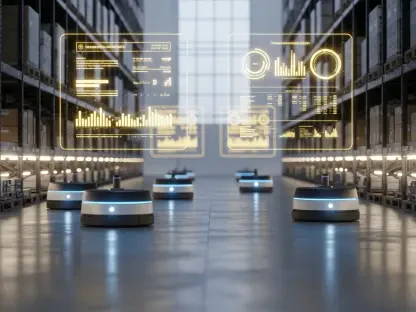
The integration of physical robotics into a seasoned software ecosystem is more than a simple product expansion; it is a fundamental reimagining of material handling. For decades, the company’s proprietary WarehouseOS (WOS) served as the digital backbone for countless fulfillment centers, providing the visibility needed to manage complex inventories. However, the leadership recognized that even the most sophisticated software could not overcome the physical limitations of a manual workforce. By merging WOS with autonomous hardware, they created a unified platform where the software does not just tell a human where to go, but actively dispatches a robot to complete the journey.
This marriage of disciplines allows the company to act as a bridge between the digital and physical realms. The software acts as the brain, processing orders and prioritizing tasks, while the AMRs serve as the muscle, executing those tasks with a level of precision and consistency that manual labor struggles to match. This synergy ensures that the automation is not just an additive feature but a core component of the operational logic. Consequently, businesses can achieve a level of synchronization that was previously impossible, reducing the lag time between order receipt and physical movement.
Strategic Necessity: Why the Shift to Autonomous Integration Matters Now
The global supply chain currently faces a dual pressure of persistent labor shortages and a consumer demand for unprecedented fulfillment speed that shows no signs of slowing down. Traditional warehouses often suffer from what experts call “lost production”—those quiet moments where human workers are forced to perform low-value, repetitive tasks like walking empty carts across a facility rather than picking or packing. These inefficiencies, while small in isolation, aggregate into massive operational hurdles that cap a facility’s maximum throughput and drive up overhead costs.
Recognizing that software alone could no longer solve these physical bottlenecks, the firm pivoted toward an integration model that addresses the physical movement of goods directly. In the current economic climate, the ability to automate the “low-brain-power” tasks is no longer a luxury but a requirement for survival. By bridging the gap between digital intelligence and physical movement, the company is addressing the urgent need for a unified ecosystem where every second of labor is dedicated to high-value activity. This shift allows facilities to scale their operations without a linear increase in headcount, providing a sustainable path forward in a tightening labor market.
Foundational Elements: The Pillars of the Automation Ecosystem
Rather than attempting to manufacture proprietary robots from the ground up, a strategy that often leads to hardware-locked ecosystems, the company has adopted a pragmatic role as a systems integrator. This strategy prioritizes the customer’s specific operational needs over the novelty of the hardware itself, allowing for a more flexible and tailored approach to automation. To support this massive undertaking, the company expanded its headquarters with a 5,000-square-foot facility dedicated exclusively to software and automation research. This space functions as a high-tech testing ground where engineers simulate complex warehouse environments to ensure every machine is rigorously vetted.
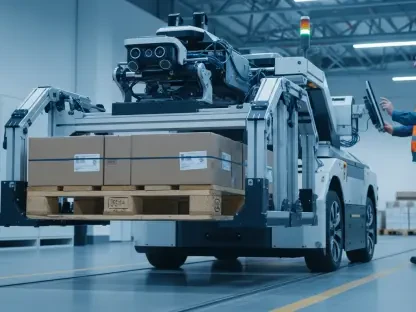
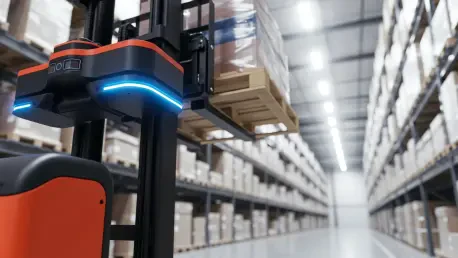
The resulting AMR portfolio is remarkably diverse, covering the full spectrum of industrial needs from light-duty fulfillment to heavy-duty manufacturing. The lineup includes agile robots designed for conveyor-top attachments and small package handling, as well as massive autonomous fork trucks capable of transporting pallet loads weighing up to 6,600 lbs. To ensure these machines operate at peak performance, a strategic partnership with SEER Robotics provides the advanced navigation and control systems required for complex environments. Furthermore, by prioritizing hardware that meets stringent UL and CE safety standards, the company ensures that its systems are ready for the rigorous demands of modern industrial regulations.
Operational Reality: Insights from the Front Lines of Automation
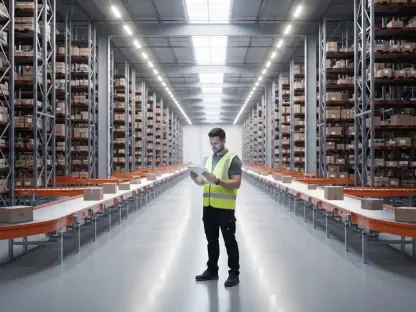
The engineering leadership at the firm emphasizes that the true value of automation lies in the “technical dance” between humans and machines. The ultimate goal is not the total replacement of the human element, but rather the total elimination of wasted movement that currently plagues manual operations. When robots take over the long-distance hauling of materials, human workers are freed to stay in their specialized zones, whether that be high-speed picking or precision packing. This spatial stability allows workers to become more efficient and less fatigued, as they are no longer spending half their shift walking across concrete floors.
By utilizing AMRs to transport full carts from picking zones directly to packing stations, the system removes the manual “walking time” that typically drains warehouse productivity. This orchestration is directed by WarehouseOS, which acts as the central nervous system of the facility. The software ensures that robots arrive exactly when and where they are needed, preventing bottlenecks at the packing station and ensuring a steady flow of work. This level of coordination transforms the warehouse from a series of disjointed tasks into a continuous, fluid process where machines and people work in a complementary rhythm.
Practical Implementation: Strategies for a Human-Centric Robot Workflow
Transitioning to an automated environment requires a calculated framework to ensure a return on investment and operational harmony. The first step in this approach involves a thorough audit of “lost production” moments to identify exactly where human effort is being squandered on transit. Facilities are encouraged to look for areas where workers are stationary while waiting for materials or moving long distances to drop off completed tasks. Replacing these specific movements with AMRs creates an immediate uptick in throughput without requiring a complete overhaul of the existing picking logic or facility layout.
To maximize efficiency, the AMR fleet must be integrated directly into the facility’s existing Warehouse Management System rather than running on a siloed, independent platform. Using WarehouseOS as the orchestrator ensures that the robots receive real-time data on order priority, allowing them to adjust their routes and tasks dynamically based on the shifting workload of the day. Additionally, the compact nature of modern AMRs allows companies to reclaim valuable floor space previously reserved for heavy machinery traffic. By redesigning aisles for these smaller, more precise machines, facilities not only improved material flow but also increased their overall storage capacity.
The strategic pivot toward an autonomous mobile robot division demonstrated how a legacy company successfully adapted to the rapid physical demands of modern logistics. By focusing on the integration of software and hardware, the firm provided a blueprint for eliminating the hidden costs of manual transit. The establishment of the R&D playground and the partnership with navigation experts ensured that the resulting systems were both safe and highly efficient. Ultimately, the transition shifted the focus from merely tracking inventory to actively managing its movement through space, proving that the future of the warehouse relied on the seamless cooperation of human intelligence and robotic reliability. This evolution set the stage for a new standard in fulfillment where waste was systematically removed from the floor.