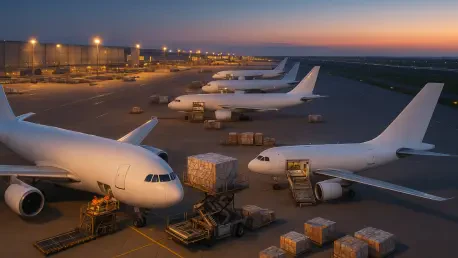

Regional airports are transforming into specialized logistics platforms by offering streamlined customs and handling procedures that bypass congested primary cargo hubs. This structural evolution marks a departure from the traditional hub-and-spoke models that have dominated the aviation industry for decades, as the explosive growth of global e-commerce forces a rethink of how goods move through the sky. In the current landscape, the viability of flight operations is no longer tied strictly to legacy schedules or the convenience of passenger connections; instead, it is determined by raw demand density and the relentless pursuit of lower unit costs. Shippers and carriers are prioritizing speed and reliability above all else, leading to a decentralized, point-to-point freighter network that directly links manufacturing centers to consumer markets. This shift is not merely a change in geography but a fundamental reconfiguration of the logistical DNA that powers global trade, requiring new investments in technology and physical infrastructure to keep pace with the market.
The Logic Of Engineered Utilization
High-Density Point-To-Point Logistics
The move to point-to-point freighter operations is driven by a logic of engineered utilization that maximizes every cubic foot of available space. Unlike the legacy systems where cargo was often treated as a secondary byproduct of passenger routes, modern e-commerce logistics prioritize dedicated freighters that launch only when specific volume thresholds are met. This demand-responsive model ensures that aircraft are flying at peak efficiency, which is essential for maintaining the thin margins associated with competitive global shipping. By focusing on direct routes between major production hubs and regional consumption centers, carriers can avoid the traditional consolidation bottlenecks found at massive international airports. This approach relies heavily on predictive analytics to forecast demand surges, allowing logistics providers to position aircraft ahead of the wave. Consequently, the industry has seen a massive increase in the deployment of converted freighters tailored for these high-frequency, high-volume circuits.
Maximizing Payload And Competitive Efficiency
Furthermore, the prioritization of high payloads has become the primary lever of competitiveness for air cargo operators looking to outpace their rivals. In this environment, the traditional reliance on belly cargo—the space available beneath passenger seats—has proven insufficient for the sheer scale of modern digital retail requirements. Dedicated freighter networks allow for specialized loading configurations that optimize for the lighter, more voluminous parcels typical of online shopping. This shift has led to the emergence of specialized air bridges that operate with the precision of a conveyor belt, moving goods across oceans with minimal human intervention. To sustain this level of performance, companies have invested heavily in automated loading systems and modular container designs that reduce ground time significantly. By stripping away the complexities of mixed-use airports and focusing on pure cargo environments, operators have successfully lowered their unit costs while simultaneously increasing the velocity of their supply chains.
Addressing The Structural Friction Of Trade Imbalance
However, this transition toward point-to-point efficiency is not without its challenges, most notably the persistent issue of structural trade imbalances. On major intercontinental sectors, particularly those connecting Asian manufacturing centers to Western markets, the inbound leg of a flight is often packed to the ceiling with high-value consumer electronics and apparel. In contrast, the return leg frequently suffers from severe under-utilization, as outbound demand from Western hubs rarely matches the staggering volume of inbound e-commerce. This disparity creates a financial vacuum, as the revenue generated by the inbound cargo must essentially subsidize the operational costs of the empty or partially filled return flight. This economic friction threatens the long-term sustainability of decentralized networks if not managed through clever routing or the pursuit of alternative cargo types for the backhaul. Logistics planners are now forced to explore triangular routes that incorporate secondary markets to pick up industrial goods.
Dynamic Pricing And Market Diversification
This imbalance has also prompted a re-evaluation of how carriers price their services, with many moving toward dynamic models that account for the total cost of the round trip rather than individual legs. The industry is seeing a rise in collaborative agreements where different carriers share space on under-utilized return routes to mitigate losses. Additionally, some logistics giants are attempting to stimulate outbound demand by offering deeply discounted rates for non-urgent shipments or heavy industrial equipment that would normally move by sea. Despite these efforts, the fundamental gap between production and consumption remains a stubborn hurdle in the optimization of global networks. The success of the current logistical landscape depends on the industry’s ability to bridge this gap through technology and market diversification. If carriers cannot find a way to balance their loads, the increased costs will eventually trickle down to the consumer, potentially cooling the very e-commerce growth that spurred this evolution.
Specialized Gateways And Infrastructure Innovation
Optimized Infrastructure And Operational Simplicity
One of the most significant trends in the current cargo environment is the elevation of regional airports from peripheral players to essential nodes in the global supply chain. The value proposition of these gateways lies in their operational simplicity, offering a faster and often cheaper alternative to congested primary hubs like London Heathrow or New York’s JFK. For e-commerce freight destined for immediate land-based distribution rather than another connecting flight, these regional nodes provide the reliability needed for modern delivery standards. By avoiding the multi-layered bureaucracy and physical congestion of mega-hubs, cargo can be moved from the aircraft to a delivery truck in a fraction of the time. This efficiency is particularly critical for next-day or same-day delivery promises that have become the baseline for consumer expectations. Smaller airports have responded by dedicating entire sectors of their land to logistics warehouses, ensuring runway proximity.
Cargo-First Design Philosophy And Automation
The success of these regional nodes depends on a cargo-first design philosophy that prioritizes the cadence of the logistics chain over passenger needs or luxury retail. Many airports have abandoned the attempt to be everything for everyone and have instead rebranded as specialized logistics platforms. By engineering processes specifically for freight—including streamlined customs coordination and rapid handling technology—these airports have become genuine engines of commerce. These facilities often feature pre-clearance programs and digital twin integration, allowing customs officials to inspect manifests and clear goods while the aircraft is still in the air. This proactive approach reduces dwell time on the tarmac, which is often the most expensive part of the journey. Furthermore, the absence of massive passenger terminals means that cargo aircraft have priority for takeoff and landing, eliminating the costly holding patterns that frequently delay operations at major international hubs.
Network Fragmentation And Localized Fulfillment
Within this fragmented landscape, a clear stratification emerged among airports as they reached different levels of maturity. While some facilities successfully transitioned into mid-tier cargo hubs through sustained investment in robotics and sorting automation, others reached an operational ceiling where increased volume introduced new inefficiencies. To maintain high service standards, many regional airports found their optimal performance level by processing a limited number of freighter rotations, avoiding the infrastructure bottlenecks that plagued larger primary airports. This optimal scale philosophy suggested that bigger was not always better in the world of e-commerce logistics. In conclusion, the industry moved toward a more modular and adaptable framework that favored agility over sheer size. Stakeholders recognized that harmonizing digital standards across these diverse nodes was the only way to ensure a seamless data flow, and investing in autonomous ground handling became the next necessary step for the network.