
Rohit Laila brings decades of deep-seated experience to the logistics and supply chain sector, having witnessed the industry’s evolution from traditional freight to the high-stakes world of digital infrastructure. As an expert who bridges the gap between massive physical operations and cutting-edge technological innovation, he has become a leading voice in how logistics must adapt to the “AI era.” Today, he shares insights into how a massive expansion of infrastructure and specialized handling processes are becoming the secret weapons for hyperscalers racing to build the world’s digital backbone.
You are planning ten new dedicated sites totaling seven million square feet by 2026. What specific logistical hurdles do these massive footprints solve for hyperscalers, and how does this expansion specifically support the rapid deployment of the infrastructure required for the AI era?
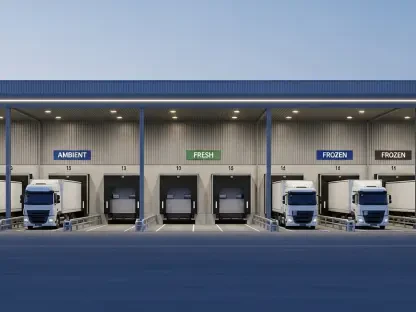
The scale of seven million square feet is not just about storage; it is about creating a buffer and a staging ground that matches the sheer velocity of the AI boom. Hyperscalers are currently building at an extraordinary speed, but they are often throttled by the “just-in-time” arrival of components that have nowhere to go if a construction site isn’t ready. By launching these ten dedicated sites by 2026, we provide the physical capacity to house mission-critical infrastructure long before it is needed on-site. This prevents the gridlock often seen when massive shipments arrive at a congested construction zone. Ultimately, this footprint allows us to act as the digital backbone’s waiting room, ensuring that when the build phase hits a specific milestone, the equipment is already local and ready for immediate deployment.
Moving critical testing and rack configuration from active construction zones into secure warehouses reduces on-site complexity. Could you walk through the step-by-step process of this “white-glove” handling and explain how moving these tasks off-site prevents damage to sensitive power modules or networking systems?
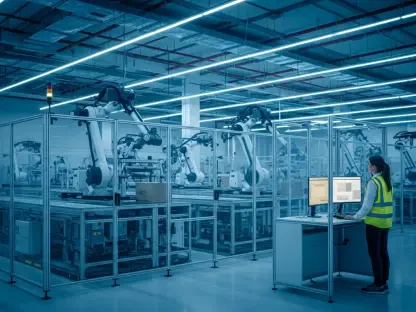
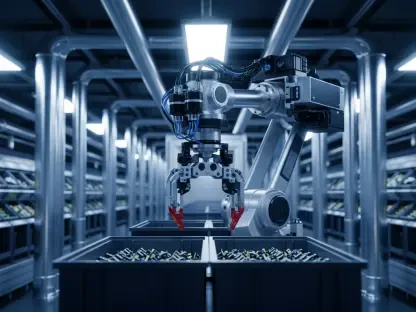
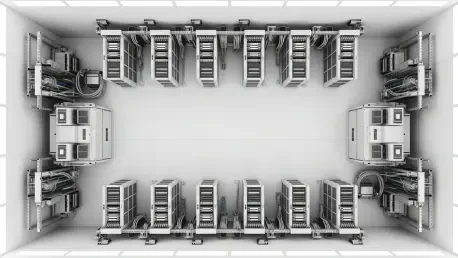
White-glove handling is a meticulous process that begins the moment a component enters our secure, climate-controlled warehouse environments. Instead of unboxing a sensitive server in a dusty, high-traffic construction zone, our technicians perform the uncrating, rack integration, and initial testing in a sterile “clean room” setting. We follow a rigid sequence: first, the physical inspection of power modules, followed by the precise mounting of networking systems into racks, and finally, a series of diagnostic tests to ensure everything is “plug-and-play” ready. By performing these intricate tasks off-site, we eliminate the 70% of risks associated with manual handling in chaotic environments where dust, vibration, and accidental impact are common. When the rack finally leaves our facility, it is fully configured and secured, reducing the on-site installation to a simple, low-risk connection.
High-value components like GPUs and cooling systems often originate in overseas manufacturing hubs before reaching remote North American build sites via multimodal routes. How do you synchronize air and ocean freight with specialized heavy-lift road transport to ensure these global supply chains remain resilient?
Synchronizing these global flows requires a “control tower” approach where every leg of the journey—from a GPU factory in Asia to a remote greenfield site in the U.S. Midwest—is visible and timed. We utilize specialized charter flights for time-sensitive processors and ocean freight for heavier power cooling systems, ensuring that customs expertise is applied at every border to prevent administrative stalls. The real magic happens when these international shipments meet our heavy-lift road solutions, which are engineered specifically for out-of-gauge components. We coordinate the arrival of an ocean container at the port with a specialized transport team that has already scouted the route for bridge heights and weight limits. This end-to-end synchronization ensures that no component sits idle at a port or airport, maintaining a continuous flow that keeps billion-dollar projects on their aggressive schedules.
While many operators currently rely on fragmented providers for specialized tasks, there is a clear demand for a single end-to-end logistics partner and unified account management. What are the primary operational risks of a fragmented setup, and how does a single point of accountability accelerate mega-campus builds?
The primary risk of fragmentation is the “accountability gap” where, for instance, a transport company blames a warehouse provider for a delay, leaving the customer to play detective. Our research shows that while 85% of decision-makers want a single partner, only 43% feel they actually have one, leading to broken communication and missed deadlines. When you have a single point of accountability, you eliminate the friction of hand-offs between different companies, which is where 90% of logistics errors typically occur. A unified account manager has the authority to reroute a shipment or prioritize a configuration task across the entire chain, from the manufacturing hub to the final data center floor. This holistic view allows us to move at the speed of the customer’s needs, rather than the speed of the slowest sub-contractor.
Specialized warehouse-to-site transport is becoming essential for moving oversized components through congested metro areas and active construction zones. What specific metrics do you use to measure the success of these precision deliveries, and how do these services help operators maintain their increasingly compressed build schedules?
We measure success through three primary metrics: On-Time Delivery (OTD) within a specific 15-minute window, Zero-Defect Handling, and “Dock-to-Rack” speed. In congested metro areas, a delivery that is two hours late can delay an entire crane crew and a team of 50 electricians, costing the operator tens of thousands of dollars. Our specialized transport teams use real-time GPS and pre-cleared routes to ensure we hit those tight windows every single time. By delivering “installation-ready” racks directly to the specific data hall, we cut down the time it takes to go from the delivery truck to an active state. These precision movements allow operators to compress their build schedules because they no longer have to build in “buffer days” for potential transport mishaps or damaged equipment.
What is your forecast for data center logistics?
I forecast that data center logistics will transition from being a “support service” to becoming the primary driver of competitive advantage in the tech sector. As AI demands continue to skyrocket, the bottleneck will no longer be the software or the chips, but the physical ability to deploy hardware in record time. We will see a massive shift toward “modular logistics,” where entire sections of a data center are built, configured, and tested in our warehouses before being shipped as a single unit. In the next few years, the regions that can master this integration of global supply flows with local, high-security execution—particularly in North America, which holds over 40% of the world’s data centers—will be the ones that define the future of the internet. Expect to see logistics providers becoming deeply embedded in the engineering and planning phases of these mega-campuses from day one.