
The deployment of sophisticated LGVs at the Parma site demonstrates that legacy manufacturing facilities can be retrofitted with cutting-edge robotics to meet modern efficiency standards. As the logistics industry accelerates its shift toward fully integrated autonomous systems, the Pedrignano plant has emerged as a premier example of how to bridge the gap between traditional production and a high-tech supply chain. By automating the “final meter” of the outbound process, the facility has successfully eliminated a long-standing manual bottleneck that often hindered even the most advanced warehouses. This transition represents a significant leap forward in pasta production management, moving beyond simple robotic sorting to an end-to-end operational flow. The facility now operates as a unified ecosystem where every movement is calculated to minimize delays and maximize throughput. This strategic evolution not only addresses immediate labor challenges but also sets a new global benchmark for the seamless integration of robotics within existing brownfield industrial environments.
Digital Orchestration and Autonomous Navigation
The Role of Laser Guided Vehicles
At the heart of this logistical revolution is a massive fleet of more than 100 laser-guided vehicles that operate with remarkable precision. Unlike earlier generations of automated guided vehicles that required physical wires or magnetic markers embedded in the floor, these LGVs utilize advanced sensors to navigate the existing infrastructure. This flexibility allows the facility to maintain a high volume of traffic without the need for costly or disruptive floor modifications. These units serve as the physical link between the storage racks and the outbound trucks, picking up finished pallets and transporting them across the expansive warehouse floor. The most notable feature of these machines is their ability to drive directly into the interior of a transport trailer to position a load accurately. By handling the heavy lifting and precise placement required during the loading stage, these robots have transformed the loading dock from a site of chaotic manual activity into a streamlined zone of autonomous movement.
Centralized Coordination Through the SM.I.LE80 Platform
The physical movements of the LGV fleet are managed by a centralized digital brain that coordinates every stage of the production cycle. This software ecosystem manages everything from the initial receipt of raw materials to the final loading of finished goods onto transport trailers. By integrating the entire process into a single digital platform, the plant achieves a level of visibility and control that was previously impossible in fragmented systems. The platform calculates the most efficient routes for the LGVs, manages inventory levels in real-time, and ensures that the flow of goods remains predictable even during peak production periods. This centralized management allows the facility to adapt to changing demands instantaneously, optimizing the dispatch area to ensure that no trailer is left waiting. This digital framework is what makes the “final meter” automation possible, as it synchronizes the warehouse’s output with the physical arrival of trucks at the dock, creating a perfectly timed exchange.
Physical Infrastructure and Operational Impact
Stabilizing the Loading Environment for Robotics
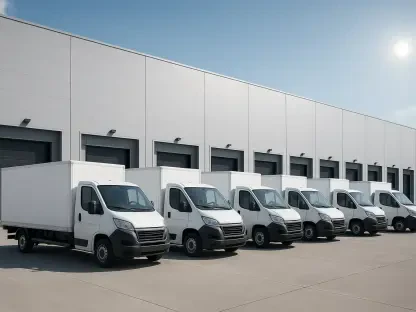
Automating the loading of a transport trailer presents unique physical challenges that go beyond simple navigation software. Because a parked trailer is inherently unstable, often shifting or “creeping” as heavy equipment moves in and out, the facility had to implement specialized dock stabilization hardware. In collaboration with engineering partners, the site installed advanced locking mechanisms that physically secure the trailer to the dock, preventing any vertical or horizontal movement. This rigidity is critical because, while human forklift operators can compensate for a slight shift in the trailer’s floor, a robot requires a perfectly stable and predictable environment to function safely and accurately. These infrastructure upgrades ensure that the heavy LGVs can enter and exit vehicles without the risk of accidents caused by unexpected shifts. This focus on the interface between the building and the truck highlights a critical realization: for robotics to succeed, the surrounding physical environment must be as sophisticated as the machines.
Strategic Findings: Scaling and Environmental Impact
The successful integration of autonomous loading systems established a clear blueprint for the broader manufacturing sector. By resolving the complexities of the loading dock through a combination of robotics and physical stabilization, the project proved that the “final meter” of logistics is no longer an insurmountable barrier. The expansion of the site, measured from 2026 through the subsequent operational years, effectively eliminated more than 3,000 annual lorry journeys. By centralizing storage and removing the need for external shuttling, the project successfully reduced the carbon footprint of the outbound logistics process. Furthermore, the transition moved the workforce away from repetitive, high-risk manual tasks and toward supervisory roles that required technical oversight of the robotic systems. Moving forward, the industry should focus on creating universal software protocols that allow different robotic systems to communicate seamlessly with various transport providers, ensuring that diverse platforms can interact across the global supply chain.