
In the current landscape of global commerce, even a minor misstep in inventory allocation across a decentralized network can trigger a cascade of financial losses that threaten the viability of a modern enterprise. For decades, supply chain managers relied on historical averages and static spreadsheets to guide their decisions, yet these tools frequently failed to account for the volatility of modern consumer behavior. The arrival of high-speed artificial intelligence has fundamentally altered this dynamic, providing a way to test thousands of variables in a matter of minutes. Companies no longer face a binary choice between carrying massive safety stocks or risking empty shelves.
Moving Beyond the Limitations of Traditional Inventory Management
The transition from reactive replenishment to proactive distribution marks a significant turning point for the logistics sector. In the past, managers were often forced to make critical decisions based on lagging indicators, which frequently resulted in bloated carrying costs or missed revenue opportunities. Traditional models lacked the computational power to simulate complex “what-if” scenarios, leaving organizations vulnerable to sudden shifts in transportation costs or supply chain disruptions.
High-speed simulation has replaced these archaic methods by allowing for a more granular analysis of the supply chain. By utilizing data-driven distribution models, businesses can now identify the precise moment when stock needs to be moved or replenished. This shift toward intelligent automation ensures that every decision is backed by statistical probability rather than administrative guesswork, allowing for leaner operations that do not sacrifice service quality.
The Rising Complexity of Modern Distribution Networks
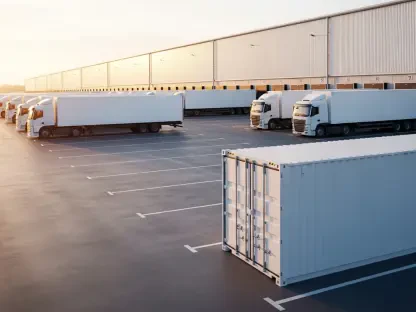
Managing a singular facility is a manageable localized challenge, but coordinating a network of interconnected warehouses introduces a geometric increase in operational difficulty. Businesses must now juggle regional demand spikes, varying storage capacities, and the fluctuating price of moving goods between different nodes. When these facilities operate as isolated silos, the lack of visibility often leads to “emergency” procurement, where new stock is ordered to fill a gap at one site while a surplus of that same item sits unused at another.
As the demand for rapid delivery intensifies, the necessity for a centralized, intelligent “brain” to coordinate these networks has become undeniable. Traditional “rules of thumb” are simply insufficient for managing the nuances of a modern ecosystem. Without a unified view, the hidden costs of inefficient stock placement can quickly erode profit margins, making a sophisticated coordination system a prerequisite for any competitive logistics strategy.
The Technical Core of AI-Driven Simulation and Genetic Evaluation
At the technical center of this revolution lies the use of genetic algorithms and parallel processing to evaluate inventory policies. Unlike older models that analyzed scenarios one by one, modern simulators like GENESIS can process thousands of potential outcomes simultaneously. This methodology mimics the process of natural selection, allowing the most efficient inventory strategies to “evolve” as they are tested against real-world constraints such as transportation lead times and warehouse footprint limitations.
This leap in processing power has transformed AI from a theoretical concept into a practical tool for tactical weekly planning. By reducing the time required for complex simulations from several days to mere minutes, organizations can respond to market changes with unprecedented speed. The ability to run these evaluations in parallel ensures that the selected inventory policy is the most robust option available, having been vetted against a vast array of potential disruptions.
Insights from the MIT Center for Transportation & Logistics Collaboration
Research stemming from the partnership between the MIT Center for Transportation & Logistics and Mecalux emphasizes a shift from simple stock management to total logistics cost optimization. This collaboration led to the realization that the true value of AI lies in its ability to provide a comprehensive view of the entire supply chain through integrated statistical dashboards. These tools identify high-risk areas for stockouts before they occur and reveal consumption patterns that often remain invisible to human analysts.
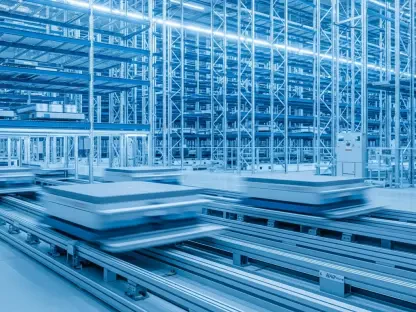
Logistics leaders have reached a consensus that the future of the industry depends on the development of “digital twins” for automated storage. In this virtual environment, every physical movement is simulated and optimized before it is executed in the real world. This approach ensures maximum efficiency and allows for the testing of new strategies without the risk of disrupting actual operations, creating a safer and more predictable environment for innovation.
Strategies for Inventory Rebalancing and Transportation Optimization
To implement these AI-driven insights, organizations are adopting a framework centered on internal redistribution rather than immediate procurement. When a specific warehouse experiences a shortage, the AI determines if it is more cost-effective to trigger a new purchase order or to transfer surplus stock from a nearby facility. This process, known as inventory rebalancing, minimizes the capital tied up in new assets and ensures that existing stock is utilized to its full potential.
Furthermore, these intelligent systems provide specific guidance on shipment consolidation and fulfillment location selection. By recommending how to bundle orders to optimize truckloads, the AI significantly decreases the costs associated with the “last mile” of delivery. Organizations that followed these data-driven steps maintained superior service levels while lowering their total operational spend. The focus eventually moved toward internal replenishment strategies and the development of even more sophisticated digital twins. Leaders adopted slotting optimization to further streamline movements within automated storage systems. This technological evolution effectively minimized total logistics costs while ensuring that service levels remained consistently high through data-driven decision-making.