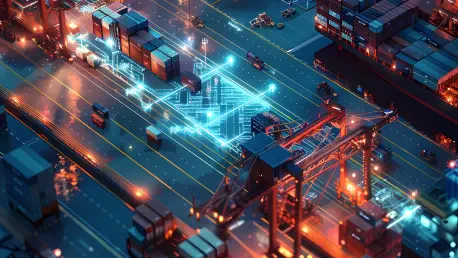

The traditional freight industry has long operated in a reactive state of perpetual crisis management, where logistics professionals spend their days extinguishing operational fires rather than strategically planning for the future. This constant cycle of troubleshooting—addressing missed appointments, tracking down lost pallets, and managing dock congestion—results in significant inefficiencies, higher costs, and strained client relationships. However, a fundamental transformation is underway, driven by the powerful combination of the Internet of Things (IoT) and Artificial Intelligence (AI). These technologies are systematically dismantling the old reactive model, replacing it with a predictive and anticipatory framework. This evolution is not merely an incremental improvement; it represents a paradigm shift that enables carriers, shippers, and freight forwarders to move from a position of constant uncertainty to one of informed foresight, fundamentally altering how goods move across the global supply chain and creating unprecedented opportunities for efficiency, resilience, and reliability.
1. Why Real-Time Visibility is Now a Requirement
In the modern supply chain, shipment visibility has transitioned from a premium, nice-to-have feature to an absolute baseline expectation for all stakeholders involved in the movement of goods. Customers now demand the ability to know precisely where a pallet is at any given moment, compliance teams require verifiable temperature logs to ensure product integrity, and operations managers expect far fewer surprises that disrupt meticulously planned schedules. The journey of long-haul trucks, ocean containers, trailers, and air cargo involves numerous handoffs between different carriers and hubs, and historically, each of these transfer points introduced a significant blind spot into the tracking process. This pervasive lack of continuous, reliable data is a primary cause of cascading operational failures, including severe dock congestion, costly missed delivery appointments, and inflated operational expenses due to inefficiencies and penalties. This environment of uncertainty creates a ripple effect of delays and costs that impacts the entire logistics network.
The challenge of eliminating these informational black holes is now being effectively met by modern Internet of Things (IoT) tracking solutions that provide a constant stream of actionable data. Small, incredibly rugged tracking devices—engineered to be solar-powered for longevity, battery-efficient for extended deployments, or even designed as disposable one-way tags for specific use cases—can now be affixed to virtually any asset. These devices provide a continuous feed of location and condition data without the need for constant manual scanning or intervention, effectively turning the supply chain’s blind spots into a comprehensive, live dashboard. Logistics managers can monitor not just the real-time location of a shipment but also critical metrics like dwell time at facilities, shock events indicating rough handling, and temperature excursions that could compromise sensitive cargo. This wealth of near real-time information allows teams to proactively prioritize critical loads, mitigate risks before they escalate, and significantly reduce product spoilage and waste.
2. Using AI to Turn Data into Decisions
While the Internet of Things serves as the engine for generating a massive volume of raw operational data, it is Artificial Intelligence that forges this information into a powerful and actionable toolset. With fleets of vehicles, thousands of containers, and sprawling warehouse operations generating a constant deluge of telemetry points every single day, the task of identifying meaningful patterns, recognizing anomalies, and optimizing complex logistics networks has grown far beyond the capacity of human analysis alone. Relying on manual review of this data is not only inefficient but practically impossible, leaving significant opportunities for improvement undiscovered within the noise of daily operations. AI models are uniquely capable of sifting through these vast datasets to uncover subtle, yet critical, insights that can drive substantial gains in efficiency and cost reduction across the entire supply chain, making machine assistance an indispensable component of modern logistics management.
The true value of AI in logistics lies in its ability to move beyond simple problem identification to providing prescriptive, data-driven recommendations. Advanced machine learning models can accurately detect chronically underutilized equipment across a network, identify recurring congestion points at specific terminals or times of day, and even predict which assets are most likely to experience a mechanical failure in the near future. Crucially, these systems do not just flag potential issues for human review; they proactively recommend concrete actions to mitigate them. For example, an AI might suggest rerouting a specific trailer to avoid an emerging traffic bottleneck, dynamically shifting dock assignments to balance workload and reduce wait times, or scheduling preventative maintenance for a vehicle before a critical component fails. This is the pivotal point where freight operations fundamentally stop being reactive and start becoming truly predictive, enabling managers to anticipate and prevent disruptions rather than just responding to them.
3. System Interoperability Connecting the Network
The transformative potential of IoT and Artificial Intelligence can only be fully realized at scale when the disparate systems that manage the flow of goods begin to speak a common, standardized language. The logistics ecosystem is composed of a complex web of technologies, including Transportation Management Systems (TMS), yard management systems, warehouse management systems, and visibility dashboards, each often operating in its own isolated data silo. When these systems cannot communicate effectively, the result is a fragmented view of the supply chain, where critical information is delayed, duplicated, or lost during handoffs. Establishing standardized protocols for data exchange creates a single, shared source of truth that is accessible to all relevant parties in real time. This unified data layer is the essential glue that holds the modern, multimodal network together, ensuring that information flows as seamlessly as the physical assets themselves.
This need for a common operational picture becomes particularly acute in multimodal transportation, where a single container may move from a ship to a railcar and finally to a truck on its journey to the final destination. In such a complex logistical chain, the data associated with the asset—including its location, condition, and customs documentation—must follow it flawlessly through every transition. Without seamless interoperability, each handoff between modes of transport risks reintroducing the very blind spots that IoT trackers are designed to eliminate. When a standardized data framework is in place, however, information from a carrier’s TMS can be instantly integrated with a terminal’s yard management system, which in turn feeds data into the shipper’s visibility platform. This creates a powerful, end-to-end view of the shipment’s journey, enabling smarter coordination, reducing delays at transfer points, and ensuring that all stakeholders are making decisions based on the same accurate and up-to-date information.
4. Building Resilience to Plan for Disruptions
No supply chain is immune to disruption, whether it stems from unpredictable weather events, sudden labor shortages, or unexpected infrastructure failures that can bring operations to a halt. The key differentiator for a modern logistics operation is not whether it will face disruptions, but how quickly and effectively it can respond to them. By combining the real-time visibility provided by IoT with the advanced analytical power of AI-driven scenario modeling, shippers and carriers can now move beyond reactive scrambling and toward proactive contingency planning. These technologies allow organizations to simulate the impact of various disruptions on their network and model potential responses, such as rerouting shipments, shifting transportation modes from truck to rail, or securing temporary capacity swaps with partners. This capability transforms crisis management from a chaotic, ad-hoc exercise into the smooth execution of a well-rehearsed contingency plan.
The practical application of these technologies directly translates into more resilient and adaptable supply chains that can weather unforeseen challenges with minimal impact on service levels. For instance, when a major highway is closed due to an accident, dynamic rerouting algorithms can use live asset locations to automatically guide drivers along the most efficient alternative paths. In situations involving port congestion, AI can help prioritize the unloading and dispatch of the most critical shipments based on their contents, condition, or service-level agreements. Furthermore, the rich historical and real-time data gathered through these systems provides logistics providers with significant leverage during negotiations with terminals and other partners during peak seasons or periods of widespread disruption. This data-driven approach enables them to secure necessary resources and make informed decisions that keep freight moving, proving that in logistics, the true measure of success is how quickly and intelligently a network can recover from the inevitable.
5. Addressing Challenges and Human Factors
The integration of advanced technology alone is not a panacea for all logistical challenges; successful adoption requires a holistic approach that addresses workflows, data governance, and the human element of change. For teams to fully embrace and leverage these new tools, they need more than just access to a dashboard. This involves a fundamental redesign of existing operational workflows to incorporate automated insights and recommendations into daily decision-making processes. Furthermore, establishing clear data governance policies is crucial to ensure the quality, consistency, and security of the information being fed into AI models. Perhaps most importantly, building trust in automated recommendations is a critical hurdle. Teams need a degree of visibility into the reasoning behind an AI’s suggestions and must be equipped with clear Key Performance Indicators (KPIs) to objectively measure the success and impact of these new systems.
Navigating the path to a fully predictive logistics operation is often fraught with common yet surmountable obstacles that organizations must anticipate and plan for. One of the most frequent issues is the integration friction that arises when trying to connect new IoT tracking devices and software platforms with legacy enterprise systems that were not designed for real-time data exchange. In parallel, data quality and standardization issues often emerge, particularly when information must be shared and aggregated across multiple partners, each with their own unique data formats and protocols. Finally, organizational resistance to automated decision-making can pose a significant cultural barrier. Overcoming this requires a dedicated change management strategy that includes comprehensive training, clear communication about the benefits, and a phased implementation that allows teams to build confidence in the technology over time. The companies that successfully blend powerful technology with practical, human-centric training are the ones that ultimately win.
From Reactive Responses to Reliable Outcomes
The integration of IoT and AI has fundamentally reshaped the freight industry, steering it away from a model of constant firefighting and toward one of strategic foresight. By providing continuous, real-time data streams, IoT devices acted as the distributed eyes and ears of the entire logistics network, eliminating the blind spots that traditionally plagued supply chains. In turn, AI served as the intelligent brain, interpreting this vast flow of information to uncover patterns, predict disruptions, and recommend proactive measures that saved invaluable time and resources. This powerful synergy resulted in a logistics ecosystem defined by fewer surprises, more efficient maintenance cycles, and smarter routing decisions. For professionals in the field, this transformation represented a move toward gaining unprecedented control over their operations. The journey from reactive troubleshooting to predictive logistics ultimately delivered what every shipper and carrier strives for: more reliable outcomes and a more resilient, efficient, and predictable global supply chain.