
The End of the Black Box Supply Chain
A single misplaced parcel in a sprawling distribution center often triggers a costly chain reaction of delays that ripples through global trade networks and compromises consumer satisfaction. While the logistics industry historically functioned through manual checkpoints, today’s market demands hyper-transparency, making the old “last-known location” model completely inadequate. Transitioning from opaque, manual processes to a self-reporting ecosystem is no longer an optional upgrade; it is a fundamental requirement for any company hoping to survive in a landscape where instant status updates are the standard.
The modern supply chain must operate with a level of visibility that leaves no room for the “black box” phenomenon, where goods vanish into a facility and reappear only upon departure. This shift is driven by a consumer base that tracks purchases with minute-by-minute expectations. Consequently, logistics providers are abandoning the reactive methods of the past in favor of proactive systems that flag issues the moment they occur.
Bridging the Visibility Gap: Why Real-Time Data is Non-Negotiable
The primary source of friction in contemporary delivery networks is the operational blind spot—that silent period between manual scans where a package effectively disappears from view. Traditional barcode systems, despite their long history of reliability, require significant labor and remain vulnerable to human error, creating data gaps that inevitably result in bottlenecks. As e-commerce volumes continue to climb toward record heights, logistics providers face an urgent pressure to eliminate these gaps by evolving past intermittent data points.
Success in the current market requires a shift toward a continuous stream of real-time intelligence that tracks every movement within a facility. By removing the guesswork associated with manual logging, companies can ensure that every asset is accounted for at every stage of the journey. This evolution represents a move from reactive management to proactive oversight, where data is generated and analyzed as events occur, providing a shield against the unpredictability of global trade.
The Layered Intelligence Framework: RFID and Machine Vision Integration
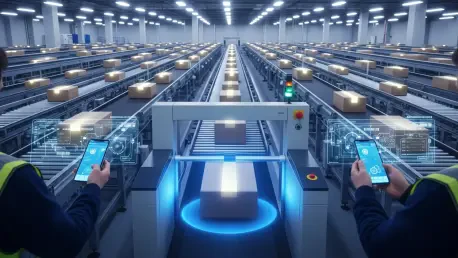
Modernizing a warehouse does not necessitate a complete “rip and replace” of existing infrastructure; instead, industry leaders advocate for a layered approach that integrates Radio Frequency Identification (RFID) with legacy barcode systems. This dual-track strategy allows packages to automatically report their presence and location as they move through various gates, effectively removing the need for manual intervention at every checkpoint. When RFID tags are paired with machine vision technology, facilities gain a granular view of package flow that was previously impossible to achieve.
This synergy allows frontline teams to identify and rectify sorting errors before a package even reaches the loading dock, saving both time and fuel. By turning passive inventory into active participants in the supply chain, companies reduce the likelihood of misrouting and loss. The integration of these tools creates a resilient network that can adapt to high-volume fluctuations without the need for constant human supervision, ensuring that the physical flow of goods matches the digital data stream.
Solving the Final Mile: On-Device AI and the Shift to Intelligent Automation
Insights from industry leaders like Pat Bogan of Zebra Technologies highlight a significant shift toward “edge computing” to conquer the final-mile hurdle. Rather than funneling massive datasets to a distant cloud for processing, logistics firms are now running AI algorithms directly on the handheld devices carried by drivers. This shift enables instantaneous proof-of-delivery verification, where the AI analyzes photos in real-time to confirm a successful drop-off while maintaining strict privacy standards.
The technology automatically blurs sensitive information, such as residential addresses or faces, ensuring compliance with privacy regulations without delaying the workflow. Furthermore, while the concept of fully autonomous “dark facilities” remains a long-term vision due to the physical complexity of diverse package handling, the industry focus has shifted to incremental automation. This approach leverages AI to manage repetitive tasks, allowing the human workforce to move into higher-value roles that require complex problem-solving and oversight.
Implementation Strategies for a Data-Driven Logistics Network
To navigate this technological transition, logistics providers followed a structured framework for integration that prioritized high-friction zones. The initial step involved identifying areas where manual scanning created the most significant data gaps or operational bottlenecks. Once these zones were mapped, companies deployed a layered technology stack that utilized RFID for automation while keeping barcodes as a reliable redundancy. This ensured that no single point of failure could disrupt the flow of information across the network.
Following the hardware rollout, providers implemented edge AI solutions on mobile devices to streamline final-mile tasks and ensure privacy compliance. Finally, the focus shifted to workforce evolution, where employees were trained to manage data-rich environments and oversee the automated systems now performing the bulk of data capture. This comprehensive strategy successfully transformed traditional operations into resilient, transparent networks that met and exceeded modern consumer expectations while laying the groundwork for future scalability.