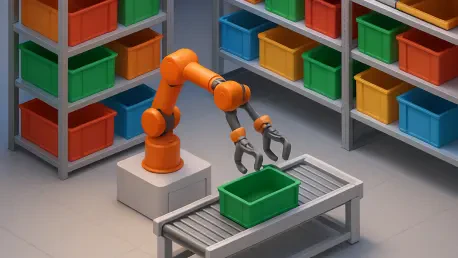

When paired with the specialized Max Workstation, this climbing AMR facilitates a dual-point continuous feeding mode that processes more than 800 totes per hour at a single station. This advancement addresses the chronic bottleneck faced by modern fulfillment centers where traditional conveyor systems often fail to keep pace with the volatile demands of global e-commerce. By integrating sophisticated vertical reach with horizontal mobility, the system eliminates the need for extensive fixed infrastructure, allowing facilities to pivot their operations in real time. The ability to handle diverse container sizes and weights further distinguishes this solution from its predecessors, ensuring that the technology remains versatile across various industries, from pharmaceutical distribution to high-end apparel fulfillment. Logistics managers now find themselves equipped with a tool that doesn’t just improve throughput but fundamentally alters the rhythm of the warehouse floor through autonomous coordination. Furthermore, the integration of these robots into existing brownfield sites minimizes the downtime typically associated with major technological overhauls, providing a seamless transition to automated workflows that are both robust and flexible enough for the current market demands.
Strategic Efficiency: Mechanical Innovation and Dual-Point Feeding
The core of the RoboShuttle Hyper lies in its revolutionary dual-arm design, which allows the robot to handle two totes simultaneously during its vertical ascent and descent. This capability effectively halves the travel time required for picking operations, as the robot can retrieve a full container while returning an empty one in a single cycle. Unlike older generations of automated guided vehicles that were limited by single-task movements, this climbing autonomous mobile robot operates with a degree of mechanical fluidity that mimics human multi-tasking but with the tireless accuracy of a machine. The telescopic lift mechanism is engineered for stability even at extreme heights, reaching shelves that were previously inaccessible to standard picking robots. This vertical reach enables warehouses to maximize their cubic volume, effectively increasing storage density by up to three hundred percent without expanding the physical footprint of the building itself. This engineering breakthrough allows for a more streamlined flow of goods, particularly in facilities that manage a high volume of stock-keeping units with varying turnover rates. The system’s ability to operate in narrow aisles further maximizes the available floor space.
The successful integration of the RoboShuttle Hyper into the logistics ecosystem demonstrated that the transition from manual to high-speed automated picking was no longer a luxury but a necessity for survival. Companies that prioritized this shift were able to achieve a return on investment within eighteen months, setting a new benchmark for industry performance. Moving forward, the focus shifted toward the complete harmonization of robotic fleets with artificial intelligence capable of autonomous warehouse reorganization. It became clear that the most effective strategy involved a phased approach, starting with high-traffic zones before expanding to the entire facility. Future considerations highlighted the need for open-source communication protocols between different robotic systems to create a truly unified warehouse environment. Businesses were encouraged to audit their existing shelving structures to ensure compatibility with high-reach climbing units. This proactive stance ensured that infrastructure was ready for the next generation of robotics and helped organizations maintain a decisive edge in the competitive landscape of global commerce while setting a new standard for operational excellence.