
The global logistics industry is currently navigating a high-stakes digital transformation as the July 2027 deadline for the European Freight Transport Information (eFTI) regulation draws closer. While the shift from physical paperwork to electronic consignment notes (eCMR) promises to streamline operations, it also exposes a critical vulnerability in how international identity is verified at the warehouse dock. Modern supply chains do not stop at the borders of the European Union, yet many of the technical frameworks currently being deployed are surprisingly insular. As the industry moves through this critical transition period, the focus has shifted from mere digitization to the complex challenge of inclusive, cross-border authentication.
Evolution of Digital Freight Documentation
The transition to eCMR represents a fundamental departure from the carbon-copy pads that have defined trucking for decades. At its core, the technology serves as a decentralized digital ledger that records the transfer of goods from the consignor to the carrier and finally to the consignee. Unlike paper, which is easily lost, altered, or delayed, a digital consignment note provides an immutable audit trail. This evolution is not just about convenience; it is a regulatory necessity. With the eFTI mandate looming, the logistics sector is under immense pressure to adopt systems that can communicate across different national platforms without friction.
This shift is occurring within a broader push for paperless logistics, where data efficiency is seen as the primary driver of future profitability. In the current landscape, the eCMR is the linchpin that connects warehouse management systems with telematics and invoicing software. However, the true value of this technology lies in its ability to provide real-time visibility. When a digital signature is captured, the entire supply chain is notified instantly, allowing for faster payment cycles and more accurate inventory management. The drive toward 2027 is essentially a race to eliminate the administrative “black holes” that occur when a truck leaves a facility.
Core Technical Components and Authentication Standards
Electronic Signature Frameworks: QES vs. AdES
A significant portion of the current implementation friction stems from a misunderstanding of electronic signature standards. Many stakeholders mistakenly believe that the highest level of security, the Qualified Electronic Signature (QES), is mandatory for every transaction. While a QES offers the highest legal standing in the EU, it requires certificates from specific European trust service providers, making it nearly impossible for non-EU drivers to utilize. This “gold standard” approach often becomes a barrier to entry, inadvertently forcing logistics companies back to paper when dealing with international partners.
In contrast, the Advanced Electronic Signature (AdES) has emerged as the more practical and legally sufficient alternative for international logistics. An AdES is unique to the signatory and created using data that the signatory can use under their sole control. By focusing on AdES, eCMR platforms can maintain high security without the exclusionary requirements of the QES. This distinction is vital because it allows for a more flexible onboarding process that can accommodate a wider range of global participants while still meeting the integrity requirements of the eCMR protocol.
Biometric Verification and NFC Technology
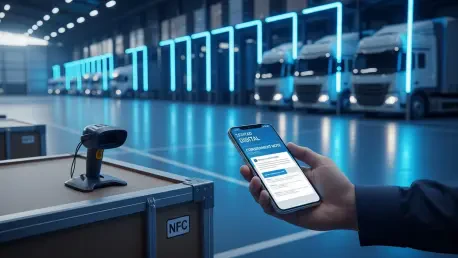
To solve the identity gap, developers are increasingly turning to the hardware already carried by almost every international driver: the biometric passport. By utilizing Near Field Communication (NFC), eCMR platforms can scan the ICAO-compliant chips embedded in travel documents to verify a driver’s identity. This process uses cryptographic handshakes to ensure the data on the chip is genuine and has not been tampered with. This method bridges the gap between digital convenience and government-grade security, providing a level of trust that simple username-and-password systems cannot match.
Furthermore, biometric verification adds a layer of non-repudiation that is essential for high-value cargo. When a driver’s identity is verified against a passport chip, it creates a robust link between the physical person and the digital transaction. This technical synergy between mobile devices and international ID standards is what makes the digital transition viable for carriers from outside the EU. It transforms the smartphone from a mere communication tool into a secure terminal capable of executing legally binding international contracts.
Emerging Trends and the Non-EU Identity Gap
Recent market observations reveal a troubling “Euro-centric” bias in many first-generation eCMR platforms. These systems often rely exclusively on the European Digital Identity (EUDI) wallet, which effectively ignores the 37% of international freight handled by vehicles registered outside the Union. This oversight creates a fragmented ecosystem where digital workflows only function for a portion of the fleet. However, a trend is shifting toward more inclusive identity solutions that recognize the global nature of trade, particularly on corridors connecting the EU to Turkey, Ukraine, and North Africa.
Industry behavior is changing as stakeholders realize that a “fair-weather” digital system is a liability. If a warehouse must maintain a parallel paper process for non-EU drivers, the efficiency gains of the digital system are halved. Consequently, there is a growing demand for platforms that provide a unified onboarding experience regardless of the driver’s nationality. This shift marks the beginning of a second wave of eCMR adoption, where interoperability and inclusivity are prioritized over simple regional compliance.
Real-World Applications and Industry Use Cases
The effectiveness of cross-border eCMR is most evident on high-volume trade corridors such as the route between Turkey and Germany. These corridors involve complex customs procedures and multi-national data handovers where paper documentation often causes significant bottlenecks. In the automotive sector, where “just-in-time” manufacturing is the norm, the ability to transmit digital proof of delivery instantly allows manufacturers to trigger automated workflows without waiting for a driver to return with a physical folder of documents.
In the textile industry, particularly on the Morocco-Spain route, the eCMR provides a level of security that was previously unattainable. Real-time visibility and secure handovers ensure that high-value shipments are tracked with precision. These use cases demonstrate that eCMR is more than just a digital version of a paper form; it is a data-rich tool that enables deeper integration between shippers and carriers. The ability to handle complex, multi-national data in a single digital environment is becoming a competitive advantage for logistics providers.
Technical Hurdles and Regulatory Obstacles
Despite the progress, the “identity gap” remains the most significant technical hurdle facing the industry. If non-EU drivers lack access to the digital tools required to sign consignment notes, the entire system risks a reversion to paper-based “fallback” methods. This fragmentation is particularly dangerous because it creates a two-tier system that can be exploited by bad actors. Without a robust, government-issued data verification method for all participants, the risk of “phantom carriers” and cargo fraud remains high, even in a digital environment.
Furthermore, the lack of a fully cohesive regulatory framework across all non-EU transit countries creates a patchwork of legal requirements. While the eFTI regulation provides a clear path forward for EU member states, the surrounding regions are moving at different speeds. Developers must navigate these varying standards to ensure their platforms remain compliant across every border. Mitigating fraud requires more than just better software; it requires a global consensus on how digital freight data is verified and shared between governments and private entities.
Future Outlook and the Transition Window
The transition period leading up to the 2027 mandate has turned into an era of intense pilot programs and stress testing. Logistics companies are using this window to identify where their digital chains break, specifically focusing on the onboarding of third-party carriers. The industry is moving toward a future where biometric integration is the standard, and the EUDI wallet is just one of many compatible identity sources. This evolution will likely lead to a fully cohesive, paperless European freight ecosystem that extends well beyond the borders of the EU itself.
Looking ahead, the integration of eCMR data with other digital documents, such as customs declarations and health certificates, will further reduce friction at border crossings. We are likely to see the emergence of “smart corridors” where digital documentation allows for automated gate entry and faster customs clearance. This holistic approach to digital freight will eventually render paper documents obsolete, not just because of regulation, but because the digital alternative will be demonstrably faster, cheaper, and more secure for every participant in the chain.
Assessment of the eCMR Digital Shift
The review of current eCMR implementations indicated that success depended entirely on moving beyond regional silos. It was observed that platforms relying solely on EU-specific identity tools failed to account for the integrated nature of global trade. The transition demonstrated that Advanced Electronic Signatures, when coupled with biometric passport verification, provided the only viable path for universal adoption. This approach did not just digitize a form; it established a verified trust layer that was previously absent from the logistics industry.
The long-term impact of this shift reached far beyond simple administrative efficiency. By closing the identity gap, the industry significantly reduced the opportunities for cargo crime and fraudulent impersonation. The move toward a more inclusive digital framework allowed for a smoother flow of goods across major trade corridors, proving that technological progress must be paired with operational reality. Ultimately, the shift to eCMR served as a blueprint for how global industries could successfully modernize by prioritizing interoperability and secure, universal authentication standards.