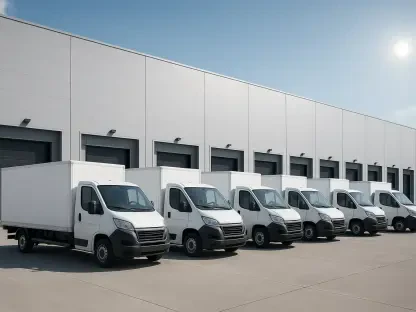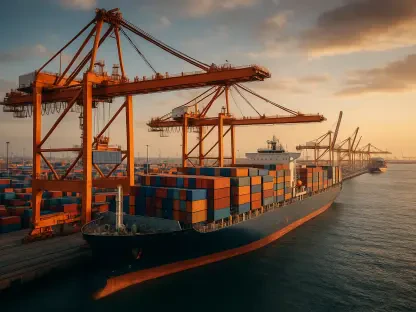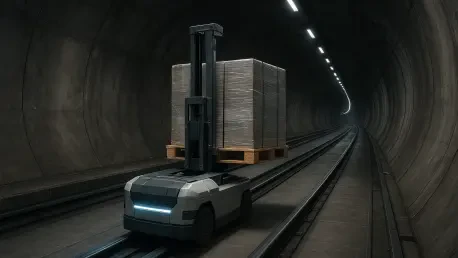

Japan is currently entering the field-testing phase of a massive automated road project designed to replace human-operated trucks with unmanned carriers. The so-called “2024 Problem” has evolved into a 2026 reality where the driver shortage is no longer a forecast but a daily operational hurdle for the archipelago. To combat this, the Ministry of Land, Infrastructure, Transport and Tourism is spearheading the “Autoflow” initiative. This project integrates automated palletized transport into the nation’s highway medians, shoulders, and even subterranean tunnels. By creating a 24/7 logistics backbone that functions independently of the traditional labor market, the government aims to decouple national productivity from a shrinking demographic. This isn’t just about software; it is a total redesign of the physical environment where freight moves. As the nation grapples with a rapidly aging population, this massive infrastructure pivot serves as a bold experiment in maintaining economic vitality through absolute automation in a controlled setting.
Technical Milestones and Design Specifications
Modernizing Infrastructure for High-Speed Freight
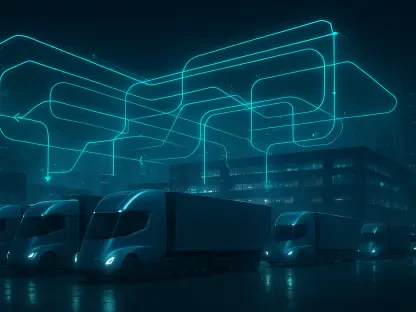
Recent trials at the National Institute for Land and Infrastructure Management in Tsukuba and Narita International Airport have specifically targeted the technical feasibility of multi-carrier operations. These tests involve “platooning,” where three or more unmanned electric carriers travel in a tight, synchronized formation to maximize throughput and minimize wind resistance. Engineers are carefully monitoring the ability of these units to handle complex maneuvers such as lane merging, diverging, and navigating the sharp curves often found in Japan’s mountainous highway geography. A significant evolution in the project’s scope occurred recently when the government dramatically upgraded the target operational speed for these carriers. Originally envisioned as a slow-moving conveyor system, the target has been increased to a range of 70 to 80 kilometers per hour. This adjustment was deemed necessary to ensure the automated road could match the efficiency and delivery windows of existing long-haul freight trucks.
Standardizing the Cargo Lifecycle
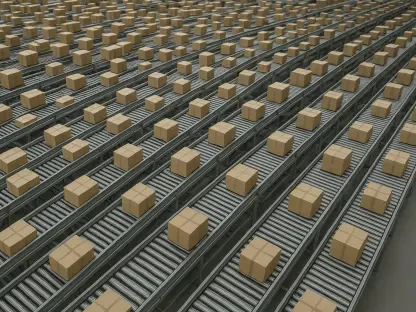
To address the rise of e-commerce and the resulting trend toward smaller, more frequent shipments, the system utilizes standardized pallet units. The operational workflow is highly automated: freight is loaded onto electric carriers at roadside hubs using unmanned equipment, travels autonomously along dedicated corridors, and is finally transferred to local vehicles for last-mile delivery. This infrastructure-centric approach seeks to bypass the unpredictability of public roads, such as weather and human error, by providing a controlled, interference-free environment for autonomous transit. Central to this efficiency is the move toward total standardization of cargo units. The system is designed around specific pallet dimensions—1.1 meters wide and 2.2 meters high—tailored specifically for “less-than-truckload” shipments. By standardizing the physical envelope, the system eliminates the complexities associated with diverse packaging and odd-sized loads, allowing for seamless transitions between automated forklifts and the carriers.
Economic Drivers and Industrial Collaboration
Preventing a Total Logistics Collapse
The primary catalyst for this massive investment is a projected 34% shortfall in transport capacity by fiscal year 2030. Japanese policymakers view the loss of long-haul drivers as a grave threat to the national economy that cannot wait for the slow evolution of self-driving software on public streets. Current estimates suggest that these automated roads could offset over 20% of the looming freight shortfall, providing a pragmatic buffer against the demographic crisis that threatens to halt the movement of goods across the archipelago. Japan’s preference for infrastructure-centric automation marks a distinct departure from the global trend of focusing solely on vehicle-based artificial intelligence. While many nations are focusing on developing self-driving trucks for existing roads, Japan is prioritizing dedicated freight space. This choice is rooted in the understanding that a controlled environment significantly lowers the technical threshold for full automation and reduces the risk of accidents.
A Massive Coalition of Corporate Stakeholders
This initiative is supported by a powerful consortium of 127 companies, including global leaders like Amazon Japan, retail giants like Seven-Eleven, and tech firms like NEC and Toshiba. This broad participation reflects an industrial consensus that the current logistics model is no longer sustainable. With the first segment of the Tokyo-Osaka corridor expected to be operational by the mid-2030s, the project represents a unified effort between the public and private sectors to future-proof the nation’s supply chain. The government and its corporate partners have set an ambitious timeline, choosing this specific corridor because it represents the most congested and economically vital transport artery in the nation. The successful implementation of the Tokyo-Osaka link will serve as a proof-of-concept for the rest of the country. As field testing continues, the consortium is also focusing on financial models where the costs of construction are shared between the public sector and the private companies involved.
Comparative Strategies and Future Challenges
Weighing Infrastructure Against AI-Driven Solutions
While Japan is doubling down on “hard” infrastructure to create a controlled environment, other nations like South Korea are taking a different path. South Korean firms are prioritizing the development of AI-driven autonomous trucks that can navigate existing highways and urban centers. Japan’s strategy acknowledges that its labor shortage is more immediate and dire, leading it to favor a “dedicated space” model that lowers the technical threshold for full automation. This choice highlights a fundamental tension in global logistics: whether to adapt the vehicle to the road or the road to the vehicle. In a public road environment, even the most advanced self-driving system must account for an infinite number of variables, from jaywalking pedestrians to weather anomalies. By removing these variables through physical separation, Japan is able to implement full automation much sooner than mixed-use roads. This strategy simplifies the insurance and liability frameworks, as the controlled tracks make it easier to maintain high safety standards.
Navigating Cost and Efficiency Hurdles
Despite the widespread support, the project faced significant scrutiny regarding its immense construction costs and potential operational bottlenecks. Building dedicated routes, particularly the expensive subterranean segments required for urban access, necessitated an estimated investment of 4 trillion yen. Critics and logistics experts pointed out the “double handling” problem as a major efficiency hurdle. Because the system operated on fixed routes, cargo had to be transferred twice—once at the start of the automated track and again at the end. This mirrored the historical limitations of rail freight, where the time and labor saved during transit were often offset by the complexity of the transfer hubs. To mitigate this, engineers worked on integrating automated loading docks that could move pallets directly from the carrier to local delivery bots without stopping. These early operational lessons highlighted the need for a seamless transition between the high-speed backbone and the capillary networks of city streets.
The transition toward a fully automated logistics network provided a blueprint for how aging nations could sustain critical infrastructure in the face of labor depletion. Policymakers and industry leaders learned that successful automation required more than just advanced robotics; it demanded a fundamental shift in how physical space was allocated within the national transport grid. Future considerations for other countries facing similar demographic shifts included the early standardization of cargo units and the integration of energy-efficient electric propulsion into the road design itself. This proactive approach allowed Japan to begin securing its supply chains before the projected 2030 capacity cliff reached a breaking point. The move toward dedicated freight corridors suggested that the most effective path to a driverless future was not to make vehicles smarter, but to make the roads more predictable. For global logistics firms, the key takeaway was the necessity of participating in infrastructure planning at the earliest stages.