
The relentless hum of diesel engines that has defined American commerce for over a century is finally meeting its match in the silent, calculating precision of artificial intelligence and automated systems. This technological shift is fundamentally altering the logistics landscape as companies prioritize energy efficiency and operational safety. While diesel fuel has long been the primary power source for moving goods across the United States, the emergence of autonomous platforms suggests that the historical dominance of petroleum is no longer an absolute certainty.
The Structural Shift: How Heavy-Duty Freight is Outgrowing its Petroleum Roots
Analyzing the historical dominance of diesel reveals a sector that has been deeply dependent on distillate fuels for long-haul and regional transport. This reliance stems from the high energy density and torque required to move massive loads across the vast American interstate system. However, the American logistics network is now outgrowing these petroleum-centric roots as heavy-duty freight segments, from highway trucking to inland maritime shipping, adopt high-tech alternatives. Key market players and technology developers are spearheading this transition by moving toward autonomous operations that promise to streamline every aspect of the supply chain.
The Sun Belt has emerged as a critical commercial testing ground for these large-scale driverless deployments. This region offers the infrastructure and climatic stability necessary for perfecting the software that guides autonomous trucks through complex highway environments. By focusing on these specific corridors, innovators are creating a blueprint for a nationwide rollout that could eventually decouple economic growth from diesel consumption. These developments indicate that the industry is shifting away from traditional mechanical brute force toward a model defined by intelligent data management and algorithmic precision.
Driving the Transition Through Intelligent Logistics and High-Tech Connectivity
Sophisticated Efficiency: The Rise of Platooning and Smart Route Optimization
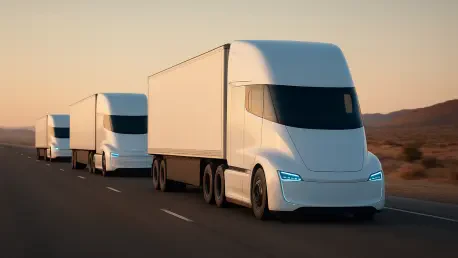
The mechanics of truck platooning offer a sophisticated way to reduce aerodynamic drag and fuel expenditure by linking vehicles in close-proximity convoys. These AI-enabled systems allow for synchronized braking and acceleration, which drastically lowers the energy required for high-speed travel. Beyond simple fuel savings, these technologies are eliminating wasteful idling and optimizing the routing of goods to ensure that assets are utilized at their maximum capacity. This level of coordination represents a departure from the isolated operation of traditional fleets, moving instead toward a unified, connected network.
Transitioning from experimental pilot programs to commercial-grade, driver-out operations is now a reality in many regional delivery networks. These deployments demonstrate that automation is not a distant goal but a present-day solution for increasing efficiency across various shipping lanes. As more companies integrate these systems into their daily logistics between 2026 and 2028, the traditional patterns of energy use in the freight sector are being permanently redrawn. The shift toward regional autonomous hubs further reduces the need for long-duration diesel idling, significantly lowering the carbon footprint of the average delivery.
Quantifying the Shift: Energy Consumption Benchmarks and Market Projections
Reviewing current U.S. Energy Information Administration (EIA) data provides a clear benchmark for petroleum demand within the transportation sector, highlighting the scale of the existing infrastructure. Performance indicators from early adopters like Aurora and Gatik have shown that autonomous operations can deliver significant improvements in energy efficiency that manual fleets cannot match. These metrics allow for realistic projections of potential diesel savings as the technology matures and scales across different freight lanes. By focusing on measurable outcomes, the industry is establishing a clear business case for the reduction of distillate fuel use.
Forecasting the long-term decoupling of freight volume growth from traditional distillate consumption is a central theme of recent industry reports. As automation becomes more prevalent, the amount of fuel required per ton-mile is expected to decrease steadily. This shift reflects a broader trend toward intelligent energy management that prioritizes precision and data over the simple consumption of raw resources. The successful integration of these technologies suggests that the era of peak diesel demand in the American freight sector is quickly approaching, driven by the relentless pursuit of operational efficiency.
Navigating the Roadblocks: Technical and Commercial Hurdles to Widespread Autonomy
Transitioning from human-operated fleets to scalable, automated manufacturing models involves navigating complex technical and commercial hurdles. Maintaining situational awareness in diverse environmental and maritime conditions remains a significant challenge for software developers who must account for every possible variable on the road. The shift requires a total reimagining of vehicle architecture and fleet management to ensure that automated systems can operate reliably over long periods without human intervention. Scaling these operations requires significant capital investment and a rethinking of how vehicles are assembled and maintained.
Overcoming the demands of the most complex supply chains is essential for ensuring consistent service and capacity across the nation. Strategies for addressing these roadblocks include the development of more resilient sensor technology and the creation of standardized protocols for autonomous vehicle interaction. Ensuring that these systems can work together seamlessly is a prerequisite for the widespread adoption of high-level autonomy in the freight sector. Companies must also address the commercial reality of integrating new technology into legacy systems that were designed for a different era of transportation.
The Framework of Progress: Harmonizing Policy with Autonomous Freight Innovation
The evolving regulatory landscape is playing a vital role in implementing safety standards for autonomous heavy-duty vehicles across various jurisdictions. State-level legislation has been instrumental in facilitating commercial routes between major logistics hubs, providing a clear legal framework for the industry to follow. Harmonizing these policies at the federal level is the next necessary step in creating a unified market for autonomous freight that spans the entire continent. These frameworks ensure that innovation does not outpace the ability of the government to manage safety and public interest.
Environmental mandates and carbon-reduction targets are further influencing the adoption of energy-efficient automation in the freight industry. As corporate entities look for ways to meet their internal sustainability goals, the efficiency gains offered by AI become an increasingly attractive proposition. The influence of these mandates ensures that the move toward automation is aligned with broader societal shifts toward energy conservation and reduced environmental impact. This alignment creates a powerful incentive for both the public and private sectors to support the continued modernization of the logistics network.
Beyond the Highway: Multimodal Automation and the Future Energy Profile
The expansion of AI into maritime logistics is creating new opportunities for efficiency, particularly with the introduction of autonomous tow vessels on major inland waterways. These systems provide a level of precision in navigation that was previously unattainable, reducing fuel consumption and improving safety for barge transport. This multimodal approach ensures that the benefits of automation are felt throughout the entire logistics ecosystem, not just on the highways. The integration of AI into waterborne transport marks a significant expansion of the technology’s reach into traditionally conservative shipping sectors.
Emerging market disruptors are also being seen in the convergence of electrification and autonomous software, creating a powerful combination for energy reduction. Consumer goods giants are leading the way by integrating these technologies into their distribution networks to lower costs and improve service reliability. The involvement of these major players dictates future market trends, pushing the entire industry toward a more integrated and autonomous energy profile. This corporate integration ensures that the technology moves from the fringes of the industry to the core of the American supply chain.
Charting a Leaner Path: Final Verdict on the Post-Diesel Freight Economy
The technological and operational milestones achieved during this transition signaled a definitive peak in American diesel demand. Industry leaders who pivoted toward modernization successfully insulated their operations against energy price volatility and labor shortages. This structural shift ensured that the supply chain became a leaner, data-driven entity that prioritized safety and efficiency over traditional fuel consumption. The move away from petroleum-heavy logistics proved to be a necessary step in stabilizing the national economy against future energy fluctuations.
Future considerations for the industry involved the continued expansion of cross-modal autonomous networks and the refinement of energy management software. New insights into AI-driven logistics prompted a move toward completely integrated energy profiles that utilized software to minimize the environmental footprint of heavy-duty transport. By finalizing the modernization of U.S. freight logistics, stakeholders secured a resilient path for long-term economic growth. The transition ultimately demonstrated that the synergy between artificial intelligence and automated machinery provided a more sustainable foundation for the movement of goods.