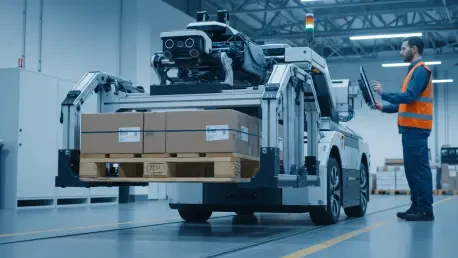

The rapid disappearance of traditional forklifts from the modern warehouse floor is not merely a trend but a fundamental shift in how global commerce manages its physical burden. This transition is fueled by the realization that human laborers spend nearly half of their shifts simply walking between pick locations and packing stations, a metric that represents a staggering loss of potential throughput. By bridging the gap between static inventory software and dynamic hardware, the integration of Autonomous Mobile Robots (AMRs) has moved from a futuristic luxury to a functional necessity. This review examines the sophisticated ecosystem required to turn these mechanical units into a synchronized workforce, focusing on the strategic shift toward holistic automation and the technical architecture that supports it.
The Evolution of Autonomous Integration in Logistics
The journey of autonomous systems in the material handling sector has transitioned from experimental hardware silos to integrated ecosystems where software and machinery coexist. Historically, companies like HOJ Innovations focused on the digital architecture of inventory management, ensuring that data was accurate while the physical movement remained manual. As the labor market tightened and consumer expectations for rapid delivery surged, the focus shifted toward a hybrid model. This evolution marks the move from simple software-centric tools to a comprehensive automation interface where the digital “brain” directly commands a physical fleet.
This technological shift is significant because it treats automation as a consultative process rather than a retail purchase. The transition involves a deep understanding of warehouse flow, moving beyond the capabilities of a single robot to the orchestration of an entire facility. By integrating these systems into existing workflows, the industry has moved toward a more resilient supply chain model. This approach minimizes the friction between digital orders and physical fulfillment, setting a new standard for how middle-mile logistics are handled in a high-demand economy.
Core Components and Technical Architecture
WarehouseOS and Software Orchestration
At the center of this robotic revolution lies WarehouseOS, a proprietary system that acts as the primary conductor for the entire facility. Unlike standard warehouse management systems that merely record data, this orchestration layer functions as the central intelligence, assigning tasks based on real-time priorities. It translates complex customer orders into actionable paths for robots, ensuring that every movement is calculated for maximum efficiency. This software is what allows a robot to know exactly when a human picker has finished a task, creating a seamless handoff that eliminates idle time.
The significance of this software orchestration cannot be overstated, as it provides the granular control necessary to manage diverse fleets. By acting as the “brain,” it allows for a level of coordination that prevents traffic congestion and optimizes pick-and-pack sequences. This digital framework ensures that the hardware is never operating in a vacuum, but is instead part of a larger, data-driven strategy. Without this level of software sophistication, the most advanced robot would remain an isolated tool rather than a productive team member.
SEER Robotics Control Systems and Navigation
For a robot to navigate a bustling industrial environment without human intervention, it requires a sophisticated internal guidance system. The integration of SEER Robotics control systems provides the necessary “navigation brains” to handle complex, ever-changing floor plans. These systems utilize a suite of advanced sensors, including LiDAR and 3D cameras, to map environments in real-time. This allows for a high degree of customization, enabling the robots to navigate around temporary obstacles, human workers, and other machinery without losing their orientation or compromising safety.
These navigation systems are unique because they offer a level of adaptability that traditional automated guided vehicles lack. While older systems required magnetic strips or fixed wires, these modern control systems allow for “natural feature navigation.” This means the robots recognize their surroundings and can be reprogrammed or rerouted through software adjustments rather than physical infrastructure changes. This flexibility is vital for manufacturing plants that frequently reorganize their production lines to accommodate new products or seasonal demands.
Hardware Diversity: From Tote Handlers to Heavy Lifters
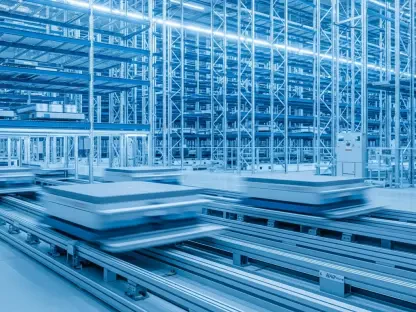
The physical manifestations of this technology range from agile units to massive industrial movers. Small conveyor-top robots are designed for the rapid transport of totes and small parcels, often used to bridge the gap between picking zones and sortation areas. These units excel in high-speed e-commerce environments where small-item accuracy is paramount. In contrast, heavy-duty pallet movers represent the muscle of the operation, with some units capable of lifting and transporting loads up to 6,600 pounds.
The performance characteristics of these different classes allow a single facility to automate multiple levels of its operations. A heavy-duty robot might move raw materials to a production line, while smaller units handle the finished goods heading to the shipping dock. This diversity in hardware ensures that the automation strategy is not a one-size-fits-all solution but a tailored application based on the specific weight, volume, and velocity of the goods being handled.
Emerging Trends in Robotic Systems Integration
The industry is currently moving away from the manufacturer-direct model toward a specialized “system integrator” approach. This trend emphasizes the importance of engineering-led consulting, where the focus is on how a robot fits into a specific workflow rather than the specs of the robot itself. To facilitate this, R&D “playgrounds” have become essential for simulating real-world scenarios before deployment. These simulation spaces allow engineers to stress-test the interaction between humans and robots, ensuring that the integration will hold up under the pressures of a live production environment.
Another notable trend is the move toward smaller, more maneuverable footprints. Traditional forklifts require wide aisles and significant turning radiuses, which dictates a warehouse’s storage density. Modern AMRs, however, are designed to operate in much tighter spaces, allowing companies to reclaim valuable square footage for inventory. This shift toward compact automation is enabling a more efficient use of real estate, which is particularly critical in urban fulfillment centers where space comes at a premium.
Real-World Applications and Industrial Impact
In the field of e-commerce fulfillment, the impact of these systems is seen in the “technical dance” between human workers and autonomous units. Instead of a picker walking miles every day to deliver items to a pack station, the robot meets the picker at the aisle, takes the completed cart, and transports it autonomously. This collaboration recovers lost production time and significantly reduces physical fatigue, allowing humans to focus on the qualitative aspects of their jobs. In heavy manufacturing, these robots are used to stage components for curing or assembly, moving massive loads with a precision that manual operators would struggle to match.
The deployment of these systems has also redefined horizontal transportation across various industries. By automating the “taxi” service of goods, facilities can maintain a constant flow of materials without the bottlenecks caused by human breaks or equipment downtime. This constant movement ensures that downstream processes are always supplied, effectively smoothing out the peaks and valleys of a typical workday. The result is a more predictable and scalable operation that can handle sudden spikes in demand without requiring a massive increase in temporary labor.
Implementation Challenges and Safety Standards
Despite the clear advantages, the integration of AMRs is not without technical hurdles. Retrofitting an existing facility to accommodate autonomous movement requires a careful audit of floor conditions, Wi-Fi connectivity, and aisle clearances. Furthermore, the proximity of humans and high-speed robots necessitates rigorous safety certifications, such as UL and CE standards. These certifications ensure that the robots possess the necessary “kill switches” and proximity sensors to prevent accidents in shared workspaces, which is a non-negotiable requirement for modern industrial environments.
Infrastructure expansion and the need for reliable power management also present ongoing challenges. Deploying a fleet of robots requires a robust charging strategy that does not interfere with daily operations. Many organizations are turning to consultative approaches to solve these issues, ensuring that the engineering behind the deployment is as solid as the hardware itself. While the initial setup can be complex, the long-term mitigation of these limitations through better facility design and smarter software is the primary focus of current development efforts.
Future Trajectory of Autonomous Material Handling
The path forward for this technology involves a deeper, more intuitive integration between AI-driven navigation and the warehouse ecosystem. Future developments are expected to focus on predictive analytics, where the system anticipates a surge in orders and pre-positions robots in high-traffic zones. This move from reactive to proactive automation will further enhance efficiency. Additionally, breakthroughs in machine learning will likely allow robots to “learn” more efficient paths over time, adapting to subtle changes in the environment without manual reprogramming.
As global supply chains become more complex, the long-term impact of these autonomous systems will be felt in the overall speed and reliability of trade. The goal is to create a fully orchestrated environment where every movement is optimized by a central intelligence. This will likely lead to a new standard in warehouse efficiency, where the distinction between “software” and “hardware” disappears into a singular, high-performance logistics machine that can adapt to any market condition.
Summary of Findings and Strategic Assessment
The analysis of autonomous integration revealed that the most successful implementations prioritized pragmatic, “bang-for-the-buck” automation over flashy, unnecessary features. By focusing on reducing human walking time and maximizing existing space, the current generation of AMRs provided a measurable return on investment. The technology demonstrated a remarkable ability to transform the human-robot workplace dynamic, turning potential competitors into a collaborative workforce. This synergy was achieved through a combination of proprietary software like WarehouseOS and advanced navigation controls that allowed for high levels of customization.
Ultimately, the transition to autonomous logistics was driven by the necessity for speed and the reality of a shrinking labor pool. The shift from manual material handling to integrated robotic fleets proved to be a vital step for companies looking to maintain a competitive edge. The integration process highlighted that while hardware is the visible component, the underlying software and engineering expertise were the true catalysts for success. These systems established a foundation for a more resilient and efficient supply chain, proving that the future of the industry depends on the seamless orchestration of digital and physical assets.