
The conversation surrounding industrial automation has fundamentally shifted from a narrow focus on replacing individual tasks to a broader strategic vision of enterprise-wide operational transformation. Autonomous Material Handling (AMH) is at the heart of this evolution, representing a significant advancement in the logistics, manufacturing, and distribution sectors. This review explores the progression of AMH technology, its core features, performance metrics, and its profound impact on various applications, using the strategic adoption by G&J Pepsi as a central case study. The purpose of this analysis is to provide a thorough understanding of the technology’s current capabilities and its potential for future development.
An Introduction to Modern Autonomous Systems
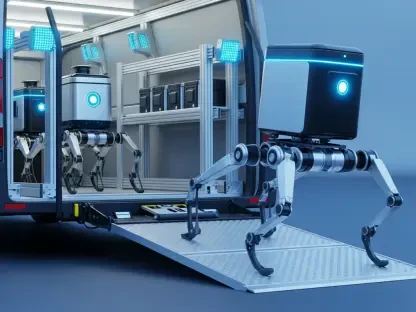
The core principles of Autonomous Material Handling have evolved dramatically from their origins. Early systems, known as automated guided vehicles (AGVs), were largely dependent on fixed infrastructure like magnetic tape or wires, limiting their flexibility. Today’s autonomous mobile robots (AMRs) represent a leap forward, utilizing advanced sensors, AI, and mapping technologies to navigate dynamic environments intelligently and safely without requiring modifications to the facility. This transition from guided to autonomous operation has unlocked new levels of operational agility.
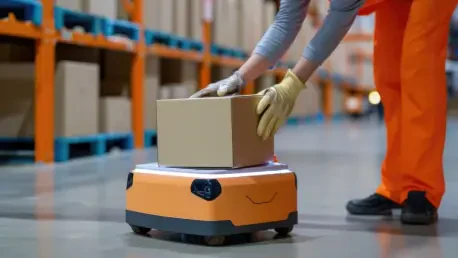
This technological advancement is particularly relevant in the current industrial landscape. Companies face persistent challenges, including labor shortages for repetitive yet physically demanding roles, intense pressure to increase operational efficiency, and an unwavering focus on enhancing workplace safety. Modern autonomous systems directly address these issues by automating strenuous material transport tasks, allowing human employees to concentrate on more complex, value-added responsibilities while creating a more predictable and secure work environment.
Key Technologies and Platform Features
Accessible Autonomy The DriveMod System
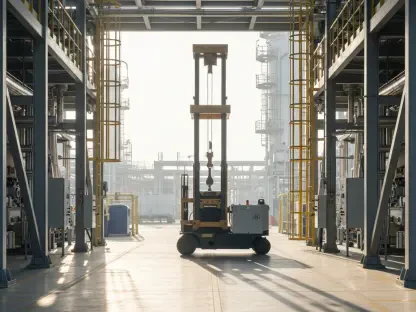
A pivotal development in AMH is the emergence of retrofittable solutions like Cyngn’s DriveMod, which can be installed on existing industrial vehicles, such as the widely used Motrec MT-160 tuggers. This approach fundamentally alters the accessibility of automation. Instead of requiring massive upfront capital investment in a new fleet of purpose-built robots, companies can upgrade their current assets. This model dramatically lowers the financial barrier to entry, making sophisticated autonomy a viable option for a broader range of organizations.
The significance of this retrofittable technology extends beyond cost savings. By enabling autonomy on existing equipment, it eliminates the need for major, disruptive infrastructure modifications that were once a prerequisite for automation. This turnkey approach minimizes operational downtime during implementation and accelerates the path to realizing a return on investment, fostering greater confidence among adopters who can see tangible benefits without overhauling their established workflows.
Scalability and Seamless Fleet Integration
Modern AMH platforms are defined by sophisticated software and management systems that enable their seamless integration into existing warehouse operations. These systems allow for centralized command and control of autonomous fleets, facilitating smooth coordination between human-driven vehicles and their autonomous counterparts. This interoperability ensures that automation enhances, rather than disrupts, the established operational rhythm of a facility.
This built-in scalability provides a clear pathway for organizations to expand their autonomous capabilities methodically. G&J Pepsi’s recent decision to grow its fleet of DriveMod Tuggers across its distribution network serves as a prime example. Their commitment to a multi-vehicle expansion, even before finalizing deployment locations, underscores a deep confidence in the technology’s adaptability and proven performance. It illustrates how an initial successful deployment can pave the way for a strategic, enterprise-wide adoption aimed at driving productivity improvements across the board.
Current Trends in Technology Adoption
One of the most significant current trends is the industry’s shift away from viewing automation as a single-task solution toward embracing it as a versatile, strategic capability. Previously, a company might seek an autonomous solution for one specific, problematic workflow. Today, forward-thinking organizations recognize that a flexible autonomous platform can be deployed across an entire enterprise to drive consistent value and standardize operational excellence.
This evolving perspective is reshaping investment and implementation strategies. The decision by G&J Pepsi to secure a new fleet of autonomous vehicles without pre-assigning them to specific facilities highlights this trend perfectly. It reflects a high-level confidence that the technology’s value is not tied to a single use case but is broadly applicable across various operational contexts, providing a scalable method for improving productivity wherever it is deployed.
Applications in High-Volume Distribution
In the demanding environment of G&J Pepsi’s distribution network, the real-world application of AMH demonstrates its immediate value. DriveMod Tuggers are deployed to handle the repetitive and physically strenuous task of transporting materials throughout dynamic warehouse settings. These vehicles consistently and reliably move goods between staging, packing, and loading zones, streamlining workflows that are critical to high-volume operations.
By automating these foundational tasks, the technology yields significant gains in productivity and operational consistency. The autonomous tuggers maintain a steady pace without breaks or fatigue, ensuring a predictable flow of materials that is crucial for meeting tight delivery schedules. This not only increases throughput but also enhances the overall efficiency of the distribution center, allowing the company to meet market demands more effectively.
Addressing Challenges and Overcoming Barriers
Historically, the widespread adoption of automation has been hindered by several common challenges, including prohibitive implementation costs, the perceived complexity of integration, and the risk of significant operational disruption. For many businesses, the prospect of a massive capital outlay combined with a lengthy and complicated deployment process made automation an impractical goal.
Modern AMH platforms have been engineered specifically to mitigate these limitations. Retrofittable systems, in particular, offer a more accessible and less disruptive path to automation. By reducing upfront investment and eliminating the need for major facility overhauls, these solutions provide a clearer and faster return on investment. This approach has been instrumental in building customer confidence and demonstrating that automation can be an attainable and strategically sound decision.
Future Outlook and Industry Trajectory
The trajectory of AMH technology points toward even greater intelligence and integration. Future breakthroughs are expected to center on enhanced AI-driven decision-making, allowing autonomous vehicles to handle increasingly complex and unpredictable scenarios with greater efficiency. Furthermore, developments in machine learning will enable these systems to continuously learn from their operational environment and optimize their performance over time.
A key aspect of the long-term outlook is the push toward greater interoperability between different autonomous systems, regardless of the manufacturer. The ultimate goal is to create a cohesive, interconnected ecosystem where robots, vehicles, and management software communicate seamlessly. This level of integration promises to build a more resilient, efficient, and data-driven supply chain capable of adapting to future disruptions and demands.
Conclusion The Strategic Imperative of Automation
This review confirms that Autonomous Material Handling has evolved from a nascent concept into an accessible and strategically vital tool for modern industrial operations. The technology’s capacity for seamless integration, scalability, and its ability to deliver a clear return on investment are the primary drivers behind its accelerating adoption across the logistics and manufacturing sectors.
The strategic expansion by G&J Pepsi served as a definitive case study illustrating this industrial shift. It demonstrated how organizations have leveraged AMH not just to solve an immediate task but as a foundational pillar for achieving long-term growth and competitiveness. This move away from tactical problem-solving toward strategic, enterprise-wide implementation underscored the new imperative of automation in shaping the future of industry.