
Rohit Laila brings decades of deep-seated experience to the logistics and supply chain sector, having witnessed firsthand the shift from manual labor to sophisticated robotic integration. As an expert who is deeply passionate about how technology can solve the most pressing challenges in delivery and warehouse management, he has helped numerous organizations navigate the complexities of moving perishable goods at scale. His perspective is rooted in the belief that innovation is not just about speed, but about maintaining the integrity and quality of the products that families put on their dinner tables every day.
The following discussion explores the transformation of grocery distribution, covering the integration of storage and picking into single-flow systems and the use of intelligent software to automate inventory protocols. We delve into how high-density storage grids enable massive SKU expansion within existing footprints and the ways automated sequencing creates store-friendly pallets to assist retail staff. Furthermore, we examine how digital transparency ensures food safety and how modular automation provides a buffer against labor shortages and seasonal spikes, ultimately driving down costs for the end consumer.
Conventional distribution systems often treat storage and picking as separate functions, which can be too slow for perishables. How do modern robotic systems integrate these steps into a single continuous flow, and what specific metrics demonstrate the resulting improvement in product freshness?
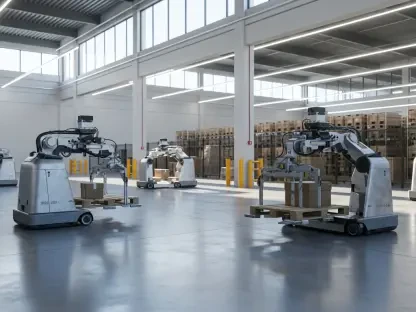
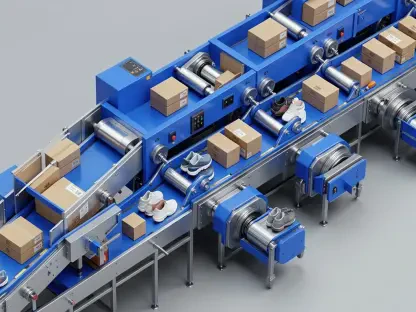
In the past, the wall between storage and picking created a bottleneck that was a death sentence for delicate produce like leafy greens or berries. Modern robotic systems have shattered that wall by combining high-speed storage, handling, sequencing, and picking into one unified, continuous flow from the moment a crate hits the loading dock to the moment it leaves for the store. By eliminating the transit time between separate warehouse zones, we can move inventory through the system much faster, ensuring that the product spends the absolute minimum amount of time in the distribution center. This streamlined approach directly translates to more “shelf life” days for the retailer, meaning the customer gets a peach that is firm and fresh rather than one on the verge of spoiling. We see the success of this integration in the drastic reduction of dwell time, allowing us to maintain a cold chain that is never interrupted by manual staging or redundant handling steps.
Inventory management for fresh produce relies heavily on strict FIFO and FEFO protocols to minimize spoilage. Could you walk through how intelligent control software automates these movement decisions in real time and describe the practical impact this has on reducing warehouse waste?
The beauty of intelligent warehouse control software lies in its ability to act as a digital brain that never sleeps, meticulously tracking every single barcode as it enters the facility. Instead of a human worker trying to read labels on a pallet, the software identifies the origin and expiration data of each batch and automatically assigns its priority based on First In, First Out (FIFO) or First Expired, First Out (FEFO) principles. The system makes real-time decisions, directing robotic arms or gantry cranes to grab the oldest viable stock first, ensuring nothing gets “lost” in the back of a dark cooler. This level of precision virtually eliminates the “shrink” or waste that typically plagues manual warehouses where human error might lead to a newer shipment being sent out before an older one. When you reduce spoilage through automated rotation, you aren’t just saving money; you are ensuring that the inventory on the shelf is of the highest possible nutritional quality.
Grocers face pressure to expand organic and specialty selections, but facility footprints are often fixed. How do overhead gantry robots and high-density storage grids allow for a 50% increase in SKU capacity, and what does the step-by-step process of retrieving a specific crate look like?
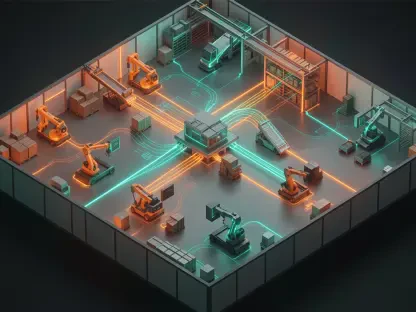
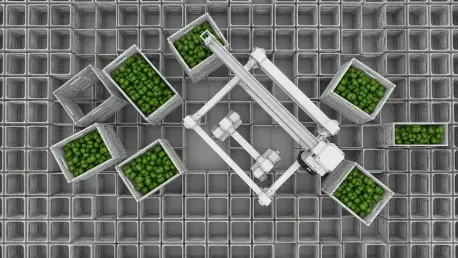
When a grocery store wants to double its organic offerings but cannot afford to build a new warehouse, we look upward to overhead gantry robots that operate on a structured storage grid. These systems are incredibly efficient because they remove the need for wide, forklift-accessible aisles and bulky racking, allowing us to pack crates tightly together on the floor. When a specific SKU is needed, the gantry robot glides over the top of the grid, identifies the exact coordinates of the crate, and uses a specialized gripper to lift it directly from the stack. If the required crate is buried, the robot can rapidly reposition the crates above it to other nearby stacks, retrieve the target, and then return the moved crates to their place. This high-density configuration can increase a facility’s storage capacity by up to 50%, providing the physical room needed to manage a much wider variety of specialty and seasonal goods without expanding the building’s walls.
Distribution efficiency is only one part of the equation; the labor at the retail storefront is also critical. How do automated sequencing and the creation of store-friendly pallets simplify the stocking process for employees, and how does this reliability change the way stores manage their daily inventory?
The ripple effect of automation reaches all the way to the teenager stocking shelves at 5:00 AM, thanks to the concept of “store-friendly” pallets. In an automated system, the robots sequence the crates so that they arrive at the store in the exact order they appear on the aisles—for example, all the root vegetables together, followed by the citrus. This means the store employee doesn’t have to crisscross the floor or sort through a chaotic jumble of boxes, which makes the stocking process significantly faster and less physically taxing. This reliability allows store managers to move toward leaner inventory models, trusting that their daily shipments will be accurate and easy to process. When the backroom isn’t cluttered with unsorted pallets, the store can focus its energy on customer service and maintaining the visual appeal of the fresh produce sections.
Consumers and regulators are increasingly demanding to know the exact origin and handling history of fresh food. How do automated scanning and integrated software capture batch data throughout the distribution chain, and how does this level of transparency support food safety compliance?
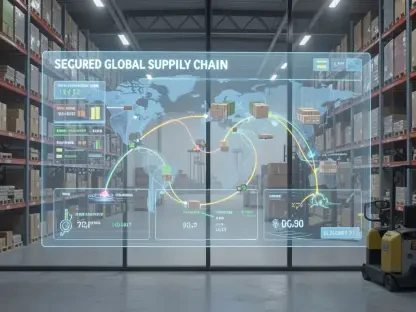
Transparency is no longer a luxury; it is a regulatory and consumer requirement that modern automation is uniquely equipped to handle. Every time a crate moves through an automated system, it is scanned, and its data—including batch information, origin, and its journey through the facility—is logged into an integrated software database. This creates a digital breadcrumb trail that provides end-to-end traceability, allowing a retailer to pinpoint the exact location of a specific batch within seconds if a food safety concern arises. Beyond just compliance, this data empowers retailers to be honest with their customers about where their food comes from, whether it was locally sourced or imported. This level of granular detail builds a profound sense of trust, as shoppers feel confident that the grocer has total control and visibility over the safety of the products they are selling.
Labor shortages and seasonal demand spikes often disrupt supply chain consistency. What are the advantages of using modular, pre-engineered automation components to handle these fluctuations, and how can a successful automation model be replicated across different regional distribution centers with unique layouts?
The grocery industry is notoriously volatile, facing everything from sudden labor shortages to the massive demand spikes of the holiday season. Modular, pre-engineered automation components are the answer to this instability because they offer a “Lego-like” flexibility; we can scale the system up or adjust the configuration without redesigning the entire operation from scratch. These standardized units can be installed in a variety of facility layouts, meaning a successful automation blueprint used in a large Midwest hub can be adapted for a smaller, awkwardly shaped coastal facility. This modularity ensures that the distribution center can maintain a consistent output regardless of how many workers show up or how high the order volume climbs. By replicating a proven model across different regions, a retail chain can ensure a uniform standard of freshness and availability for all its customers, regardless of their geography.
While automation requires an initial investment, it is designed to protect long-term margins. In what ways does increased picking accuracy and order-building productivity lower overall distribution costs, and how does this efficiency eventually translate into better value for the end consumer?
Protecting margins in the grocery world is a game of pennies, and automation wins that game by eliminating the hidden costs of human error. Increased picking accuracy means that we are no longer paying to ship the wrong items or dealing with the expensive logistics of returns and discarded stock. Furthermore, the massive boost in order-building productivity allows a facility to process more volume with the same or fewer resources, significantly lowering the cost per case handled. When you combine fewer picking errors with a dramatic reduction in spoilage and waste, the overall cost of the distribution operation drops. While these savings might not immediately slash the price of an organic avocado, they allow the retailer to maintain competitive pricing and provide consistent value even as inflation and fuel costs rise, effectively shielding the consumer’s wallet.
What is your forecast for the future of fresh food logistics?
I believe we are entering an era where the “dark warehouse” for perishables will become the standard, where the time from farm to fork is cut by 30% or more through hyper-local automated micro-fulfillment centers. We will see AI-driven forecasting that doesn’t just react to what was sold yesterday but predicts what will be needed tomorrow based on weather patterns and local events, allowing the automated systems to pre-stage inventory before the order is even placed. Ultimately, my forecast is that the distinction between “logistics” and “quality control” will disappear entirely; the system that moves the food will be the very same system that guarantees its nutritional peak and safety. This will lead to a more resilient food supply chain where waste is a relic of the past and fresh, high-quality produce is accessible to every community, regardless of their distance from the field.