
The relentless acceleration of e-commerce and persistent supply chain disruptions have transformed the modern warehouse from a simple storage facility into a high-stakes nerve center for global commerce. In this environment, operational efficiency is no longer a goal but a baseline requirement for survival, pushing warehouse management systems (WMS) to their absolute limits. While artificial intelligence is frequently touted as the solution, many organizations struggle to distinguish between superficial marketing claims and genuinely transformative capabilities. The most effective application of AI in warehouse operations depends on a well-designed framework that moves beyond buzzwords to deliver tangible value, focusing on practical tools deeply embedded within the WMS to accelerate deployment, enhance real-time performance, and ensure long-term strategic adaptability. This shift requires a discerning eye for features that offer immediate impact and a foundation for future growth.
Streamlining Operations from Day One
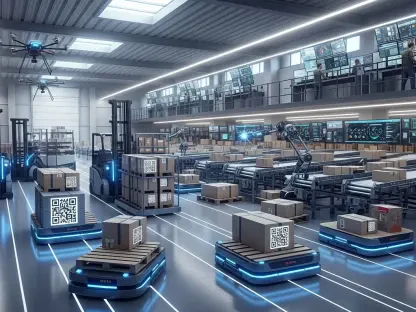
A truly intelligent WMS leverages artificial intelligence to fundamentally reshape both its initial implementation and its daily operational command. Historically, deploying a new WMS has been a notoriously complex, time-consuming, and risk-laden process, often requiring extensive consulting and custom coding. A premier system now utilizes AI-guided configuration advisors and intuitive, wizard-driven workflows to dramatically shorten this timeline. This approach not only reduces the upfront investment but also mitigates the risk of costly errors, allowing businesses to realize value faster. This intelligence extends directly into user adoption through embedded in-app support, where an AI acts as an integrated help agent. This feature empowers teams to resolve queries and learn the system independently, accelerating training and fostering self-sufficiency. Once operational, the AI transitions to orchestrating the live environment, enabling the WMS to actively monitor conditions and make intelligent, on-the-fly adjustments. It can automatically reassign tasks to available workers to clear backlogs, escalate priorities to prevent bottlenecks, and dynamically adjust workflows to maintain peak productivity as circumstances change in real time.
Building a Foundation for Future Innovation
To maintain a competitive edge in a landscape of continuous technological advancement, a WMS must be architected for the future. An investment in a closed, proprietary system, regardless of its current capabilities, is a significant strategic risk. The pace of AI innovation means that today’s cutting-edge algorithm could be obsolete tomorrow. Therefore, a critical must-have feature is a future-proof and open architecture designed to evolve alongside ongoing AI developments. This requires an open ecosystem that supports seamless integration with external, third-party AI tools and platforms. Such flexibility ensures that an organization is not locked into a single vendor’s technology roadmap and can adopt new, best-in-class innovations as they emerge from the broader market. This capability transforms the WMS from a static software purchase into a dynamic, adaptable platform. It protects the long-term value of the initial investment by guaranteeing that the system can incorporate next-generation tools for predictive analytics, machine learning, and automation, securing its relevance and effectiveness for years to come.
The Strategic Imperative of Integrated Intelligence
Ultimately, the success of an AI-powered WMS was determined not by a checklist of features, but by how thoughtfully these capabilities were integrated into a cohesive operational strategy. The most forward-thinking decision-makers sought a system that delivered a clear, compounding advantage across the entire lifecycle of the platform. This began with a commitment to faster and simpler deployment, which minimized disruption and accelerated the return on investment. This foundation then supported smarter execution, where real-time decision-making and autonomous optimization translated into tangible gains in throughput and efficiency on the warehouse floor. Finally, the strategic flexibility afforded by an open architecture ensured the system could adapt and grow, protecting the business from technological obsolescence. This holistic approach recognized that true intelligence in a WMS was about creating a resilient, agile, and future-ready logistics backbone capable of navigating the complexities of the modern supply chain.