
Groundbreaking engineering projects are being designed at an unprecedented pace, yet their success is often tethered to procurement strategies that remain painfully slow and outdated. In today’s landscape, the most innovative designs can be rendered obsolete by a single unavailable component, transforming supply chain management from a logistical function into a core engineering challenge. As companies navigate intense market pressures, the gap between rapid project cycles and lagging procurement plans exposes them to significant financial and operational risks, demanding a more integrated and forward-thinking approach. Traditional procurement methods, built for a more stable era, are no longer sufficient to manage the technical integrity and timelines of increasingly complex electrical systems.
When Innovation Outpaces Inventory
In many organizations, engineering teams operate in an agile, fast-moving environment, iterating on designs and pushing the boundaries of technology. In contrast, procurement departments often work on much longer, more rigid planning cycles, which creates a fundamental disconnect. This asynchronous workflow means that by the time a component is specified in a design, its lead time may have already extended beyond the project’s deadline, or its cost may have escalated beyond the budget.
This gap between design speed and material acquisition exposes companies to severe vulnerabilities. When supply and demand fall out of sync, mission-critical systems face costly delays and potential redesigns. For sectors with tight margins and zero tolerance for failure, such as aerospace and defense, the consequences can be catastrophic. Proactive procurement that is deeply integrated with the engineering process is no longer a competitive advantage; it has become a prerequisite for operational survival.
Confronting the Realities of a Modern Supply Chain Crisis
The modern electrical supply chain is facing a multi-faceted crisis defined by sharply rising costs and dramatically longer lead times for critical components. Commodity volatility has intensified these pressures, with recent market behavior showing a 30% surge in silver prices, a key material in many electronic applications. This instability is not an isolated event but part of a broader trend of market unpredictability.
Compounding this issue is a tightening global copper supply, driven by a combination of constrained mining capacity and the accelerating pace of global electrification. As demand for electric vehicles and renewable energy infrastructure soars, the competition for essential raw materials grows fiercer. This dynamic transforms the supply chain from a predictable system into a highly contested and volatile environment where foresight and strategic partnerships are essential for securing necessary resources.
Bridging the Gap with Vendor Managed Inventory
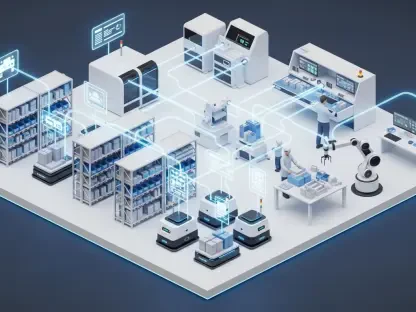
To counter these formidable challenges, Vendor Managed Inventory (VMI) has emerged as a practical and effective solution. VMI systems operate on a foundation of shared visibility and continuous, real-time monitoring of material usage directly at customer facilities. By placing inventory management in the hands of the supplier, companies can ensure that stock levels are optimized based on actual consumption, not on forecasts that can quickly become obsolete.
This approach creates a unified data source that serves both procurement and engineering departments, offering a clear and immediate view of stock levels, incoming shipments, and component status. The transparency afforded by VMI allows design decisions to be more closely aligned with real-world material availability, preventing engineers from designing around components with prohibitive lead times. Moreover, it supports crucial technical oversight, such as shelf-life monitoring for sensitive materials, while simultaneously reducing administrative burdens.
From Theory to Practice VMI Delivers Tangible Results
The primary benefit of a well-executed VMI program is a significant enhancement in supply chain resilience, particularly during unexpected disruptions. A compelling case study illustrates this point: a customer facing an immense 50-week lead time for a specialized cable was at risk of a major production halt. Through their VMI partnership, an approved, in-stock alternative was identified and delivered in just four weeks. This rapid pivot not only prevented a costly delay but also saved the company approximately $55,000.
Such outcomes demonstrate that VMI is far more than a logistical tactic; it is a strategic tool that directly impacts the bottom line and production timelines. By ensuring a steady flow of critical components, VMI minimizes the operational downtime that can cripple manufacturing and assembly lines. The result is a more agile, responsive, and reliable production environment capable of withstanding market shocks.
Building a Framework for Visibility and Continuity
Successful VMI programs are built on more than just technology; they depend on strong, collaborative relationships with suppliers who possess deep specialist expertise. This partnership provides crucial early insights into market shifts, allowing businesses to anticipate potential component shortages or price fluctuations long before they impact production. An expert supplier can act as an early warning system, giving companies the time needed to adapt their strategies.
Ultimately, procurement models that prioritize visibility, continuity, and real-time data alignment are becoming essential for managing the technical integrity of modern systems. By integrating supplier expertise directly into the procurement framework, businesses can ensure compliance with evolving industry standards and navigate the complexities of global sourcing. This collaborative approach transformed the supply chain from a potential liability into a source of strategic strength and resilience. The most effective VMI solutions were not merely transactional but relational, creating a foundation of trust and shared data that fortified operations against uncertainty and protected the integrity of complex engineering projects.