
Rohit Laila is a seasoned veteran in the logistics and supply chain sector, bringing decades of experience that bridge the gap between traditional delivery methods and cutting-edge technological innovation. As the global economy becomes increasingly dependent on the seamless movement of goods, his insights into the “invisible” infrastructure of warehousing offer a vital perspective on how products journey from the factory floor to the consumer’s doorstep. This conversation explores the mounting financial pressures facing the industry, the strategic importance of distribution hubs, and the looming legislative changes that could reshape the United Kingdom’s logistics landscape.
Warehousing is often an overlooked part of the economy despite almost every consumer product passing through one. How do you quantify the impact of these hubs on manufacturing, and what specific operational risks arise when these facilities are undervalued?
Warehouses serve as the vital connective tissue of our economy, acting as the primary transition point for every item destined for a hospital, restaurant, or retail shelf. When these hubs are undervalued by policymakers or the public, the primary risk is a total breakdown in manufacturing fluidity, where a lack of storage capacity leads to production line stoppages. We see the impact in the sensory details of a disrupted supply chain: the silence of a stalled factory or the sight of empty shelves in a neighborhood grocery store. Without efficient warehousing, the transition of stock from the manufacturing phase to the consumer becomes a fragmented, high-risk endeavor that threatens the stability of the entire national supply chain.
Operating costs for energy, staffing, and transport are rising across the sector. What specific metrics should facility managers track to offset these expenses, and how can warehouses balance the need for speed with the high price of maintaining strategic locations?
To combat the rising tide of overhead, facility managers must move beyond basic accounting and focus on granular metrics like energy consumption per pallet and labor efficiency per square foot. The balancing act between speed and location costs requires a meticulous three-step approach: first, conducting an exhaustive audit of spatial utilization to ensure every inch of a high-value facility is generating revenue; second, implementing smart energy systems to mitigate the sting of fluctuating utility prices; and third, optimizing transport routes to reduce the massive financial burden of fuel and vehicle maintenance. It is a constant struggle to justify the premium costs of urban distribution centers, but these strategic locations are the only way to meet the modern demand for rapid delivery. We have reached a point where operational efficiency is no longer just a goal, but a prerequisite for survival in a high-cost environment.
New business rate revaluations and property supplements are scheduled for April 2026. What steps can companies take to prepare for these financial shifts, and how will these taxes impact future investments in automation?
The upcoming revaluation in April 2026 represents a significant fiscal hurdle, as many warehouse operators are facing substantial increases in their rateable values alongside a new large property supplement. To prepare, companies must engage in long-term fiscal planning that includes a deep dive into transitional relief options and a complete reassessment of their property portfolios. This tax burden creates a difficult trade-off, as the capital that could have been used for innovative robotics might now be diverted to satisfy increased government levies. However, I believe this will actually accelerate the push toward automation, as firms look to squeeze more productivity out of their taxed footprint to maintain their margins. It is a high-stakes game of financial chess where the winners will be those who can integrate technology to offset the rising cost of physical space.
Increased costs in storage and fulfillment often trickle down to the final consumer. How can logistics firms prevent these overheads from hurting their retail partners, and what strategies help maintain competitive pricing as distribution becomes more expensive?
The ripple effect of rising storage costs is a major concern, as the financial strain on a warehouse eventually impacts the price a family pays at the checkout counter. Logistics firms can protect their retail partners by adopting a “radical transparency” model, sharing real-time data to identify and eliminate waste throughout the fulfillment process. By implementing collaborative distribution strategies—such as sharing transport loads with other firms or utilizing multi-user facilities—we can create economies of scale that keep prices competitive even as raw costs climb. It is about building a buffer of efficiency so that the “last mile” of delivery doesn’t become an unsustainable financial burden for the end user. We must work as a unified front with retailers to ensure that the logistical backbone remains strong without passing every cent of inflation onto the consumer.
E-commerce growth is driving record demand for logistics space. What does the ideal infrastructure look like for a modern distribution hub, and how can the industry better advocate for specialized support to keep pace with consumer expectations?
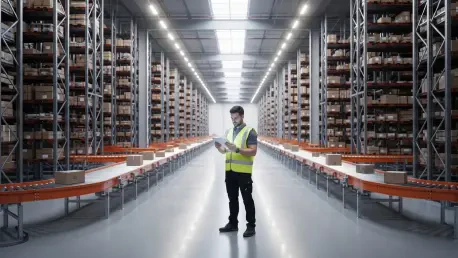
The ideal modern distribution hub is no longer a simple storage shed; it is a high-tech nerve center characterized by vertical storage solutions and integrated data loops that can handle the blistering pace of e-commerce. To stay ahead, the industry must reach benchmarks where sortation and dispatch are measured in minutes, requiring a level of infrastructure support that recognizes warehousing as a critical national utility. We need to advocate for planning policies that allow for the development of specialized, tech-enabled zones that are close to major population centers, ensuring that the physical supply chain can keep up with digital demand. If we fail to secure this specialized support, we risk a “logistics bottleneck” where consumer expectations for next-day delivery outpace our physical capacity to fulfill them. The goal is to create a seamless, invisible network where the infrastructure is as agile as the software that drives the orders.
What is your forecast for the UK warehousing industry?
I forecast that the UK warehousing industry will undergo a period of intense technological consolidation as it navigates the dual pressures of rising business rates and surging e-commerce demand. While the 2026 tax changes will present a significant challenge, they will act as a catalyst for a “smart warehouse” revolution, where only the most automated and energy-efficient facilities will remain competitive in the long term. We will see a shift toward high-density urban fulfillment centers and a much greater emphasis on sustainable, self-sufficient energy production within these hubs. Ultimately, the industry will finally gain the political and economic recognition it deserves, emerging not just as a supporting player, but as the indispensable primary driver of the national economy.