
Rohit Laila is a seasoned expert in the logistics industry, bringing decades of experience across supply chain management and delivery systems. With a deep-seated passion for warehouse innovation, he has guided numerous organizations through the complexities of digital transformation. In this interview, we dive into the recent scale-up of drone technology at Southern Glazer’s Wine & Spirits, where Laila provides his perspective on the shift toward autonomous, real-time inventory control.
After an eighteen-month collaboration, the deployment of over 40 drones across nine distribution centers marks a significant scale-up. How do you manage the logistical complexities of such a broad rollout, and what specific technical hurdles arise when transitioning from a single-site pilot to a network-wide standard?
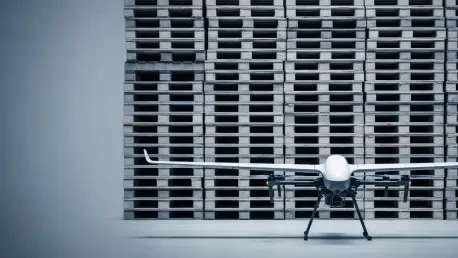
Managing a fleet of over 40 drones across nine distribution centers is less about the hardware and more about the standardization of operational procedures. When we transition from a single-site pilot to a network-wide standard, the primary hurdle is ensuring that the autonomous system can adapt to slight architectural variations across multiple facilities. Over the past eighteen months, we have refined a step-by-step process where the drones map unique aisle configurations while maintaining a uniform data output for the central management team. It is a massive undertaking that required 5,000 flights to ensure the software’s reliability across diverse environments. This level of scaling proves that autonomous inventory is no longer just a trend but a core piece of infrastructure.
Identifying 35,000 inventory discrepancies highlights a clear gap in traditional manual counting methods. How does resolving these specific errors translate into a 100-basis-point increase in cases processed per hour, and what does this mean for the daily productivity of the warehouse floor staff?
Identifying 35,000 inventory discrepancies is a wake-up call for any facility manager, as each error represents a potential bottleneck on the warehouse floor. By resolving these discrepancies, we eliminate the time pickers spend searching for “ghost” inventory, which directly leads to a 100-basis-point increase in cases processed per hour. This productivity gain means that staff are no longer frustrated by incorrect pallet locations and can stay in a productive flow state during their shifts. We’ve seen that when a distribution center moves faster, the physical and mental stress on the floor decreases because the digital records finally match the physical reality. It transforms the daily routine from a frustrating hunt for missing items into a streamlined, high-speed operation.
Shifting from quarterly to biweekly inventory validation represents a fundamental change in supply chain strategy. What are the primary benefits of this increased frequency for customer fill rates, and how does real-time data enable management to shift from reactive counting to proactive problem-solving?
Moving from quarterly to biweekly inventory validation completely changes the rhythm of a supply chain by narrowing the window for errors to compound. This increased frequency ensures that customer fill rates remain high because we are catching out-of-stock or misplaced items every 14 days rather than every 90. When management has access to current stock levels, they stop playing defense and start playing offense, identifying issues earlier in the fulfillment cycle. We are no longer waiting for a massive end-of-quarter audit to realize our numbers are off; instead, we are fixing small issues before they reach the shipping dock. It is about building a supply chain that is resilient and consistently reliable for the end consumer.
These autonomous systems are designed to scan pallet locations and sync data with warehouse management systems without interrupting active picking. How do you ensure these flights remain safe in high-traffic environments, and what are the practical steps for integrating drone data into existing software architectures?
Safety is our top priority in high-traffic environments, which is why these drones are designed to navigate warehouse aisles autonomously without interrupting active picking. The systems use advanced sensors to scan pallet locations in real-time, safely maneuvering around forklifts and personnel who are busy moving product. To integrate this into existing software architectures, we establish a direct sync between the drone’s data collection and the warehouse management system. This process involves a seamless digital handshake where the drone uploads scanned data immediately after a flight, updating inventory records without manual entry. By automating this link, we ensure that the digital twin of the warehouse always matches the actual pallets sitting on the racks.
What is your forecast for the future of autonomous drone technology in the beverage distribution industry?
My forecast for the beverage distribution industry is one of total integration where human-led inventory counts eventually become obsolete. As companies see the value in scaling systems across nine or more sites, we will see these drones evolve into multi-purpose sensors that monitor temperature, warehouse conditions, and even site security. Within the next decade, the ability to perform biweekly or even nightly audits will be the entry-level requirement for staying competitive in high-volume distribution. We are moving toward a model where the warehouse self-corrects while the team focuses on higher-level logistics strategy. This will eventually lead to a global standard where accuracy is measured in real-time, every single day, rather than through periodic and exhausting manual checks.