
With decades of experience navigating the intricate web of global supply chains, Rohit Laila has witnessed the logistics industry evolve from manual ledgers to high-speed automation. As a veteran who has managed both the physical movement of goods and the digital infrastructure that supports it, he brings a unique perspective on how technology serves as the heartbeat of modern commerce. Our conversation explores the recent shift from reactive software to anticipatory artificial intelligence, specifically focusing on how unified platforms are redefining efficiency from the warehouse floor to the final delivery.
How does integrating multiple AI solutions into a single platform change the way logistics teams manage complexity, and what specific challenges do you encounter when trying to unify forecasting and execution within one interface?
In the past, logistics managers had to juggle a dozen different dashboards that didn’t speak the same language, leading to a fragmented view of the operation. By bringing these tools under a unified platform like KNAPP Brain, we move away from simply running processes and start anticipating them before they even happen. The real challenge in unification is ensuring that the data flows seamlessly across the entire value chain, from initial forecasting to the high-pressure last mile. When you bridge that gap, you eliminate the friction that usually slows down decision-making, allowing a team to act on real-time intelligence rather than old reports. It transforms the warehouse from a place of constant firefighting into a synchronized environment where every move is calculated for maximum impact.
When handling massive data quantities in real time, where do traditional systems typically fail, and how does shifting to predictive processing specifically improve error rates for warehouse staff?
Traditional software systems often struggle because they are inherently reactive; they tell you what just happened, which usually results in decisions that are suboptimal or simply made too late to matter. When you are dealing with a massive range of items and major fluctuations in orders, those seconds of delay translate into missed shipments and exhausted workers. Shifting to predictive processing allows the system to evaluate these mountains of data instantly, stabilizing the daily workflow by smoothing out those frantic peaks. This technological foresight reduces the mental load on warehouse staff, significantly lowering error rates because the system has already optimized the order prioritization and resource planning. It’s about creating a calmer, more productive atmosphere where the software does the heavy lifting of complex analysis.
In facilities using robotic pickers, how do advanced grip-point calculations and packing-pattern planning affect throughput, and what steps are necessary to handle a wide variety of diverse items?
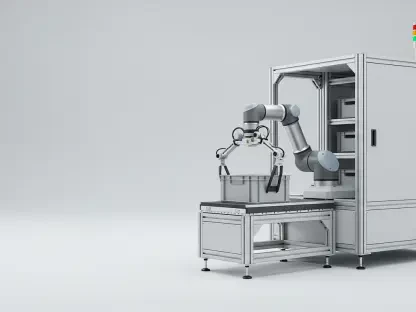
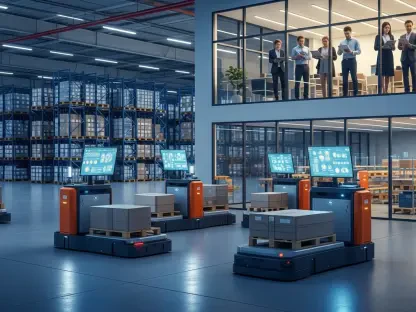
The magic of modern robotics lies in the precision of image-processing and grip-point calculation, which allows a mechanical arm to handle a fragile item just as easily as a heavy box. When the AI calculates the perfect packing pattern in a split second, it ensures that every square inch of a container is used efficiently, which directly boosts total throughput. To handle a diverse inventory, the system must be able to identify and sort items with a high degree of accuracy, adjusting its physical approach based on the item’s unique dimensions and texture. We saw this in action during the tour of the Victorinox global distribution center, where fully integrated software solutions manage the iconic Swiss Army Knife inventory with incredible finesse. This level of detail ensures that even the most complex assortments move through the facility without a single bottleneck.
Forecasting item flows is essential for minimizing stockouts. How can a facility better coordinate its human resources and automation during unexpected order spikes to maintain a high on-time delivery rate?
Maintaining a high on-time delivery rate during an unexpected spike requires a delicate dance between human expertise and automated speed. By using precise forecasting tools, a facility can see a surge coming and automatically adjust its resource planning to ensure that neither people nor machines are overwhelmed. The software coordinates these resources by automating order prioritization, making the transition from a standard day to a peak day feel almost seamless for the crew. When the system handles the logistical “brain work,” human workers can focus on the tasks that require manual dexterity or nuanced problem-solving. This synergy is what allows a company to do more with less, keeping customers happy even when order volumes are through the roof.
Looking at the transition from the warehouse to the road, how do loading patterns influence vehicle efficiency, and what metrics should managers track to determine if route optimization is truly working?
The efficiency of a delivery doesn’t start when the driver turns the key; it starts on the loading dock with a perfectly planned loading pattern. If a vehicle is packed in the exact reverse order of its stops, the driver saves precious minutes at every curb, which adds up to significant cost savings over a week. Managers should look closely at metrics like total miles driven versus successful on-time deliveries and the reduction in fuel consumption per route. By using tools that create the ideal delivery route while simultaneously planning the load, you are essentially squeezing every bit of value out of your fleet. It’s a holistic approach that ensures the efficiency gained inside the warehouse isn’t lost the moment the van hits the pavement.
Implementing fully automated software solutions in high-volume distribution centers requires a strategic approach. What are the key lessons learned when integrating comprehensive suites into existing workflows to ensure a seamless transition?
One of the most vital lessons we’ve learned, especially through events like the two-day Softwarebites meeting in the Swiss Alps, is that integration is as much about people and partnerships as it is about code. Whether you are implementing the KiSoft suite or SAP by KNAPP, the transition must be strategic, involving software specialists and customers early in the process to exchange insights. You have to ensure that the new AI platform doesn’t just sit on top of the old workflow but actually transforms it into something more agile. A successful rollout is measured by how quickly the team adapts to the new “real-time intelligence” and how fast they see a reduction in operational stress. Seeing a facility like Victorinox in Seewen utilize these integrated solutions shows that with the right preparation, even the largest centers can modernize without skipping a beat.
What is your forecast for AI in logistics?
I believe we are moving toward a future where “autonomous orchestration” becomes the standard, where the AI doesn’t just suggest a path but actively balances the entire supply chain in real time. We will see platforms move beyond the warehouse walls to create a completely self-healing grid that can reroute shipments and reallocate labor the moment a global disruption is detected. Success will no longer be defined by how well you react to a crisis, but by how effectively your AI predicted it three days in advance. Ultimately, this technology will turn logistics from a back-end necessity into a primary competitive advantage for every company that embraces it.