
Bridging the Gap Between Concept and Reality in Global Logistics
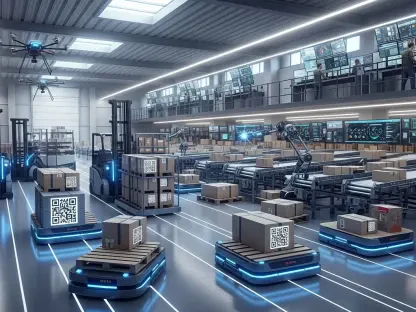
The physical movement of goods has transitioned from a labor-heavy necessity into a high-tech discipline where milliseconds of processing time can dictate the success of a multi-billion-dollar supply chain. As global consumer expectations hit a fever pitch, the traditional warehouse is undergoing a metamorphosis, shed of its image as a static storage box and reborn as a dynamic, “living” organism. Artificial intelligence has moved beyond the experimental phase to become the central nervous system of these facilities, orchestrating everything from robotic picking paths to the predictive replenishment of stock. This shift is driven by the urgent need for resilience in a world where supply disruptions are the new normal. By integrating machine learning into the very fabric of logistics, enterprises are finally achieving the level of agility required to navigate a volatile global marketplace.
From Theory to the Front Lines: The Historical Context of Industrial AI
The intellectual seeds of this transformation were planted long ago, yet for decades, the technology lacked the raw computational power and the sheer volume of data necessary to flourish. Early pioneers envisioned machines that could reason and solve problems with human-like nuance, but these ideas remained largely academic until the massive proliferation of sensors and cloud computing. The transition from basic digital record-keeping to true intelligent automation represents one of the most significant shifts in industrial history. It is a journey from reactive management—where leaders responded to problems after they occurred—to a proactive era defined by systems that can foresee a bottleneck before a single pallet is moved.
Navigating the Shift Toward Intelligent Automation
The Massive Economic Commitment to Logistical Intelligence
The most undeniable evidence of this evolution is found in the staggering financial data currently defining the sector. Projections indicate that supply chain-related spending on artificial intelligence is set to expand from $7.8 billion to more than $44 billion by 2031. This is not a speculative bubble; it is a calculated response to the increasing complexity of global commerce. A significant portion of this capital, roughly 30%, is being funneled specifically into warehouse and inventory management. Businesses are no longer content with “good enough” manual processes; they are betting their long-term solvency on the ability of AI to optimize every square inch of their fulfillment centers.
Human-in-the-Loop: The Current State of Autonomous Systems
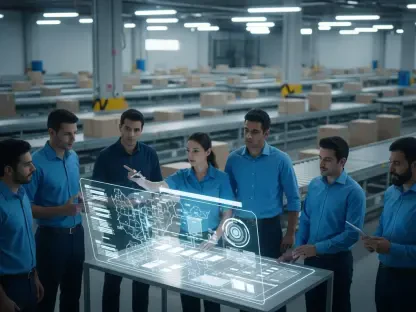
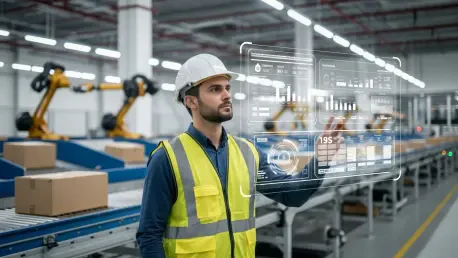
Despite the rapid advancement of robotics, the modern warehouse is not yet a void devoid of human presence. We are currently operating in a hybrid era characterized by “human-in-the-loop” systems, where AI serves as a high-level advisor rather than a total replacement for human judgment. In this model, algorithms handle the exhaustive data processing—such as calculating the most efficient order batches—while human operators focus on high-stakes problem-solving and physical oversight. This collaboration ensures that while the speed of operations increases, the reliability of the fulfillment process remains uncompromised. It is a pragmatic approach that acknowledges the current limitations of technology while maximizing its immediate benefits.
Breaking Down Operational Silos Through Cross-Functional AI
One of the most profound impacts of AI is its ability to dissolve the walls that have historically separated different departments within a company. In the past, inventory management, transportation, and labor often functioned as isolated silos, sometimes pursuing conflicting goals that led to inefficiencies. Today, integrated AI platforms act as a connective tissue, providing a unified view of the entire operation. This allows a facility to adjust its internal picking speeds based on real-time transportation delays or to shift labor resources dynamically as weather patterns affect incoming shipments. By synchronizing these moving parts, enterprises can achieve a level of coordination that was once deemed impossible.
The Future Landscape of Autonomous Fulfillment
As we move toward a more mature technological environment, the focus is shifting toward global ecosystems of specialized tools that communicate across borders in real-time. We are seeing the rise of decentralized decision-making, where individual warehouse nodes coordinate with global hubs to prevent regional bottlenecks before they ripple through the network. The next generation of machine learning will likely handle unstructured data with far greater ease, allowing systems to respond to unpredictable variables like sudden shifts in trade policy or local labor shortages. The fulfillment center of the future will function less like a machine following a script and more like a self-correcting organism that anticipates market needs autonomously.
Strategic Takeaways for a Data-Driven Supply Chain
To thrive in this new landscape, organizations had to move beyond the mere adoption of software and instead embrace a philosophy of total digital integration. Success required a foundational commitment to data quality, as even the most advanced AI is rendered useless by inaccurate or fragmented inputs. Furthermore, the most effective leaders focused on augmenting their workforce rather than simply automating it, using technology to reduce physical fatigue and streamline complex tasks. The shift toward “living” machine learning models, which evolve based on real-world performance rather than static updates, has become the hallmark of a competitive modern enterprise. Integration across all supply chain functions is now the mandatory standard for maintaining visibility.
Conclusion: Embracing the New Standard of Warehouse Excellence
The restructuring of global logistics through a $44 billion investment in intelligence signaled a permanent departure from traditional inventory management. It was clear that data-driven decision-making became the primary differentiator between market leaders and those struggling to keep pace with modern demand. Organizations that recognized AI as a strategic partner rather than a simple cost-cutting tool were able to navigate the complexities of a fragmented global economy with much greater ease. The focus then shifted toward scaling these intelligent networks to ensure long-term sustainability and operational excellence. Ultimately, the industry proved that the future of commerce belonged to those who successfully married human ingenuity with the speed of autonomous thought.