
Rohit Laila brings decades of deep-seated experience in the logistics industry, navigating the complex intersection of supply chain management, delivery networks, and cutting-edge technology. As a seasoned expert who has witnessed the evolution of global distribution, he offers a unique perspective on how innovation is reshaping the physical landscape of industrial real estate. Today, we explore the recent and dramatic rebound in the big-box warehouse sector, a market that has seen a 32% surge in activity as major players move toward massive, high-tech footprints.
Our discussion delves into the strategic shift toward consolidation within Class A facilities, the rising dominance of third-party logistics providers and manufacturers, and the financial logic behind the migration to lower-cost inland hubs. We also examine the technical demands of build-to-suit projects and the implications of tightening vacancy rates on tenant negotiations.
Leasing for warehouses over 500,000 square feet surged by 32% last year, driven largely by logistics providers and manufacturers. What specific operational advantages are these massive footprints offering right now, and how are companies justifying such significant capital expenditures after the recent market slowdown?
The surge we are seeing is a direct response to the need for extreme operational efficiency in a post-pandemic world. These massive footprints allow companies to consolidate their inventories under one roof, which significantly reduces the “touches” an item goes through before reaching the customer. By absorbing 113 million square feet in these larger facilities, logistics providers and manufacturers are essentially betting on the scale to lower their cost-per-unit. They justify the capital expenditure by looking at the long-term gains in throughput; moving from several small, disjointed hubs into one 500,000-plus square foot facility eliminates redundant management costs and streamlines the entire supply chain. It is a strategic pivot where the initial high cost is offset by the massive productivity gains found in a unified, modern distribution center.
Modern Class A facilities are increasingly designed for robotics, higher clear heights, and advanced automation. When a company consolidates multiple older locations into one of these high-tech centers, what are the primary hurdles during the transition, and how does this shift impact their long-term labor requirements?
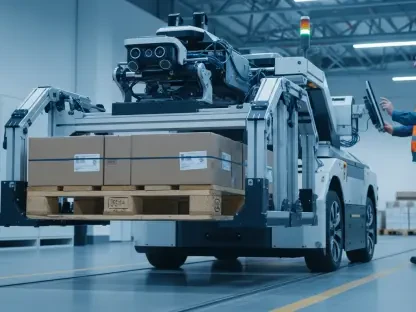
The transition is rarely as simple as moving boxes; it involves a total overhaul of the technological DNA of the operation. The primary hurdle is often the integration of legacy warehouse management systems with the advanced robotics and higher clear heights that define these Class A spaces. Companies have to retrain their workforce to operate alongside sophisticated automation, which can create a temporary dip in productivity during the learning curve. However, the long-term impact on labor is transformative, as these facilities are designed to handle 64% of nationwide logistics volume with a more specialized, tech-savvy team. While the headcount might stabilize or even decrease in some areas, the roles become more focused on maintenance and tech oversight rather than manual sorting.
Build-to-suit projects rose by 11% recently, with many large leases tied to custom-designed facilities. What are the most critical technical specifications tenants are demanding today, and how do these specialized requirements affect the timeline and financial risk for developers compared to speculative builds?
Tenants today are moving away from “one size fits all” and are instead demanding facilities with very specific power requirements and floor load capacities to support heavy automation. With build-to-suit projects rising by 11%, we are seeing a focus on massive electrical upgrades and customized layouts that can accommodate miles of conveyor systems. For a developer, this specialization increases the financial risk because the building is tailored to a single user, making it harder to re-lease if that tenant departs. However, because nearly one-fifth of large warehouse leases are now tied to these custom designs, developers are often securing longer-term commitments of 10 to 15 years. This provides a level of financial stability that speculative builds, which may sit vacant in a shifting market, simply cannot match.
More than 70% of large-scale leases are being signed in markets where rents fall below the national average. How are companies balancing the savings found in these lower-cost inland hubs against the increased transportation costs of being further from coastal ports, and what does this mean for regional infrastructure?
The data is striking—71% of large leases are heading to markets where the rent is significantly cheaper, sometimes 20% below the U.S. average. Companies are performing a delicate balancing act where the massive savings on real estate and labor in inland hubs are used to subsidize the higher transportation costs of trucking goods from coastal ports. This shift is putting immense pressure on regional infrastructure, as rural and inland roads now have to handle the heavy traffic once reserved for coastal corridors. We are seeing a “hub-and-spoke” evolution where these low-cost regions are becoming the new nerve centers of American logistics. It means that state and local governments in these areas must move quickly to upgrade bridges and highways to keep up with the 14% increase in large-scale projects currently underway.
With vacancy rates for large-format warehouses dropping by 140 basis points, the market is tightening significantly. What strategies should tenants use to secure prime space in a limited supply environment, and how does this scarcity alter their negotiation leverage regarding lease terms and tenant improvements?
As vacancy rates drop by 140 basis points, the window of opportunity for tenants is closing fast, making speed the most critical asset in any negotiation. Tenants can no longer afford to spend months deliberating; they need to come to the table with pre-approved budgets and clear technical requirements to win over landlords. This scarcity has shifted the leverage almost entirely to the property owners, meaning that traditional perks like large tenant improvement allowances are becoming harder to secure. To compete, savvy tenants are often signing leases earlier in the construction phase or even before the ground is broken on new developments. If you aren’t looking eighteen to twenty-four months ahead of your needs, you are likely going to be left with sub-optimal space or forced to pay a massive premium.
What is your forecast for the big-box warehouse market?
I anticipate that the momentum we saw in 2025 will carry forward with even more intensity, especially as the 14% increase in projects currently under construction begins to hit the market. We will see a permanent shift where the “big-box” becomes the standard rather than the exception, as companies realize that smaller facilities simply cannot compete with the efficiency of a consolidated, automated hub. Supply will remain tight, keeping vacancy rates low and rental growth steady in those key inland markets that have become the new favorites for 3PLs and manufacturers. Ultimately, the market will move toward a “quality over quantity” phase, where the most technologically advanced buildings will command the highest premiums and the longest lease terms. Logistics is no longer just about storage; it is about high-speed throughput, and the real estate market is finally reflecting that reality.