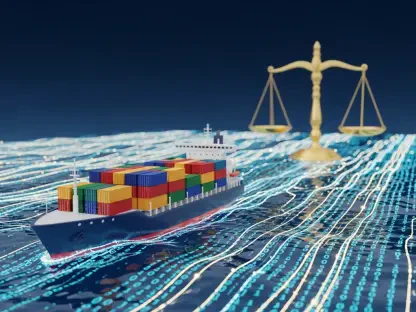

A single social media post now possesses the power to send shockwaves through global supply chains, threatening to upend international trade agreements and economic stability overnight. This dramatic reality signals a profound shift in foreign policy, where unilateral secondary sanctions are increasingly wielded as a primary tool for geopolitical leverage, bypassing traditional diplomatic channels entirely. The modern unpredictability of economic statecraft demands closer scrutiny, and this analysis dissects the growing trend by examining a recent case study, incorporating expert analysis on its far-reaching economic impact, exploring the high-stakes legal battles it ignites, and projecting the future of this new economic battlefield.
The Evolving Landscape of Economic Sanctions
The Rise of Unilateral and Ambiguous Tariff Threats
A startling new pattern in trade policy has emerged, characterized by sudden, sweeping tariff announcements made through informal channels. The recent declaration of a proposed 25% tariff targeting all trading partners of Iran, announced on January 13, 2026, exemplifies this trend. Delivered not through official government communication but via a social media post, the statement created immediate global uncertainty, as markets and corporations scrambled to understand its implications without any formal guidance.
This approach is not without precedent, suggesting an evolving strategy of using secondary tariffs as a coercive instrument. A similar, though ultimately unimplemented, threat was previously leveled against Venezuela’s trade partners. This established a pattern of leveraging the threat of economic disruption as a policy tool itself, regardless of whether the tariffs are formally enacted. The ambiguity inherent in such declarations creates a chilling effect on trade, compelling businesses to preemptively alter their supply chains based on a single, informal statement.
Real-World Application: The 2026 Iran Tariff Crisis
The potential scope of this policy is immense, targeting major global economies that maintain trade relationships with Iran, including China, the United Arab Emirates, Turkey, and India. The direct threat to these nations illustrates how such a tariff would function less as a targeted sanction and more as a seismic disruption to the international economic order. This broad-brush approach ensnares allies and adversaries alike, creating widespread collateral damage.
The central crisis stems from the policy’s ambiguity. In the absence of a formal executive order, the term “doing business” remains dangerously undefined. This leaves global companies in a state of paralysis, unable to determine which transactions or partnerships could trigger punitive duties. The tariff threat is directly linked to the current U.S. administration’s strategy to pressure Iran over its handling of widespread domestic protests, weaponizing trade policy as a direct extension of its foreign policy objectives.
Expert Perspectives on Economic and Legal Ramifications
Industry experts quickly reframed the tariff threat, moving beyond traditional diplomatic language to capture its true nature. Pete Mento, director of global trade advisory services at Baker Tilly, characterized the policy not as a targeted sanction but as a “global supply chain stress test.” This perspective highlights the indiscriminate impact on international commerce, stressing that the fallout would extend far beyond Iran to disrupt logistics networks and raise costs for businesses and consumers worldwide.
From a legal standpoint, the administration would likely rely on the International Emergency Economic Powers Act (IEEPA) as the statutory authority for imposing such tariffs. This act grants the president broad powers to regulate international commerce after declaring a national emergency. However, the president’s viewpoint, expressed in a subsequent social media post, underscores the high-stakes conflict brewing between the executive and judicial branches. He dismissed the financial and logistical possibility of refunding tariffs if the Supreme Court were to rule against his authority, signaling a readiness to challenge any institutional check on his power.
Future Outlook: Legal Showdowns and the New Economic Battlefield
The future of this coercive trade strategy hinges significantly on a pending Supreme Court ruling concerning the president’s authority to impose duties under IEEPA. This decision will serve as a critical precedent, either validating or constraining the executive branch’s ability to unilaterally weaponize trade policy. A ruling against the administration would create immense institutional pushback, potentially forcing the U.S. government to refund billions in collected tariffs.
Such a scenario would, in the president’s own words, create a “complete mess,” raising questions about the logistical feasibility of such a massive refund operation and its impact on federal finances. Regardless of the court’s decision, this trend of legally contentious, unilaterally imposed sanctions is pushing the global economy toward a new reality. We can expect an increase in retaliatory trade wars, a fragmentation of long-standing economic alliances, and a greater emphasis among U.S. trading partners on building resilient, diversified supply chains to mitigate the risks of sudden policy shifts.
Conclusion: Navigating the Era of Economic Coercion
This analysis confirms that the rise of aggressive, unilateral secondary sanctions has introduced a profound level of uncertainty into the global economic system. The weaponization of trade policy, often announced through informal channels and based on contentious legal authority, now stands as a central element of modern geopolitics. The critical legal challenges that lie ahead will ultimately define the boundaries of this powerful tool. This trend necessitates a strategic pivot for both businesses and governments, compelling them to develop new frameworks for navigating an era marked by the constant threat of sudden and impactful economic coercion.