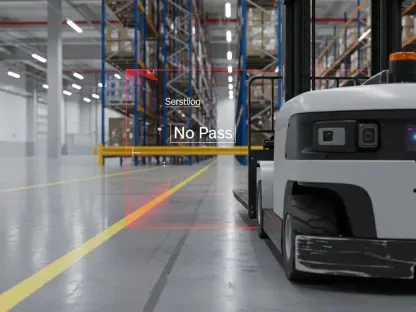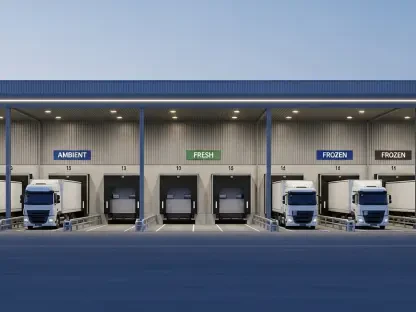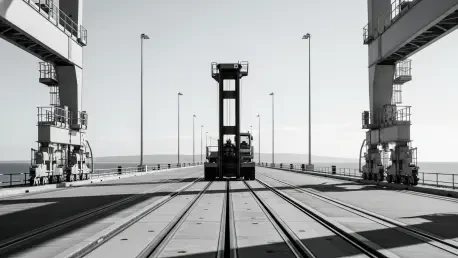

The silent hum of a driverless carrier moving across a concrete pier represents more than just a technological upgrade; it signifies a fundamental shift in who controls the gates of the Australian economy. As an island nation, Australia relies on its maritime infrastructure as a primary lifeline, with the vast majority of consumer goods and industrial exports passing through a handful of high-traffic container terminals. However, the rapid integration of artificial intelligence and automated systems is raising uncomfortable questions about whether the country is trading its long-term economic security for the short-term efficiency gains of foreign corporations.
The Current Landscape of Australia’s Maritime and Stevedoring Industry
Defining the Gateway: An Overview of Australia’s Port Infrastructure
Australia’s ports serve as the indispensable conduits for international trade, connecting local markets to the global supply chain. Because the nation lacks land-based borders with trading partners, the efficiency and reliability of these maritime hubs dictate the cost of living for nearly every citizen. From heavy machinery to medical supplies, the flow of goods is concentrated in major capital cities, making these specific geographical points some of the most strategic assets in the country.
The Duopoly Dynamic: Analyzing Market Dominance
The stevedoring sector is characterized by a powerful duopoly where foreign-owned entities hold significant sway over domestic logistics. DP World, a subsidiary of the Government of Dubai, manages a massive portion of the throughput in Brisbane, Sydney, and Melbourne. This concentration of power in the hands of a multinational entity creates a tension between the corporate mandate to maximize global profits and the Australian requirement for stable, affordable, and locally accountable infrastructure management.
Technological Integration: Assessing the Shift Toward Automation
Recent years have seen a concerted push toward transforming traditional labor-intensive docks into automated container terminals. This shift involves the deployment of sophisticated AI software to coordinate the movement of goods, often bypassing human decision-making in real-time operations. While proponents argue that this evolution is necessary to keep pace with global standards, the transition has often occurred without transparent public debate regarding the long-term impact on the maritime ecosystem.
The Regulatory Framework: Examining Oversight and National Plans
The existing National AI Plan provides a broad outline for digital adoption, yet maritime authorities face significant challenges in applying these high-level principles to the grit of port operations. Current oversight mechanisms are often reactive, struggling to keep pace with the speed of software deployment. There is a growing concern that the regulatory framework lacks the teeth necessary to ensure that technological shifts do not undermine the sovereign interests or the physical security of these critical nodes.
Drivers of Technological Change and Economic Projections
Emerging Trends in Global Supply Chain Automation
The Push for AI Integration: Redefining Port Efficiency
The drive toward AI integration is fueled by the promise of 24-hour operation without the traditional constraints of human schedules. Driverless vehicles and remote-operated cranes are being marketed as the solution to congestion, capable of stacking and retrieving containers with mathematical precision. However, this push is not merely about speed; it is about the centralization of control within proprietary software environments that are often developed and maintained outside of Australian borders.
Global Turmoil as a Catalyst: Accelerating Autonomous Demand
Geopolitical instability and the recent shocks to global energy markets have acted as catalysts for the rapid adoption of autonomous systems. In an era where supply chain predictability is low, corporations are looking to automation as a way to “de-risk” their operations from industrial disputes and local labor market fluctuations. This trend is accelerating as companies seek to insulate their bottom lines from the volatility of a world where traditional shipping routes are increasingly under threat.
Shift Toward Sovereign Infrastructure: Reclaiming Critical Nodes
In response to these global pressures, a counter-movement is emerging that advocates for the reclamation of sovereign control over logistics nodes. Policymakers and industry analysts are beginning to argue that critical infrastructure should not be a laboratory for foreign-controlled AI experiments. This shift suggests that true resilience comes from having infrastructure that is not only efficient but also fully transparent and accountable to the national government rather than offshore shareholders.
Market Forecasts and the Future of Maritime Labor
The Workforce Displacement Outlook: Projections of Labor Loss
Data-driven forecasts suggest a grim outlook for the traditional maritime workforce, with projections indicating the potential disappearance of up to 1,000 skilled, unionized roles. This displacement represents more than just a statistic; it is the erosion of a middle-class career path that has sustained coastal communities for generations. The speed of this transition threatens to outpace the capacity of the labor market to retrain and transition these workers into new technical sectors.
Economic Value Redistribution: Tax Base Versus Corporate Profit
The economic impact of automation extends far beyond the wharf, threatening the national tax base. While human workers contribute millions in income tax annually, the “robotic” replacements offer no such fiscal contribution. This creates a scenario where the economic value generated by Australian trade is increasingly captured as corporate profit and shifted to offshore royalty structures, leaving the public to shoulder the burden of maintaining the physical infrastructure that these companies use.
The Growth of Automated Logistics: Evaluating Market Value
By the end of this decade, the market value of AI-driven port operations is expected to soar as technology becomes the standard rather than the exception. Investors are pouring capital into specialized software firms that promise to optimize every square inch of the terminal. Yet, this growth must be weighed against the potential for market monopolization, where a few tech-heavy players dictate terms to the entire logistics industry, potentially driving up costs for smaller local exporters.
Strategic Challenges and the Risks of Unregulated Automation
The Sovereign Risk Factor: Foreign Control of Critical Software
Allowing foreign entities to hold the keys to the AI software that runs Australian ports introduces a profound sovereign risk. If the algorithms governing the flow of goods are proprietary and managed from overseas, the Australian government effectively loses its ability to intervene during a national emergency. This dependency creates a vulnerability where a software update or a remote “kill switch” could theoretically paralyze the nation’s trade without a single ship being diverted.
Corporate Conduct and Accountability: Profit-Shifting Tensions
The tension between multinational profit-shifting and the Australian national interest is becoming increasingly visible. When major terminal operators report minimal local tax contributions while simultaneously extracting record profits, it undermines the social contract. Automation provides a convenient veil for this conduct, as companies can claim high capital expenditure on “innovation” to offset their tax liabilities while reducing the local headcount that normally fuels the domestic economy.
The Efficiency vs. Resilience Paradox: Weathering Physical Shocks
There is a dangerous paradox in assuming that automated systems are more resilient than human ones. While AI can optimize operations during calm periods, it often lacks the flexibility to adapt to the chaotic, physical shocks of global conflict or extreme weather. A workforce-led model provides a level of on-the-ground problem-solving and manual redundancy that software-heavy systems simply cannot replicate, raising questions about whether we are sacrificing robustness for a brittle version of efficiency.
The Regulatory Environment and Compliance Standards
Navigating National Security Laws: Protecting Infrastructure
Government intervention is becoming a necessity to protect critical infrastructure from foreign interference. Strengthening national security laws to include mandatory reviews of the software “brains” behind port automation is a critical step. This ensures that any system integrated into the maritime network is subject to rigorous vetting, preventing the embedding of backdoors or surveillance capabilities that could be exploited by foreign adversaries during times of tension.
Taxation and Fiscal Fairness: Addressing the Revenue Gap
Addressing the fiscal disparity between corporate tax avoidance and worker contributions requires a modern approach to taxation. Proponents of fiscal fairness are calling for a “robot tax” or similar levies to ensure that companies replacing humans with AI continue to contribute to the public purse. Without such measures, the shift toward automation will continue to drain the treasury, leaving less funding for the very infrastructure—roads, rail, and sea lanes—that these companies rely upon to function.
Data Protection and Surveillance: Standards for Privacy
In high-stakes port environments, the line between operational monitoring and invasive worker surveillance is often blurred. Establishing clear standards for data protection is essential to prevent AI from being used as a tool for constant, high-pressure monitoring of the remaining workforce. These standards must guarantee that worker data is used only for safety and efficiency, not as a mechanism for automated disciplinary actions or the erosion of basic workplace rights.
Future Outlook: Balancing Innovation with National Autonomy
The Role of Human-Centric Operations: Resilience Against Cyber Threats
The massive cyberattacks seen in recent years have demonstrated that digitally dependent infrastructure is a prime target for sabotage. Maintaining a human-centric operational model is not a regressive step; rather, it is a strategic defense against cyber warfare. Human oversight provides a manual override that can keep the wheels of trade turning even when the digital networks are compromised, ensuring that a single line of malicious code cannot bring the entire nation to a standstill.
Legislative Pathways for AI Oversight: Protecting Bargaining Rights
The evolution of labor laws must include specific protections for workers facing technological shifts. Legislative pathways that mandate collective bargaining over the implementation of AI would ensure that technology serves the people, not just the shareholders. By giving unions a seat at the table during the design and deployment phases, Australia can foster a model of innovation that prioritizes safety, job security, and the equitable sharing of productivity gains.
Australia’s Path to Sovereign Control: Harnessing Innovation
True innovation should not come at the cost of democratic rights or fiscal integrity. Australia has the opportunity to lead the world by developing a “sovereign logistics” model that integrates smart technology while maintaining total local control. This path involves investing in homegrown maritime tech and ensuring that the management of critical gateways remains in the hands of entities that are physically and legally accountable to the Australian public.
Summary of Findings and Strategic Recommendations
The analysis of the maritime sector revealed that unregulated AI integration served as a conduit for foreign influence and economic extraction. The findings established that the shift toward autonomous systems, when managed by offshore entities, created significant fiscal deficits and introduced unnecessary vulnerabilities into the national supply chain. It became clear that the pursuit of corporate efficiency often came at the expense of national resilience and the economic wellbeing of the local workforce.
Future strategic efforts must prioritize the implementation of “sovereign-first” policies that require transparency in AI algorithms and strict limits on foreign control over terminal software. Policymakers are encouraged to link the permission to automate with mandatory tax contributions and guaranteed worker consultation rights. Moving forward, the goal should be to create a maritime industry where technological advancement strengthened rather than weakened Australia’s ability to govern its own shores and protect its economic future.