
The New Industrial Backbone: How Intelligent Systems are Reshaping Material Movement
The global bulk material handling equipment market is on the verge of a transformative expansion, projected to surge from $52.5 billion in 2026 to over $81.4 billion by 2035. This impressive 5.0% compound annual growth rate is not merely a sign of industrial expansion but the result of a fundamental technological shift. At the heart of this evolution is automation, a force that is redefining how raw materials and finished goods are moved, stored, and managed. This deep integration of intelligent systems is forging a new industrial backbone, one capable of supporting the unprecedented velocity and complexity of modern commerce. As industries from mining to retail grapple with pressures to increase efficiency, enhance safety, and meet ambitious sustainability targets, automated bulk handling systems are emerging as the linchpin of competitive advantage.
This profound metamorphosis extends far beyond the simple replacement of manual labor with machines; it represents a complete reimagining of the supply chain as a cohesive, data-driven ecosystem. The convergence of robotics, artificial intelligence, and the Internet of Things is creating systems that are not only faster and more reliable but also predictive, adaptable, and self-optimizing. The implications are far-reaching, promising to unlock new levels of productivity and resilience that were previously unattainable. This article will explore the powerful currents driving this market, examining how the integration of smart technologies, the explosive growth of eCommerce, and an unyielding focus on sustainability are converging to build the highly efficient, intelligent, and resilient supply chains of the future.
From Mines to Megacities: The Evolution of Bulk Handling
Historically, the domain of bulk material handling was deeply rooted in heavy industries, forming the muscular system of the global economy’s primary sectors. Giant conveyor systems, stretching for miles across rugged landscapes, transported mountains of coal from mines to power plants. Towering excavators and colossal haul trucks were the workhorses of the construction and mining sectors, designed for one primary purpose: moving massive quantities of raw materials like ore, aggregates, and cement with brute force and relentless endurance. Silos and stacker-reclaimers dominated the skylines of ports and industrial plants, managing gargantuan stockpiles that fed the world’s appetite for energy and infrastructure. In this era, the key performance indicators were tonnage, durability, and raw power, with systems engineered to withstand harsh environments and operate continuously for decades.
The landscape, however, has radically changed, and the forces reshaping it originate not from the quarry but from the consumer’s click. The exponential rise of eCommerce has stretched the definition of “bulk handling” into the sophisticated, high-velocity world of logistics and fulfillment. Today, the warehouses and distribution centers that power online retail rely on advanced systems to handle not just raw materials, but immense volumes of packaged goods with unprecedented speed and precision. The challenge is no longer about moving a single commodity in massive quantities but about sorting, conveying, and dispatching millions of individual items, each with a unique destination and a tight delivery deadline. This paradigm shift from heavy industrial utility to a critical component of modern commerce explains why automation has become a strategic necessity, moving far beyond its traditional role in reducing labor costs to become the linchpin of operational agility, scalability, and customer satisfaction in an increasingly on-demand world.
The Core Drivers Fueling Market Transformation
The Automation Imperative: Beyond Labor Savings to Operational Excellence
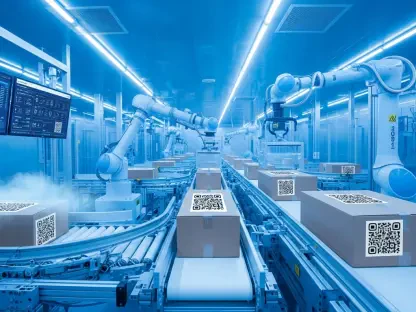
Automation stands as the primary engine of the market’s formidable growth, with automatic systems already commanding an estimated 42% of the market share and poised for further dominance. The motivation for adoption has evolved significantly from a simple cost-benefit analysis centered on labor. While reducing personnel expenses remains a tangible benefit, the true strategic value of automation now lies in achieving superior operational excellence across multiple fronts. The integration of automated conveyor belts, robotic arms, Automated Guided Vehicles (AGVs), and intelligent sorters facilitates a continuous, high-speed flow of materials with pinpoint accuracy, operating 24/7 without fatigue or human error. This technological leap is enabling businesses to build flexible and robust supply chains that can absorb demand shocks, scale operations seamlessly during peak seasons, and adapt to the volatile dynamics of the global market.
Furthermore, the automation imperative is increasingly driven by a heightened focus on workplace safety and regulatory compliance. Automating the handling of heavy, hazardous, or repetitive tasks mitigates the risk of injuries, creating a safer working environment for employees. In industries like mining and chemical processing, remotely operated or fully autonomous equipment can perform tasks in environments that are dangerous for humans, ensuring operational continuity while protecting the workforce. This not only reduces direct costs associated with workplace accidents and insurance premiums but also enhances a company’s reputation as a responsible employer. Consequently, investment in automation is no longer just an operational upgrade; it is a fundamental component of modern risk management and a critical enabler of long-term business resilience and sustainability. The ability to guarantee precision, consistency, and safety makes automation an indispensable tool for any enterprise looking to thrive in a competitive and highly regulated industrial landscape.
The Green Mandate: How Sustainability is Redefining Equipment Innovation
Environmental responsibility has transitioned from a peripheral corporate ideal to a core business driver, fundamentally influencing equipment design, engineering priorities, and investment decisions across the bulk handling sector. This industry-wide pivot toward sustainability is compelling companies to invest heavily in energy-efficient solutions to reduce their carbon footprint and operational costs. This trend is manifesting tangibly in the adoption of advanced technologies such as high-efficiency motors compliant with stringent IE4 and IE5 standards, which significantly cut electricity consumption. Moreover, the integration of regenerative braking systems in mobile equipment and downhill conveyor systems allows for the recovery and reuse of kinetic energy, turning potential waste into a valuable power source. This focus extends to the mechanics of material movement, with advanced equipment designs that minimize spillage, control dust emissions, and reduce material waste, thereby improving both environmental performance and material yield.
This green mandate is also accelerating the shift toward electrification and the circular economy. The development of fully electric-powered conveyors, excavators, and loaders is gaining significant momentum, offering zero-emission operation at the point of use, lower noise levels, and reduced maintenance requirements compared to their diesel-powered counterparts. This is particularly crucial for operations in urban areas or enclosed spaces where air quality and noise pollution are major concerns. Beyond energy consumption, manufacturers are exploring the use of sustainable and recyclable materials in the construction of the equipment itself and designing closed-loop systems that facilitate the recycling and reuse of materials within an industrial process. In this new paradigm, sustainability is no longer a secondary consideration or a marketing slogan but a powerful force compelling manufacturers to innovate and end-users to invest in cleaner, more efficient technologies that deliver both ecological and economic returns.
Navigating a Diverse Landscape: Market Segmentation and Competitive Dynamics
The bulk handling market is a complex and multifaceted ecosystem, characterized by a wide array of applications and a moderately fragmented competitive landscape. An analysis of its segments reveals where the industry’s weight currently lies and where its future growth is emerging. Fixed/stationary systems remain the dominant segment, accounting for a substantial 52% of the market and generating an estimated $26.31 billion in 2025. Their prevalence in high-volume, continuous operations such as mining, power generation, and port logistics underscores the enduring importance of heavy-duty, long-term infrastructure. These large-scale conveyor networks, stacker-reclaimers, and ship loaders are the bedrock of global commodity flows. At the same time, a growing need for operational agility in sectors like logistics, construction, and manufacturing is fueling strong demand for mobile and modular systems that can be rapidly deployed, reconfigured, and scaled to meet changing project requirements.
This diverse market is led by a cadre of established industry giants, including thyssenkrupp AG, Caterpillar Inc., and Metso Outotec, who collectively hold around 40% of the market share. These leaders differentiate themselves through comprehensive, integrated solutions, often incorporating proprietary IoT platforms for predictive maintenance and advanced analytics. Thyssenkrupp, with a leading 14% share, excels in large-scale, custom-engineered systems for mining and cement, while Caterpillar leverages its global dominance in heavy mobile equipment. However, the fragmented nature of the market below this top tier leaves ample room for specialized players to innovate and compete effectively. Smaller, more agile firms are often at the forefront of developing niche technologies, such as advanced sorting systems for eCommerce, specialized robotic solutions for food processing, or highly efficient pneumatic conveying systems, creating a dynamic environment where both scale and specialization can lead to success.
The Next Frontier: Predictive, Modular, and Eco-Conscious Systems
Looking ahead, the future of bulk material handling will be defined by the seamless integration of digital intelligence with sustainable and adaptable physical systems. The adoption of the Internet of Things (IoT), artificial intelligence (AI), and machine learning is rapidly becoming standard practice, moving the industry from a reactive to a predictive operational model. This is most evident in the rise of predictive maintenance, a strategy that leverages real-time data from sensors embedded in critical components like motors, bearings, and gearboxes. These sensors monitor variables such as vibration, temperature, and power consumption, feeding a continuous stream of data to AI algorithms that can detect subtle anomalies and predict potential equipment failures weeks or even months before they occur. This paradigm shift from reactive, break-fix repairs to proactive, data-driven management will dramatically reduce costly unplanned downtime, optimize maintenance schedules, and extend the operational lifecycle of critical assets.
Concurrently, the relentless demand for greater operational flexibility and supply chain resilience will accelerate the trend toward modular and reconfigurable systems. In an era of fluctuating consumer demand and rapid product cycles, the ability to adapt physical infrastructure quickly is a significant competitive advantage. Modular conveyor systems, for instance, can be easily reconfigured, extended, or relocated to accommodate changes in a warehouse layout or production line without requiring a complete and costly overhaul. This “plug-and-play” approach allows businesses to scale their operations up or down in response to market conditions, test new fulfillment strategies, and maintain high levels of efficiency. These technological advancements in intelligence and adaptability will be built upon an essential foundation of eco-conscious engineering. Sustainability will cease to be an optional feature and will instead become a core design principle, driving innovation in material science, energy efficiency, and waste reduction to create systems that are not only smarter and more flexible but also inherently cleaner.
Strategic Pathways for Success: Harnessing Market Momentum
For businesses aiming to capitalize on the profound shifts transforming the bulk material handling market, a deliberate and strategic approach is essential. First, companies must evolve their perspective on automation, viewing it not as a simple equipment upgrade but as a comprehensive operational strategy that requires a holistic redesign of workflows and processes. This involves conducting a thorough analysis to identify high-impact areas where intelligent systems can deliver the greatest returns on efficiency, safety, and quality. Implementing automation successfully is less about replacing individual tasks and more about creating an integrated, synergistic system where human workers, robotic equipment, and software platforms collaborate seamlessly to achieve higher levels of productivity. This requires careful planning, investment in training, and a commitment to change management to ensure the technology is fully leveraged.
Second, procurement decisions must be guided by a sophisticated total cost of ownership (TCO) model that looks beyond the initial capital expenditure. This forward-thinking approach accounts for the long-term financial implications of an asset, including energy consumption, maintenance requirements, spare parts costs, and the potential cost of downtime. By evaluating equipment based on its entire lifecycle cost, businesses can more effectively justify investing in higher-quality, energy-efficient, and reliable systems that may have a higher upfront price but deliver substantial savings and a greater return on investment over time. This methodology naturally aligns capital investment with corporate sustainability goals, as more efficient and durable equipment invariably carries a smaller environmental footprint.
Finally, unlocking the full potential of modern bulk handling systems requires leveraging the power of data. It is no longer sufficient to simply install equipment; businesses must implement a robust infrastructure of IoT sensors and analytical software to capture and interpret the wealth of real-time performance insights these systems generate. This data is the fuel for strategic decision-making, enabling the predictive maintenance strategies that maximize uptime, the process optimizations that eliminate bottlenecks, and the resource management that enhances overall productivity. By transforming operational data into actionable intelligence, companies can move beyond simply running their equipment to continuously improving and optimizing their entire material handling ecosystem.
Beyond $81 Billion: A Future Built on Automated Efficiency
The analysis of the bulk material handling market revealed that its projected journey toward an $81.4 billion valuation was a clear indicator of its increasingly central role in the global economy. The core narrative that emerged was one of profound transformation, where traditional, heavy-duty machinery evolved into intelligent, interconnected, and data-driven systems. This evolution was not arbitrary but was driven by the relentless demands of global industrialization, the unprecedented speed and scale of eCommerce, and the urgent, non-negotiable need for more sustainable industrial practices. In this context, automation proved to be the indispensable catalyst for progress, the enabling force that allowed industries to meet these multifaceted challenges.
The investigation concluded that this shift represented more than a mere market trend; it was a fundamental re-engineering of the industrial backbone that supports and facilitates global commerce. The findings underscored that the future of manufacturing, logistics, and resource extraction was not just to be powered by these advanced bulk handling systems, but was to be fundamentally defined by their intelligence, their resilience in the face of disruption, and their ever-increasing efficiency. The convergence of these technological and economic forces has set the stage for a new era of industrial productivity, built upon a foundation of automated precision and sustainable design.