
The integration of Nippon Cargo Airlines into the expansive operations of ANA Holdings marks a pivotal moment where Japan’s aviation sector attempts to consolidate its power against a backdrop of increasing international competition. This move is far more than a corporate consolidation; it represents a high-stakes play to redefine how cargo moves across the Pacific by blending the massive belly capacity of a passenger fleet with the raw heavy-lifting strength of specialized freighters. As the industry watches, ANA is not just increasing its fleet size but is actively rewriting the logistical playbook for the entire Asia-Pacific region.
A New Titan Rises in the Transpacific Sky
The global air cargo landscape is experiencing a significant transformation as ANA Holdings brings Nippon Cargo Airlines (NCA) under its primary umbrella. This strategic move aims to create a more resilient supply chain capable of handling the rapid fluctuations in modern trade. By merging these two entities, the group addresses the long-standing issue of fragmented operations, which previously led to redundant overhead and inefficient routing.
This integration matters because it establishes Japan’s largest combination carrier, offering a vital counterweight to the dominance of major logistics players from the Middle East and North America. In an era where speed and reliability are the primary currencies of global commerce, this unified approach seeks to eliminate the bottlenecks that have traditionally slowed down transpacific trade. The result is a more agile organization ready to pivot as market demands shift.
Consolidating Power to Meet Shifting Global Demands
For years, ANA Cargo and NCA functioned as separate units, often competing for the same customers while operating overlapping flight paths. This fragmentation was increasingly seen as a liability, particularly when faced with volatile fuel prices and the explosion of global e-commerce. By combining resources, the new entity can leverage a broader network that offers both high-frequency passenger belly space and dedicated freighter capacity.
This synergy allows the group to provide a more comprehensive service than either company could offer alone. Shippers now benefit from a more stable logistics partner that can manage everything from small, urgent parcels to massive industrial machinery. This consolidation is a direct response to the need for greater operational efficiency in a world where supply chains must be both lean and incredibly robust.
The Blueprint for a Unified Logistics Powerhouse
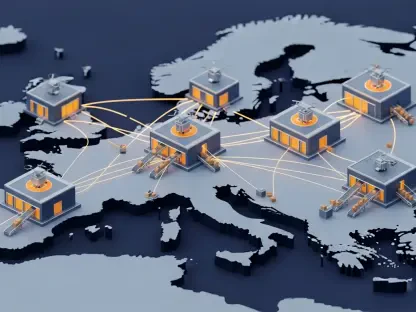
The transformation is grounded in several strategic pillars designed to maximize market penetration and internal efficiency. A key component is the transition to a single sales structure for all international markets, which essentially creates a “one-stop-shop” for freight forwarders. This move removes the friction of navigating different booking systems, allowing customers to access the entire combined network through a single point of contact.
Furthermore, the merger reaches deep into the physical infrastructure of the airlines. Ground operations and warehousing are being centralized, starting with domestic hubs like Chubu Centrair and Kansai International. On the international stage, Chicago O’Hare serves as the initial pilot for a synchronized arrival system. By consolidating these touchpoints, the group significantly reduces the administrative hurdles and transit times that often plague complex international shipments.
Fleet Optimization and Route Specialization
A tiered fleet strategy is being deployed to ensure that the right aircraft is used for the right job, effectively eliminating duplication. Under this plan, Boeing 767 freighters are prioritized for high-frequency regional routes within Asia, where speed and turnaround times are critical. Meanwhile, the heavy-duty Boeing 777s and the iconic “Queen of the Skies” 747 freighters from the NCA fleet are reserved for high-volume, long-haul corridors connecting Asia to North America and Europe.
While the operations have merged, NCA has retained its independent Air Transport Business License and Air Operator Certificate. This allows the group to maintain the highly specialized technical expertise required for dedicated freighter operations while still benefiting from the massive infrastructure of a global passenger airline. This dual-track approach ensures that the unique requirements of heavy cargo are not lost within the broader corporate structure.
Quantifying the Synergy and Industry Impact
ANA Holdings projected that this merger would capture approximately Y30 billion in synergy effects through reduced operational overlap and enhanced bargaining power with suppliers. This financial logic was a primary driver behind the acquisition of NCA from NYK. By becoming a unified force, the group has positioned itself to respond more effectively to the ebbs and flows of the global economy, ensuring long-term sustainability in a notoriously cyclical industry.
The industry impact extends beyond just financial statements; it changes the competitive dynamics of the Asian logistics hub. With a more streamlined operation, the group can offer more competitive pricing and more reliable schedules. This structural shift has forced other regional players to reconsider their own strategies, as the new ANA-NCA entity sets a high bar for operational integration and customer service in the air freight sector.
Strategies for Navigating the New ANA-NCA Network
Logistics managers and freight forwarders had to adapt quickly to this new landscape by rethinking how they engaged with Japanese air exports. The “combination carrier” model became a vital tool, allowing shippers to mix and match capacity types based on the urgency and size of their cargo. Utilizing the unified digital interface became the standard for securing real-time capacity and ensuring that shipments moved seamlessly across the consolidated network.
Stakeholders also monitored the global rollout of unified facilities to take advantage of faster throughput at major hubs. By aligning procurement protocols with the new unified portal, businesses ensured they remained competitive in an environment where speed was paramount. Ultimately, the successful navigation of this transition required a proactive approach to technology and a willingness to embrace the efficiencies offered by a more integrated and powerful Japanese aviation leader.