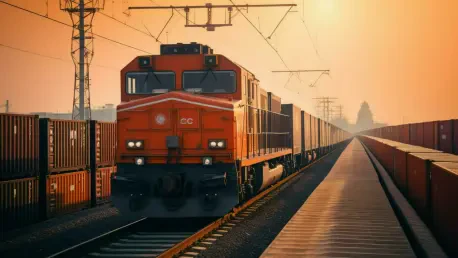

As Europe grapples with the immense challenge of decarbonizing its logistics sector, the continent’s intricate network of rail corridors is under more pressure than ever to become the backbone of a sustainable supply chain. At the heart of this transformation lies a single, strategic chokepoint where the industrial might of Northern Europe meets the manufacturing hubs of the south. This critical juncture is Verona, a city poised to become the linchpin in the future of continental rail freight, where a landmark investment is set to address an impending bottleneck and unlock the full potential of trans-Alpine trade. The confluence of geography, technology, and visionary infrastructure planning is positioning this Italian hub as an indispensable asset for the next generation of European logistics.
The Continental Crossroads Verona’s Strategic Position in European Logistics
The European rail freight network is a complex web of corridors designed to facilitate the seamless movement of goods across national borders. Among these, the Scandinavia–Mediterranean corridor is one of the most vital, serving as the primary artery connecting the economic powerhouses of Germany and Northern Europe with Italy and its Mediterranean ports. The Verona–Brenner axis is the most critical segment of this corridor, a natural gateway through the formidable Alpine barrier. Its strategic importance cannot be overstated, as it handles a significant volume of freight that is projected to grow exponentially in the coming years.
This pivotal location has attracted key market players who are shaping the future of European rail. Siemens Mobility, a global leader in locomotive manufacturing, and Railpool, a prominent rolling stock leasing company, are making significant moves in the region. Their activities are centered around the Interporto Verona, one of Italy’s most important logistics hubs. The technological landscape they navigate is complex, dominated by a mix of multi-system (MS) locomotives capable of operating across different national electrification standards and older direct current (DC) models. This diversity presents both opportunities for interoperability and challenges for maintenance and service.
Riding the Rails of Change Market Dynamics Shaping Tomorrow’s Freight
The Green Shift Decarbonization and the Push from Road to Rail
A powerful market-driven trend toward sustainability is fundamentally reshaping transportation models across Europe. With increasing pressure to reduce carbon emissions, shippers and logistics providers are actively seeking alternatives to road transport, leading to a significant modal shift toward rail. This “green shift” is not merely an environmental aspiration but a core business strategy, as companies recognize the long-term economic and operational benefits of cleaner, more efficient supply chains.
This transition is enabled by emerging technologies that enhance the performance and interoperability of rail freight. Advanced multi-system locomotives, such as the Siemens Vectron, are instrumental in this evolution, allowing a single train to traverse multiple countries without time-consuming locomotive changes at borders. Consequently, the demand for high-availability service and minimal vehicle downtime has surged. This has, in turn, spurred major investments in modern maintenance facilities capable of servicing these sophisticated machines quickly and effectively, ensuring the rail network remains fluid and reliable.
Projecting the Surge The Brenner Tunnel’s Transformative Impact
The most significant catalyst for change along the Verona–Brenner corridor is the impending opening of the Brenner Base Tunnel in 2032. This monumental infrastructure project is expected to double the rail capacity for freight crossing the Alps, dramatically reducing transit times and making rail an even more competitive option. This projected surge in traffic is the primary driver behind forward-looking investments aimed at preparing the network for a new era of high-volume, high-efficiency transport.
In a clear signal of their confidence in this future, Siemens Mobility and Railpool have announced a joint €20 million investment to develop a new maintenance hub in Verona. This proactive measure is designed to meet the anticipated demand head-on, providing the necessary service infrastructure to support a much larger fleet of locomotives operating along the corridor. Growth forecasts for freight traffic are robust, and the economic impact on the region is expected to be substantial, cementing Verona’s role as a central node in a modernized European logistics network.
Overcoming the Bottleneck Addressing Europe’s Maintenance Infrastructure Gap
Despite the promising growth in rail freight, the industry faces a primary challenge: a significant lack of modern, high-capacity maintenance hubs. The existing infrastructure is struggling to keep pace with the increasing traffic and technological sophistication of modern locomotives. This gap threatens to become a major bottleneck, limiting the potential benefits of new projects like the Brenner Tunnel and hindering the large-scale shift from road to rail.
The challenge is compounded by the complexity of servicing diverse locomotive fleets. A single corridor may see vehicles from various manufacturers, each with its own specifications and compatibility requirements for different national signaling systems. To address this, the new Verona hub is designed as an open-access “Partner Rail Service Center.” This innovative model allows it to service locomotives from multiple manufacturers, not just Siemens, providing a versatile solution that maximizes uptime and efficiency for all operators on the corridor.
Navigating the Network Policy and Standards Driving Rail Integration
The push toward rail is not just a market trend; it is strongly supported by European Union policies. Initiatives like the Green Deal aim to orchestrate a large-scale transfer of freight from road to rail to meet ambitious climate targets. These policies create a favorable regulatory environment for investments in rail infrastructure and technology, providing a powerful top-down impetus for the industry’s transformation.
Alongside these policies, strict regulatory compliance and technical standards are essential for enabling seamless cross-border operations. The harmonization of signaling systems, such as the European Train Control System (ETCS), is critical for interoperability. The new Verona facility is being built to meet these exacting standards, ensuring it can service locomotives equipped for operation across the continent. This focus on compliance makes the hub not just a maintenance depot but a key enabler of a truly integrated European rail network.
The Blueprint for a Connected Continent Verona’s Role in a Modernized Rail Network
The Verona hub is poised to function as more than just a regional service center; it represents a blueprint for the future of rail maintenance infrastructure across Europe. Its open-access, multi-manufacturer service model offers a compelling alternative to traditional, proprietary maintenance practices, which often tie operators to a single service provider. This new approach promotes competition, enhances flexibility, and ultimately benefits the entire rail ecosystem by ensuring that locomotives can be serviced efficiently regardless of their origin.
This investment also solidifies the powerful partnership between Siemens Mobility and Railpool, positioning them as leaders in the expanding European rail freight market. By co-developing this critical infrastructure, they are not only preparing to service Railpool’s growing fleet of Vectron locomotives but are also creating a strategic asset that will support a wide range of customers. This collaborative model demonstrates a forward-looking strategy that aligns with the continent’s broader goals for a connected and efficient transport network.
The Final Stop Why Verona’s Hub Is More Than Just a Depot
The development of the Verona maintenance hub was a strategic and forward-looking investment, not merely a response to current needs. It stood as a clear acknowledgment of an impending transformation in European logistics, driven by the dual forces of decarbonization and the massive capacity expansion promised by the Brenner Tunnel. This facility was designed to directly address the critical need for modern, high-availability service infrastructure, thereby enabling a more robust, efficient, and sustainable continental rail network.
This project underscored the profound importance of public-private partnerships and proactive infrastructure development in securing the future of European logistics. By anticipating future demand and investing ahead of the curve, Siemens Mobility and Railpool provided a powerful example of the strategic foresight required to build a resilient and competitive transport system for the 21st century. Verona’s role was thus cemented not just as a location on a map, but as a vital enabler of a connected and greener European future.