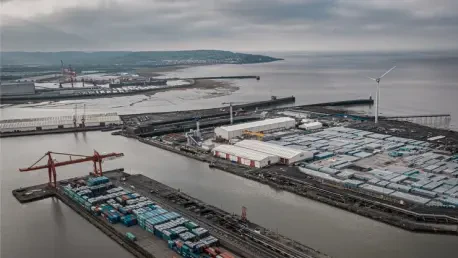

A colossal wave of investment is reshaping the coastline of Southern China, where the Beibu Gulf Port is undergoing a transformation driven by ambitions that stretch far beyond its shores. This is not merely an infrastructure upgrade; it is a calculated move to redraw global trade maps, positioning the port as a critical nexus for international commerce. The sheer scale of this development, backed by billions of dollars, signals a strategic pivot designed to connect China’s vast, resource-rich interior with the rest of the world through a new, highly efficient maritime corridor.
A $2.24 Billion Bet on a New Global Trade Artery
At the heart of this expansion lies a substantial $2.24 billion investment aimed squarely at enhancing the port’s bulk cargo and ore handling capabilities. This financial commitment is a direct response to surging transhipment demand and a clear indicator of the port’s growing importance. The funding is not just for maintenance or minor improvements but is allocated for transformative projects designed to catapult the port into the top tier of global logistics hubs.
This infusion of capital is a strategic bet on the future of global trade dynamics. By focusing on specialized infrastructure for raw materials like coal and iron ore, the port authority is positioning Beibu Gulf as an indispensable link in industrial supply chains. The investment underscores a long-term vision where the port serves as a primary engine for regional economic growth, facilitating the flow of goods on an unprecedented scale.
More Than a Port: The Strategic Gateway to Western China
The significance of Beibu Gulf Port’s expansion transcends its physical boundaries, extending deep into the heartland of the country. It serves as the primary maritime gateway for the New International Land-Sea Trade Corridor, a major national initiative designed to connect western China’s provinces with global markets. This corridor provides a more direct and cost-effective trade route for landlocked regions, bypassing more congested eastern ports.
Furthermore, the port is a key component of the broader Belt and Road Initiative, linking overland economic belts with the 21st-century Maritime Silk Road. Its strategic location offers a vital connection to Southeast Asia and beyond, making it a linchpin in a network of trade and infrastructure that spans continents. Consequently, the port’s development is integral to a grander geopolitical and economic strategy.
Deconstructing the Expansion: A Tale of Two Ports
The expansion is not a monolithic project but a targeted development across two of its principal port clusters: Fangchenggang and Beihai. The bulk of the investment is directed toward the Qisha South Port Area of Fangchenggang Port, a hub for coal and iron ore. This phase includes the construction of two massive 300,000-ton ore berths alongside six smaller 5,000-ton transhipment berths, creating a highly efficient system for unloading and redistributing raw materials.
Simultaneously, the Shawei operation area in Beihai’s Tieshan East Port is undergoing its own significant upgrade. This project involves building two 200,000-ton bulk cargo berths. This development specifically addresses a critical shortfall of large-tonnage berths in the Beihai area, which has previously limited its capacity to handle major shipments. Together, these two initiatives create a complementary system that enhances the entire Beibu Gulf’s operational capacity.
The Official Blueprint: Gauging the Ambition Behind the Investment
The expected outcomes of these projects are as ambitious as the investment itself. The upgrades at Fangchenggang are projected to add an astounding 67.53 million tons to the port’s annual throughput capacity. This will solidify its status as the premier ore unloading port in southwestern China, significantly boosting its core competitiveness and ability to attract international shipping lines.
In Beihai, the new berths are designed to handle an additional 19 million tons of bulk cargo annually. This expansion is poised to elevate the port area’s comprehensive transportation services, enabling it to meet the growing demands of local industries and enterprises. The blueprint reveals a clear intention to not just meet current needs but to anticipate future growth and secure a dominant position in regional trade.
Unlocking New Trade Corridors: The Practical Impact of Expansion
Upon completion, these new facilities will have a profound and immediate impact on regional and international trade. The enhanced capacity directly addresses the logistical bottlenecks that have constrained growth, providing a more reliable and efficient channel for both imports and exports. This unlocks new potential for businesses throughout western China, offering them improved access to global markets and raw materials.
Moreover, the expansion is set to revolutionize river-sea intermodal transport services in the region. The new transhipment berths will facilitate smoother transfers of cargo from large ocean-faring vessels to smaller river boats, improving connectivity with inland waterways. This integrated logistics network will reduce transportation costs and transit times, providing a significant competitive advantage for industries operating within this new trade corridor. The project has already established a new benchmark for what modern ports can achieve.