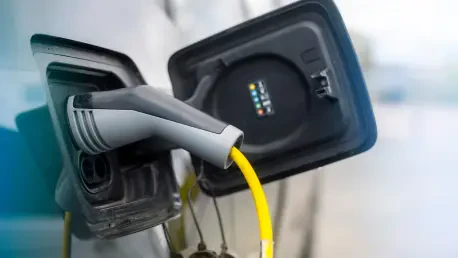

The conversation around electric vehicle adoption has decisively turned a corner, moving away from the once-dominant fear of a battery dying mid-journey to the more immediate frustration of waiting for a slow charger to finish its work. This critical shift in the EV narrative, where the primary barrier is no longer how far a car can go but how quickly and reliably it can be recharged, is fueling a new wave of infrastructure development. This article will analyze the rapid emergence of high-power charging, examining the market data, pioneering projects, expert financial insights, and the future challenges and opportunities shaping the electric mobility landscape.
The Evidence: Charting the High-Power Expansion
Market Acceleration and Investment Growth
The evolution of consumer and commercial concerns marks a maturing electric vehicle market. The initial hurdle, widely known as “range anxiety,” has been largely addressed by advancements in battery technology that now offer ample driving distance for most users. However, this progress has exposed a new, more nuanced challenge: “charging anxiety.” This modern barrier encompasses not just the availability of charging stations but their speed, reliability, and the overall user experience. The market is now demanding a refueling process that mirrors the convenience and rapidity of traditional gas stations, a critical tipping point for persuading the mainstream driver to make the switch.
In response to this clear market signal, a significant influx of capital is being directed toward high-power charging solutions. A prime example of this trend is the European Investment Bank’s (EIB) strategic €35 million loan to Eleport, a prominent charging network operator. Backed by the robust InvestEU programme, this financing is not merely a vote of confidence but a calculated move to de-risk and accelerate the deployment of next-generation infrastructure in regions poised for rapid EV growth. This kind of targeted investment is essential for bridging the gap between current capabilities and future demand.
The tangible outcome of this financial momentum is a dramatic expansion of physical infrastructure. Companies like Eleport are leveraging this capital to pivot aggressively toward ultra-fast solutions. The plan to build on an existing network of 400 fast-charging points by deploying over 250 new high-power hubs is a clear indicator of the industry’s direction. These new hubs are designed with cutting-edge technology capable of delivering up to 400 kW of power, a capacity that drastically reduces charging times and directly addresses the core issue of charging anxiety, making long-distance EV travel a far more practical and appealing proposition.
Real-World Application: The “Electric Amber Road”
Eleport’s ambitious initiative serves as a compelling case study of this trend in action, branding its cross-border network as the “Electric Amber Road.” This modern homage to the ancient trade routes connecting the Baltic and Adriatic coasts encapsulates the project’s strategic vision: to create a seamless, high-power charging corridor through Estonia, Latvia, Lithuania, Poland, Czechia, Slovakia, Croatia, and Slovenia. The project moves beyond simply dotting a map with chargers; it is a concerted effort to build a cohesive and reliable backbone for electric mobility across a vast and economically vital region.
This network is engineered to directly solve one of the most persistent problems in the European EV ecosystem: fragmentation. Currently, long-distance drivers often have to navigate a confusing patchwork of different charging operators, payment systems, and reliability standards, which creates friction and uncertainty. By creating a unified user experience accessible through a single application, the “Electric Amber Road” aims to eliminate these barriers. This creates a frictionless travel environment for both commercial transport and leisure travelers, fostering regional connectivity and demonstrating the viability of continent-spanning electric journeys.
Voices from the Industry: The Strategic Imperative
The deployment of such capital-intensive infrastructure hinges on innovative financial models that can mitigate risk for growing companies. As EIB Vice-President Karl Nehammer has highlighted, public finance institutions play a crucial role in supporting pioneering companies during their critical growth phases. By providing long-term, tailored financing, these institutions can de-risk projects that, while strategically vital, may not fit the rigid risk profiles of conventional lenders. This support enables forward-thinking companies to scale their operations and accelerate the deployment of sustainable technology.
This approach exemplifies a powerful public-private partnership model, where programs like InvestEU act as a catalyst. By providing financial guarantees, these programs allow public banks like the EIB to absorb a greater share of the risk, which in turn “pulls forward” private-sector investment and operational expertise. This synergy is fundamental to accelerating the green transition, as it unlocks the capital necessary to build the foundational infrastructure for a decarbonized economy. It is a well-established model for driving transformative change in sectors requiring massive upfront investment.
The expert consensus is that this form of financial backing is indispensable for overcoming the perceived risk that deters traditional financial institutions. Building a network of high-power charging hubs is a complex undertaking with long payback periods and significant logistical hurdles. The patient, long-term capital provided by public-private partnerships provides the stability and runway needed to navigate these challenges effectively. This, in turn, unlocks the rapid and widespread scaling of sustainable infrastructure, creating a virtuous cycle of investment, deployment, and growing user confidence.
Future Outlook: Opportunities and Grid-Level Challenges
The establishment of a mature, high-power charging network promises to unlock a cascade of benefits for society and the economy. The most immediate impact will be the near-total elimination of charging anxiety, which remains a significant psychological barrier to mass-market EV adoption. With charging stops becoming shorter and more predictable, electric vehicles will become a truly viable option for all types of drivers. This will, in turn, enable the large-scale electrification of commercial fleets, from last-mile delivery vans to long-haul logistics, where operational efficiency and minimal downtime are paramount.
However, realizing this vision presents significant technical and logistical challenges that cannot be underestimated. The promise of 400 kW charging speeds is contingent upon securing high-capacity connections to the electrical grid, a complex and time-consuming engineering task. Each hub requires deep coordination with utility providers, extensive permitting processes, and meticulous management of a supply chain for critical components like high-capacity transformers and advanced power electronics. The interface between the charging network and the grid represents the single greatest hurdle to rapid deployment.
These challenges have broader implications for urban planning and industrial policy. The integration of high-power charging networks demands a proactive and coordinated approach between network operators, utility companies, and municipal governments to ensure grid stability and manage peak loads. Furthermore, the build-out of this new infrastructure class is creating demand for a specialized workforce, fostering the creation of skilled jobs in electrical engineering, civil engineering, software development, and network operations. This highlights the need for industrial policies that support skills development and ensure a robust domestic supply chain for this critical new sector.
A Fully Charged Path Forward
The analysis revealed that the trend toward high-power EV charging is a well-funded, strategically critical movement essential for advancing the next phase of electric mobility. It reflected a clear market maturation from concerns over vehicle range to a demand for speed and convenience at the charger. The substantial investments being made, particularly through public-private partnerships, underscored the shared commitment to building the necessary infrastructure for a decarbonized future.
It was shown that projects like Eleport’s cross-border network are not just about adding more charging points; they are about constructing the foundational infrastructure for a more connected, competitive, and sustainable European transport system. These initiatives have demonstrated a clear model for overcoming ecosystem fragmentation and delivering a seamless user experience. The path forward requires continued strategic investment, deep collaboration between public and private sectors, and a steadfast focus on overcoming the complex technical hurdles to realize the full potential of a seamlessly electrified future.