
The steady, rhythmic thrum of a train passing over a switch has traditionally been the primary heartbeat of the rail network, signaling to experienced engineers that the world is moving as it should. For over a century, the safety of these massive steel arteries depended on the physical presence of track walkers and the reactive repairs that followed a visible break. However, the silent revolution currently underfoot is changing the fundamental nature of the track itself, turning static iron into a sophisticated digital nervous system capable of forecasting its own maintenance needs. This transition from “run-to-failure” to a predictive, intelligent model marks the most significant technological leap for the industry since the move away from steam, ensuring that the infrastructure of the future is as smart as the locomotives traversing it.
Beyond the Iron and Ballast: The Digital Pulse of Modern Rail
Modern railway networks are no longer just collections of physical assets; they are becoming interconnected data ecosystems. The traditional reliance on manual inspections is being phased out in favor of real-time monitoring that captures the “health” of the track at every second. By embedding sensors directly into the infrastructure, operators can now listen to the microscopic vibrations and thermal changes that precede a mechanical failure. This shift represents a move toward total asset transparency, where every turnout and sleeper has a digital twin that reports its condition to a centralized control room. Consequently, the industry is moving away from the guesswork of the past and toward a future defined by precision and foresight.
This digital pulse is particularly critical as global demand for rail transport continues to climb. With passenger and freight volumes reaching new heights, the window of time available for maintenance is shrinking. Operators can no longer afford to close lines for broad, scheduled inspections that might not even find a fault. Instead, they require a system that points them exactly to the problem before it starts. This evolution transforms the role of the infrastructure manager from a firefighter reacting to emergencies into a strategist who uses data to prevent them. The result is a more resilient network that prioritizes safety without sacrificing the high availability required by modern commerce.
The High Stakes of Infrastructure Reliability
The economic and operational pressures facing today’s rail networks are immense, as aging infrastructure must support heavier loads and higher speeds than ever before. Turnouts and switches, the complex mechanical junctions of any line, remain the most vulnerable points in the system due to the extreme physical stresses they endure. A single failure at a critical junction can trigger a domino effect of delays, costing operators millions in lost revenue and potential fines. By shifting toward intelligent monitoring, the industry addresses the unsustainable costs of reactive maintenance, which often involves emergency repairs that are far more expensive than planned interventions.
Beyond the financial implications, the reliability of infrastructure is a cornerstone of public trust and safety. As the industry strives for 100% track availability, the margin for error has effectively vanished. Intelligent monitoring serves as a bridge between the physical limitations of steel and the digital demands of modern logistics. It provides a layer of protection that identifies hidden defects—such as internal rail cracks or ballast degradation—that the human eye might miss. This predictive capability ensures that the most critical components of the network are always in peak condition, reinforcing the reputation of rail as one of the safest and most efficient modes of transport.
The Architecture of a Smart Railway Network
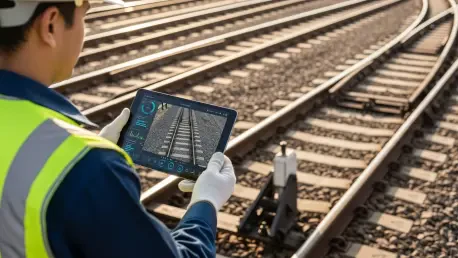
Building a truly intelligent railway starts with a robust hardware layer designed to survive the harsh environments of the trackside. Engineers are now deploying a diverse array of sensors that monitor everything from the electrical draw of a point machine to the acoustic emissions of a crossing. Vibration and acceleration sensors provide a high-fidelity look at the mechanical impact of each passing axle, while pressure sensors in hydraulic systems detect subtle leaks or pump inefficiencies. These tools work in tandem to create a comprehensive picture of the asset, ensuring that no change in performance goes unnoticed.
Moreover, the diversity of global rail environments requires a modular approach to technology deployment. A high-speed line through the Alps faces vastly different challenges than a heavy-haul mineral line in a desert. To accommodate these variables, modern monitoring systems use flexible architectures that allow for customized sensor placement based on the specific geometry and material of the track. This modularity ensures that the data collected is highly relevant to the local environment, providing infrastructure managers with the specific insights they need to manage their unique assets effectively.
The final stage of this architectural evolution is the data processing pipeline, which turns raw signals into actionable intelligence. Collecting data is only the beginning; the real value lies in filtering out the “noise” of background vibrations to find the meaningful patterns of wear. Advanced data engineering harmonizes information from wayside sensors with telemetry from the trains themselves, creating a unified view of the network. Feature extraction then distills this massive volume of information into simple metrics, such as a health score or a time-to-failure estimate, which can be easily understood by decision-makers in the control room.
Navigating the Intelligence Behind the Analytics
At the heart of modern monitoring lies a sophisticated debate between two different modeling philosophies: machine learning and physics-based engineering. Data-driven machine learning models are exceptional at spotting anomalies and patterns within massive, messy datasets, making them ideal for identifying unusual wear that hasn’t been seen before. In contrast, physics-based models rely on established mechanical principles to provide results that are transparent and easy to verify against safety standards. Many leading operators are now adopting hybrid models that combine the best of both worlds, using the structural reliability of physics to ground the high-speed adaptability of artificial intelligence.
However, the effectiveness of any algorithm is only as good as the “ground truth” used to validate it. One of the greatest challenges in the industry remains the gap between digital predictions and the physical reality recorded by maintenance crews. Historically, maintenance logs were often handwritten or stored in disparate systems, making it difficult to confirm if a sensor’s warning matched an actual defect. To solve this, there is a major push toward standardized digital protocols that ensure every field observation is instantly fed back into the monitoring system. This creates a closed-loop environment where the AI learns from every repair, constantly sharpening its predictive accuracy.
Strategies for Implementing Intelligent Monitoring
Deciding where to store and process the vast amounts of data generated by a smart railway is a strategic crossroads for many organizations. On-premise solutions remain popular for national infrastructure managers who prioritize data sovereignty and extreme security, as they keep all sensitive information within the organization’s own walls. On the other hand, cloud-based and hybrid setups are gaining ground because they offer the massive computational power needed to run complex simulations. These scalable platforms allow smaller regional operators to access the same high-level analytics as major national carriers without requiring a massive upfront investment in IT hardware.
The ultimate success of intelligent monitoring depends on how well these insights are integrated into the daily workflows of maintenance teams. An alert about a failing switch is only useful if it automatically triggers a work order and provides the crew with the exact diagnostic data they need. By linking monitoring platforms directly to asset management software, operators can shift toward dynamic maintenance scheduling. This means repairs are performed based on the actual condition of the track rather than a calendar date, which drastically reduces the amount of time tracks must be closed and ensures that maintenance resources are always focused on the areas of greatest need.
The industry moved toward a future where the distinction between physical infrastructure and digital intelligence finally blurred. By embracing high-fidelity sensors and sophisticated hybrid modeling, railway operators successfully transitioned from a culture of crisis management to one of strategic prevention. This evolution required more than just new hardware; it necessitated a fundamental shift in how data was recorded in the field and integrated into the control room. As these systems matured, they provided the foundation for a global network that was not only faster and more efficient but also inherently more self-aware, setting a new standard for how modern societies moved people and goods.