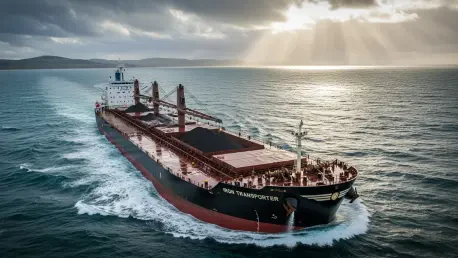

Efficiency in global trade often relies on the invisible restructuring of the giants that move the world’s essential raw materials across vast oceans. The launch of NYK Bulkship Partners (NBSP) marks a decisive pivot from fragmented operations toward a unified maritime force. By absorbing Asahi Shipping, Hachiuma Steamship, and Mitsubishi Ore Transport, the NYK Group has created a centralized hub designed to dominate the dry bulk sector. This evolution focuses on securing a stronger position in the transport of coal, iron ore, and wood chips through a single, powerful entity.
Consolidating Maritime Expertise: The Strategic Evolution of NYK’s Dry Bulk Operations
The transition to NBSP represents a calculated response to the complexities of modern logistics. By merging three veteran firms, the parent group has eliminated the silos that previously separated specialized fleets. This consolidation allows for a more fluid movement of resources, ensuring that the collective intelligence of several decades is focused on a singular mission.
Strategically, this overhaul is about more than just reducing administrative costs. It signals a commitment to “comprehensive capabilities,” where shipowning and management work in lockstep. This alignment ensures that the group can respond to market demands with greater agility than was possible under a multi-subsidiary framework.
Orchestrating Synergy: The Functional and Operational Architecture of NBSP
Fusing Specialized Human Capital to Create a High-Performance Maritime Hub
Integrating the talent pools of three distinct companies creates a powerhouse of maritime knowledge. Specialists who once focused exclusively on specific commodities now operate within a shared environment, fostering a cross-pollination of best practices. This integration provides a significant advantage when navigating the diverse requirements of transporting various bulk goods under one corporate roof.
However, blending three distinct identities into a cohesive unit requires careful management of corporate culture. Leadership must bridge the gap between different legacy systems to ensure that the new entity operates as a single, high-performance organism. The goal is to transform separate histories into a shared future of maritime excellence.
Centralizing Ship Management: Moving Toward an Integrated Service Ecosystem
The scale of NBSP is formidable, balancing a direct ownership of 21 vessels with a managed fleet of 87 ships. This massive oversight capability allows the firm to offer a diversified service model that includes both internal and third-party management. Such a shift broadens the company’s reach beyond traditional shipowning, positioning it as a comprehensive service provider.
By streamlining these operations, the entity reduces the overlap that often plagues large organizations. A centralized management structure improves reliability for global clients who require consistent performance. This ecosystem ensures that vessel maintenance and crew deployment are handled with a high degree of precision across the entire fleet.
Navigating Global Volatility Through Enhanced Operational Governance
Under the leadership of Koichi Uragami, the mandate for NBSP is to generate social and industrial value through safety. A centralized governance model is far better equipped to handle the rapid fluctuations of the dry bulk market than independent units. This structural stability allows the company to maintain competitive pricing even when economic conditions become unpredictable.
Furthermore, centralized decision-making ensures that vessel availability remains optimized. When governance is unified, the company can pivot its strategy quickly to meet shifting trade demands. This operational resilience is essential for maintaining long-term partnerships with major industrial stakeholders who depend on steady supply chains.
Anticipating Industry Shifts: The Strategic Future of Integrated Bulk Logistics
This consolidation mirrors a broader maritime trend toward lean management and the optimization of technical resources. By pooling assets, NBSP can leverage its significant scale to implement advanced digitalization and decarbonization initiatives. Larger entities often have the capital and data access necessary to lead the industry toward a more sustainable and tech-driven future.
The unified framework challenges the old model of fragmented shipping subsidiaries by proving that efficiency gains are found in integration. As the industry moves toward tighter environmental regulations, the scale of NBSP will likely serve as a blueprint for other global carriers. Moving forward, the focus will remain on how this synergy translates into superior service delivery.
Maximizing Resource Efficiency: Strategic Takeaways for the Maritime Sector
The core benefit of this merger lies in the elimination of redundant processes that previously slowed down regional operations. Optimization of fleet oversight ensures that every vessel is utilized to its maximum potential, reducing waste and improving profit margins. For the wider maritime sector, this move highlights the importance of structural agility in a competitive global landscape.
Cargo owners can now engage with a single, robust provider, which offers greater stability for long-term contracts. Managing such a large-scale transition requires a relentless focus on maintaining safety standards to prevent disruptions. The lessons learned during this integration provide a roadmap for other firms looking to consolidate their footprints without sacrificing operational integrity.
A New Standard for Bulk Transport: The Long-Term Impact of the NBSP Merger
The NBSP merger demonstrated how a legacy organization could successfully reinvent its internal structure to meet modern demands. It proved that consolidating specialized expertise under a single leadership umbrella created a more resilient platform for global trade. Stakeholders observed that the shift toward integrated logistics was no longer optional but a necessity for maintaining a competitive edge.
Industry leaders now looked toward implementing similar frameworks to handle shifting trade routes and increasing environmental pressures. The focus shifted to how these massive fleets would utilize their centralized data to drive the next wave of maritime innovation. Ultimately, the creation of this unified entity set a benchmark for reliability and excellence that influenced the entire dry bulk market.