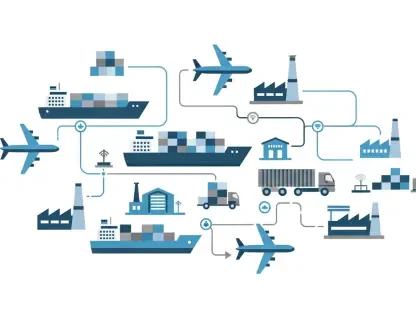

The click of an ‘add to cart’ button once triggered a near-instant, deceptively simple journey for parcels across the globe, but that seamless digital promise has now collided with a complex and costly physical reality. A sweeping and coordinated wave of global customs reform has definitively closed the chapter on an era defined by friction-free, low-cost parcel shipping. The logistics landscape of today is not an evolution of what came before; it is a fundamental reconstruction, built on a foundation of stringent data mandates and governmental enforcement rather than market demand. The pivot point of 2025 has given way to a new operational standard in 2026, where the cost and complexity of moving low-value goods have been permanently recalibrated.
The Golden Age of Friction-Free Trade a Look Back at a Transformed Industry
The period leading up to 2025 can be characterized as a golden age for high-volume, low-value e-commerce. This landscape was defined by the principle of de minimis, a customs threshold below which goods could enter a country with minimal scrutiny and without incurring duties or taxes. This system created a fertile ground for cross-border online retail to flourish, allowing consumers to access global markets with unprecedented ease and affordability. For logistics providers and e-commerce platforms, the model was built on speed and volume, treating millions of parcels as “informal imports” that moved through customs with little friction.
Fueling this instant commerce was the air cargo industry, which became the central artery for fast-moving consumer goods. Airlines dedicated significant freighter capacity to high-growth e-commerce routes, turning what was once a premium service into the default shipping method for a vast array of products. The key market players were large online marketplaces and the logistics integrators that served them, all operating within a system that prioritized rapid transit over granular data collection. This ecosystem thrived on regulatory leniency, allowing for streamlined processes that supported consumer expectations of near-instant delivery from anywhere in the world.
However, the very success of this model sowed the seeds of its own transformation. As parcel volumes exploded, governments worldwide began to recognize the significant tax revenue being lost and the growing security vulnerabilities associated with vast numbers of unvetted packages crossing their borders. The tipping point arrived as global policy, driven by fiscal and security concerns, began to outpace the market’s demand for speed and low cost. A new consensus emerged among regulators that the era of informal, low-visibility imports was no longer sustainable, setting the stage for a coordinated global crackdown.
The Twin Forces Reshaping Global Commerce
The Global Crackdown on De Minimis Why Governments Are Closing the Tax-Free Loophole
The primary driver behind the dismantling of de minimis exemptions is the pressing need for governments to recover vast sums of lost tax revenue. The exponential growth of cross-border e-commerce created a multi-billion-dollar loophole, where international sellers gained a significant price advantage over their domestic counterparts who were required to collect sales taxes like VAT or GST. Closing this loophole allows nations to tap into a massive and previously inaccessible revenue stream, directly monetizing the torrent of small parcels that had long flowed across borders untaxed.
Beyond fiscal recovery, these regulatory changes are designed to level the playing field for domestic businesses. Local retailers have long argued that de minimis thresholds create an unfair competitive environment, disadvantaging brick-and-mortar stores and domestic online sellers who must incorporate local taxes into their pricing. By subjecting all imports, regardless of value, to duties and taxes, governments are rebalancing the market and responding to pressure from local industries struggling to compete with low-cost international sellers.
Finally, the elimination of these thresholds serves a critical national security function. The informal nature of de minimis shipments created significant visibility gaps, making it difficult for customs and border agencies to screen for illicit goods, counterfeits, or items that pose a public safety risk. By requiring formal customs declarations for every parcel, authorities gain a much clearer picture of what is entering their countries, enabling more effective risk assessment and enforcement.
Data as the New Mandate The Rise of Pre-Loading Information Regimes PLACI
Complementing the crackdown on de minimis is the widespread implementation of Pre-Loading Advance Cargo Information (PLACI) systems. These data-driven regimes represent a fundamental shift in the compliance timeline, moving the burden of customs clearance from the point of arrival to before the cargo is even loaded onto an aircraft at its origin. This pre-departure vetting process requires shippers and logistics providers to submit detailed information for security screening and fiscal assessment well in advance of transport.
Central to these PLACI systems is the mandate for highly specific, item-level data. Vague descriptions like “apparel” or “electronics” are no longer acceptable. Instead, submissions must include precise product details, the correct Harmonized System (HS) classification code for each item, and accurate consignee information. This requirement for granular data transforms the shipping process, demanding a level of precision that was once reserved only for large-scale freight shipments.
Consequently, logistics is no longer just a physical operation but a time-critical data management challenge. The ability to collect, validate, and transmit accurate data in a timely manner has become a core commercial capability. Delays or errors in data submission now directly translate into physical delays, as cargo cannot be loaded until it receives clearance from the destination country’s authorities. This makes data accuracy a primary determinant of supply chain velocity and reliability.
Navigating the New Bottlenecks Operational Hurdles in a Regulated World
The new data-intensive requirements have begun to erode airfreight’s single greatest competitive advantage: speed. In the past, air cargo offered a fast-track solution for e-commerce. Now, the pre-loading clearance process introduces a new potential for delay. If item-level data is incomplete, inaccurate, or flagged for review, the shipment is held at origin, negating the time saved by air transport. This has led to a re-evaluation of logistics strategies, as the premium paid for air speed becomes harder to justify if shipments are stalled by data-related bottlenecks.
Furthermore, the costs of non-compliance have escalated dramatically. A simple error in an HS code or a vaguely worded product description can trigger a cascade of negative consequences, including significant financial penalties, mandatory physical inspections at the destination, and lengthy customs holds. These hidden costs can quickly accumulate, turning a once-profitable shipment into a loss. For shippers, the risk of non-compliance now poses a major operational and financial threat, forcing them to invest heavily in data validation systems and compliance expertise.
This new reality has placed a significant documentation burden on the entire supply chain. Logistics providers, freight forwarders, and retailers must now absorb the complexities of generating and managing detailed electronic customs declarations for every single parcel. This requires new technologies, enhanced training for staff, and redesigned workflows to ensure that data flows as smoothly as the physical goods. This administrative overhead adds another layer of cost and complexity to international shipping.
From Recommendation to Regulation a Tour of the New Global Rulebook
The European Unions Blueprint How ICS2 and New Duties Are Setting the Standard
The European Union has positioned itself at the forefront of this global regulatory shift with its comprehensive set of reforms. The phased implementation of its Import Control System 2 (ICS2) established a new benchmark for data-driven security screening, requiring detailed entry summary declarations for all goods destined for or transiting through the EU. This system institutionalized the pre-loading data mandate, making it an operational requirement for all air carriers and forwarders.
Further cementing this new paradigm, the EU has implemented a flat €3 customs duty on every low-value parcel (under €150) as of July 1, 2026. This fee is intrinsically linked to the item-level data submitted through ICS2, effectively monetizing compliance. This measure, combined with the removal of the VAT de minimis exemption, fundamentally alters the economics of low-value e-commerce into the bloc.
The cumulative effect of these policies is that every e-commerce shipment, regardless of its value, is now treated as a formal, dutiable import. Each parcel requires a full customs declaration, is subject to VAT, and now incurs a handling duty. This framework serves as a blueprint for other regions, demonstrating a scalable model for managing and monetizing the immense volume of cross-border e-commerce.
A Coordinated Global Shift North American Pacific and Middle Eastern Reforms
The EU’s actions are not happening in a vacuum but are part of a coordinated global movement toward stricter customs enforcement. In North America, programs like Canada’s Pre-Arrival/Pre-Load Advance Commercial Information (PACT) and the U.S. Air Cargo Advance Screening (ACAS) program have long been laying the groundwork for data-driven risk assessment, with enforcement becoming increasingly rigorous.
Similarly, nations in the Pacific region are following suit. New Zealand introduced its low-value goods levy in April 2026, shifting from flat fees to a more granular, per-item cost recovery model that mirrors the global trend. Australia has also tightened its stance on collecting Goods and Services Tax on low-value imports, signaling a regional consensus on closing tax loopholes.
This trend is also taking hold in emerging logistics hubs. The United Arab Emirates has rolled out its National Advance Information Center (NAIC), another data-driven system designed to screen inbound cargo before its arrival. The proliferation of these interconnected and philosophically aligned systems demonstrates that the move toward pre-departure, data-intensive customs clearance is a truly global phenomenon, establishing a new, harmonized standard for international trade.
The Supply Chain of Tomorrow Adapting to a Post-Cheap Shipping World
From Air to Sea The Strategic Shift in Freight and Fulfillment Models
In response to the rising costs and complexities of airfreight, a strategic rebalancing is underway across the logistics industry. Slower but more cost-effective and predictable transport modes, such as sea freight and intermodal solutions, are gaining significant ground for e-commerce fulfillment. Businesses are increasingly willing to trade the “instant” delivery promise for a more stable and economical supply chain, redesigning their inventory strategies to accommodate longer transit times.
This shift has direct consequences for the air cargo sector. Airlines that once aggressively expanded their dedicated freighter capacity to capture the e-commerce boom are now reassessing their commitments on key trade lanes. With parcel volumes softening and operational hurdles increasing, the profitability of high-volume, low-margin e-commerce routes has diminished, leading to a contraction in dedicated airfreight services for these goods.
The evolution of warehousing strategies reflects this new reality. Instead of relying on a centralized, direct-to-consumer shipping model from a single origin, companies are moving toward regional inventory pooling. By holding stock in distribution hubs closer to end consumers, businesses can fulfill orders domestically, bypassing the complexities and costs of individual cross-border customs clearance for every order and better managing lead times.
Rethinking Geography The Compelling Case for Nearshoring and Regional Hubs
The new regulatory landscape is forcing a fundamental rethink of supply chain geography. Businesses are actively seeking to minimize their exposure to the friction of cross-border customs and the volatility of international regulations. This has made nearshoring—moving production closer to the final market—a far more compelling strategy than it was just a few years ago. By manufacturing goods within the same customs union or free trade area, companies can largely avoid the new data mandates and duties.
This trend is closely linked to the rise of “friend-shoring,” a strategy where companies prioritize sourcing from countries with stable political and trade relationships. In an environment marked by geopolitical tensions and tariff volatility, building supply chains through allied nations is seen as a crucial method for ensuring resilience and predictability. This approach mitigates the risk of sudden trade disputes or regulatory changes that could disrupt operations.
Ultimately, the supply chain of tomorrow is being designed for compliance and resilience, not just speed. Fulfillment networks are being re-engineered around customs checkpoints and regulatory requirements. The most successful businesses are building geographically diversified, multi-tiered inventory models that prioritize stability and predictability over the increasingly elusive promise of instantaneous global delivery.
The Final Verdict Compliance Cost and the New Competitive Edge
A new operational baseline has been firmly established. The customs procedures that were once exceptions for high-value freight have become the non-negotiable standard for every parcel. The era of leveraging loopholes and regulatory shortcuts is definitively over, replaced by a system where item-level data, pre-departure clearance, and per-item fees form the price of entry into global markets.
This new environment serves as a litmus test, clearly separating the compliant from the complacent. Businesses that have invested in the systems, talent, and processes to ensure data accuracy and regulatory readiness are navigating this transition successfully. In contrast, those still relying on outdated practices like mis-valuation or vague product descriptions are facing escalating costs, delays, and penalties that threaten their viability.
The very definition of “cost” in logistics has been redefined. While transit time and freight rates remain important, the new measure of efficiency is data precision. The ability to provide accurate, complete, and timely information to customs authorities is now the most critical factor in controlling costs and ensuring the smooth flow of goods. In this paradigm, a cheap freight rate is worthless if the shipment is held for weeks due to a data error.
The transition was challenging, marked by operational friction and a steep learning curve for the entire industry. However, what has emerged is a more transparent, secure, and equitable global trade environment. The era of easy shipping is over; the era of smart shipping has begun.