
In the high-stakes world of American e-grocery, where multi-billion-dollar technology investments were once seen as the only path forward, Kroger’s recent strategic pullback from its ambitious automation plans signals a seismic shift in the industry’s digital transformation narrative. This move forces a critical re-examination of the true cost of a robotic future and whether the promise of fully automated fulfillment was a dream built on shaky financial ground.
The E-Grocery Arms Race Setting the Stage for a Digital Showdown
The American online grocery market has long been a battleground dominated by digital-native behemoths like Amazon and retail titans like Walmart. Their massive scale, established logistics networks, and deep pockets created immense pressure on traditional grocers. For companies such as Kroger, the strategic imperative was clear: innovate aggressively or risk being relegated to the history books. This environment fueled a frantic arms race, with billions of dollars pouring into technological solutions designed to capture a share of the burgeoning e-commerce market.
In response to this competitive onslaught, grocers were forced to make defining choices about their fulfillment strategies. The industry largely split into two camps. One championed the construction of large, centralized, and highly automated Customer Fulfillment Centers (CFCs), promising unparalleled efficiency and scale. In contrast, the other approach favored leveraging existing assets, using physical stores as micro-fulfillment hubs for in-store picking, often relying on third-party platforms like Instacart for last-mile delivery. Each model presented a distinct vision for the future of grocery, with vastly different implications for capital investment, operational complexity, and customer service.
From Grand Visions to Ground Realities Tracking the Ocado Experiment
The All In Bet on a Robotic Future
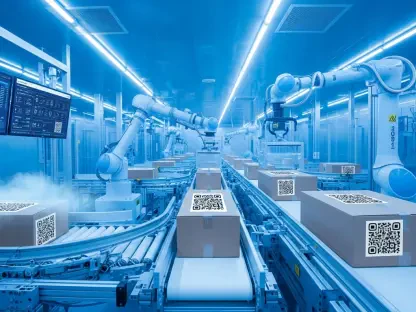
Kroger’s landmark 2018 partnership with the U.K. technology firm Ocado was a decisive bet on the centralized, automated model. The plan was to build a sprawling network of high-tech CFCs, or “sheds,” powered by sophisticated robotics to assemble customer orders with minimal human intervention. These orders would then be dispatched to smaller “spoke” facilities for local delivery. This strategy was designed not just to compete with but to leapfrog rivals by creating a fulfillment engine that promised superior efficiency and accuracy at an unprecedented scale.
However, the landscape of consumer behavior has shifted dramatically since that initial vision was conceived. The pandemic accelerated the adoption of online grocery shopping, seemingly validating Kroger’s heavy investment. Yet, the post-pandemic era brought a recalibration. As shoppers returned to in-store experiences and delivery expectations shifted toward greater speed and convenience, the rigidity of the capital-intensive CFC model became more apparent. The high fixed costs and hub-and-spoke logistics struggled to adapt to fluctuating demand and the consumer’s growing preference for rapid delivery, prompting a necessary and costly strategic re-evaluation.
By the Numbers The Soaring Costs and Elusive Profits
The financial burden of Kroger’s automated dream proved to be immense. Building and operating massive, robotic warehouses requires staggering upfront capital expenditure, followed by significant ongoing operational costs for maintenance, energy, and specialized labor. The path to profitability for these facilities was long and fraught with uncertainty, a reality that became increasingly difficult to justify as market conditions evolved and the pressure for near-term financial performance mounted.
The financial consequences of this strategic pivot are stark, punctuated by a scheduled $350 million payout to Ocado to compensate for the cancellation of a planned CFC in Charlotte and the closure of three other facilities. This figure represents a tangible admission that the original expansion plan was no longer viable. The market is now watching closely as Kroger reallocates capital away from new construction and toward optimizing its existing assets, a move that Wall Street is likely to interpret as a pragmatic, if painful, step toward making its digital operations financially sustainable.
Cracks in the Blueprint Why the Automated Dream Stumbled
The primary challenge of the centralized CFC model lies in its inherent operational inflexibility and high fixed costs. Unlike in-store fulfillment, which can scale with demand by leveraging existing store infrastructure and staff, a massive automated warehouse operates most efficiently at or near full capacity. When order volumes fluctuate, the model becomes economically strained. This stands in stark contrast to the agility of using a local store footprint, which allows for quicker adaptation to changing local market dynamics without the burden of a multi-million-dollar facility.
Market-driven hurdles further complicated the automated blueprint. The economic viability of serving less-dense suburban and rural areas from a central hub proved challenging, as long delivery routes ate into already thin margins. Concurrently, intense competition in the last-mile delivery space from nimble gig economy players created a difficult environment for a slower, more rigid hub-and-spoke system. The solution for Kroger became clear: a strategic retreat from its capital-heavy expansion in favor of a hybrid approach that better utilizes its extensive network of physical stores and embraces partnerships with third-party logistics providers.
Navigating Labor and Logistics The Regulatory Landscape of E-Grocery
The turn toward automation and the subsequent closures have had a significant impact on the grocery workforce. The shutdown of the Nashville spoke facility, for instance, is set to result in 132 layoffs, a pattern repeated at other closing locations. These developments highlight the human cost of such large-scale technological pivots and raise important questions about the future of labor in an increasingly automated retail sector.
Beyond labor, large-scale fulfillment centers are subject to a complex web of regulations governing everything from food safety and handling to transportation and logistics. Ensuring compliance across a centralized network adds another layer of operational complexity and cost. These standards must be meticulously maintained, whether an order is picked by a robot in a CFC or a person in a local store, creating a challenging regulatory environment for any large-scale grocery operator.
A Pivot to Pragmatism Charting Kroger’s Next Chapter in E-Commerce
Kroger’s new e-commerce strategy is defined by a hybrid, pragmatic approach. The company will now operate a smaller, more focused network of its most efficient CFCs, supplementing their capacity with a renewed emphasis on in-store picking. This model is designed to leverage the unique strengths of both systems: the scale of automation for dense markets and the flexibility and proximity of its existing brick-and-mortar stores for broader coverage and faster fulfillment options.
While the expansion has halted, the partnership with Ocado is not over; it has merely evolved. The collaboration will now focus on maximizing the performance of the remaining facilities. Initiatives include expanding capacity at the Detroit CFC and implementing new Ocado technology, such as the AutoFreezer system in the forthcoming Phoenix facility. This shift indicates a more targeted strategy aimed at enhancing efficiency and profitability within a smaller, optimized automated footprint rather than pursuing nationwide expansion at any cost.
The Final Checkout A Necessary Lesson in Digital Transformation
Kroger’s strategic retreat from its aggressive, high-capital automation expansion marks a definitive shift in its e-commerce philosophy. This pivot represents a clear prioritization of near-term profitability and operational flexibility over a long-term, high-risk technological vision. The company is actively moving toward a more balanced and sustainable hybrid model that leverages its greatest existing asset: its vast network of physical stores.
The initial, all-in gamble on a fully automated future was over. It was replaced by a more pragmatic and financially grounded approach to competing in the digital grocery arena. The key takeaway from Kroger’s journey offers a crucial lesson for the entire industry: enduring success in e-grocery may not come from a single, revolutionary technology but from a flexible, hybrid model that thoughtfully balances advanced innovation with the timeless strategic value of physical assets.