
While the World Was Watching Self Driving Cars Did the Trucking Industry Quietly Cross the Finish Line?
As public attention remained fixed on the promise of passenger self-driving cars, a revolution was taking place on the highways connecting warehouses to storefronts, where for some Fortune 50 retailers, fully autonomous, driverless trucks are no longer a future concept but a daily operational reality. This transition from experimental technology to a core business tool marks a significant inflection point, proving that in the right application, the driverless future has already arrived. The quiet success in this sector suggests that the path to profitability for autonomy was not on bustling city streets but on the predictable, repetitive arteries of the commercial supply chain.
The Race Against Rising Costs and an Empty Drivers Seat
The logistics industry has been grappling with a perfect storm of economic pressures, making it fertile ground for disruptive innovation. A persistent and worsening shortage of qualified drivers, combined with the escalating costs of fuel and labor, has created significant operational bottlenecks. These challenges, amplified by the increasing demand for a more resilient and responsive supply chain, have pushed companies to seek solutions that promise efficiency and consistency. Automation emerged not as a luxury but as a strategic necessity to maintain the flow of goods.
It was the “middle-mile”—the short, repetitive journey from a distribution center to a local store or fulfillment hub—that became the ideal testbed for autonomous technology. Unlike long-haul trucking, which involves complex, unpredictable cross-country routes, the middle-mile is characterized by fixed, repeatable paths. This predictability drastically reduces the variables an autonomous system must handle, making it a more manageable and solvable problem. By focusing on this niche, developers could refine their technology in a controlled yet commercially valuable environment.
A New Business Model on the Open Road
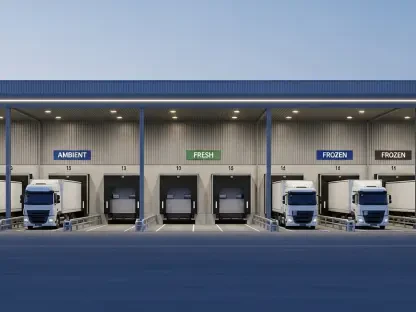
Leading this charge is the startup Gatik, which has successfully transitioned its technology from pilot programs to paid, daily commercial operations without a human safety driver. This leap is the critical distinction between a promising concept and a viable business. The company is now executing fully autonomous deliveries for major retailers, moving ambient, refrigerated, and frozen goods on public roads. This model demonstrates that a specialized approach can yield commercial results far sooner than a one-size-fits-all solution for all types of driving.
The key to Gatik’s success was cracking the operational code. Instead of aiming for universal autonomy, the company focused its efforts on short-haul, fixed routes using smaller 26- and 30-foot box trucks. This strategy streamlined the technological challenge and aligned perfectly with the hub-and-spoke logistics models used by large retailers. Active, driverless delivery networks are now fully operational in key commercial corridors across Texas, Arizona, Arkansas, and Ontario, serving as a blueprint for a new era in logistics.
By the Numbers: Vetting the Driverless Revolution
The evidence of this maturation is grounded in hard data. Since beginning its freight-only operations in mid-2025, Gatik has completed over 60,000 incident-free commercial deliveries and logged more than 10,000 driverless miles. This safety and reliability record has been crucial in building shipper confidence. The financial backing further validates the model, with an impressive $600 million in contracted revenue signaling a firm belief from major clients that the technology delivers a tangible return on investment.
This progress is not happening in a vacuum. Gatik’s success, alongside deployments from competitors like Aurora Innovation in different segments of the trucking market, indicates a broader industry tipping point. The commercial deployment of these driverless fleets followed rigorous independent safety reviews and detailed briefings with federal regulators, establishing a critical precedent for safe and scalable operations. This methodical approach has been instrumental in securing the regulatory and public trust necessary for expansion.
The New Logistics Playbook: How Businesses Can Leverage Autonomy
For businesses, the advent of commercially viable autonomous trucking opens up a new strategic playbook. One of the most immediate benefits is the ability to increase delivery frequency without a proportional increase in labor costs. Autonomous trucks can operate around the clock, enabling retailers to move from a single daily delivery to multiple runs, ensuring shelves remain consistently stocked and better meeting fluctuating consumer demand. This creates a more dynamic and responsive supply chain.
Furthermore, automation enhances predictability, a cornerstone of efficient logistics. By relying on automated schedules rather than being constrained by driver hours-of-service regulations, companies can achieve a new level of consistency. Logistics managers can now begin to frame their implementation strategy by asking key questions: Are our routes repetitive and under a certain mileage? Does our network operate on a hub-and-spoke model? Answering these helps determine if current autonomous solutions are a fit for their specific operational needs.
The journey of autonomous trucking from a futuristic concept to a profit-generating service on public roads marked a pivotal shift in the logistics landscape. By strategically targeting the middle-mile, companies proved that a focused application of technology could solve immediate, real-world business challenges. The successful deployment across multiple states, backed by substantial commercial contracts and a flawless safety record, confirmed that a new chapter in supply chain management had begun. This achievement did not just represent a technological milestone; it established a commercially viable playbook for the future of freight.