
In the rapidly evolving landscape of autonomous mobility, the shift from experimental prototypes to global infrastructure platforms is being spearheaded by industry giants like Uber, Lyft, and NVIDIA. This transformation represents a move toward “Physical AI,” where vehicles no longer just follow rigid rules but actually reason through the complexities of urban environments. As these companies prepare to deploy large-scale autonomous fleets in cities like Los Angeles and San Francisco by 2027, the focus has shifted toward creating a unified AI infrastructure that integrates seamlessly with existing transportation networks. This interview explores the technical milestones, logistical hurdles, and infrastructural changes required to make autonomous cities a reality.
Summarizing the key themes of this discussion, we delve into the phased deployment strategies that utilize human operators to train AI on local driving cultures and the emergence of “chain-of-thought” reasoning to handle unpredictable road scenarios. We also examine how multimodal AI is revolutionizing real-time mapping and the logistical complexities of managing hybrid ecosystems where human drivers and robotaxis coexist. Finally, the conversation highlights the vital role of urban planning and data-driven infrastructure in supporting this next generation of global mobility.
Initial autonomous rollouts often start with data-collection and operator-led phases before moving to driverless Level 4 operations. How do these preliminary stages help train AI for specific local driving cultures, and what technical milestones must a fleet achieve before human oversight is completely removed?
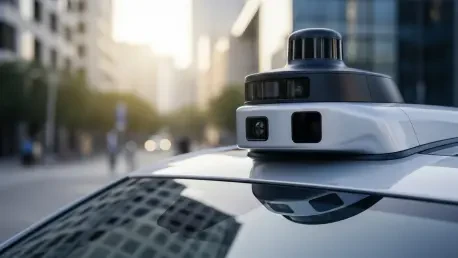
The phased approach is essential because every city possesses its own unique “DNA” in terms of road layouts, signage, and the subtle nuances of local driving behavior. During the initial data-collection phase, vehicles act as mobile sensors, gathering vast amounts of information to train AI models on the specific environmental variables of a city. Transitioning to operator-led deployments allows a human to remain in the loop, providing a safety net while the system encounters “long-tail” scenarios that aren’t easily simulated. To remove human oversight entirely and reach Level 4 autonomy, a fleet must demonstrate consistent reliability across thousands of miles of diverse urban terrain. This involves hitting rigorous technical milestones in sensor fusion and safety-certified computing, ensuring the vehicle can navigate safely even when localized data or GPS signals are imperfect.
Reasoning-based AI models are now being used to handle “long-tail” scenarios like unpredictable construction zones and erratic pedestrian behavior. How does this chain-of-thought approach change how a vehicle interprets physical environments, and what are the specific benefits for navigating chaotic urban centers?
The introduction of reasoning-based models, such as NVIDIA’s Alpamayo, marks the “ChatGPT moment” for physical AI, moving us away from simple reactive perception. Instead of just identifying an object as a “pedestrian” or a “barrier,” the vehicle uses chain-of-thought reasoning to interpret the context of a situation, much like a human driver would. For example, if a vehicle encounters a temporary traffic diversion with confusing hand signals from a worker, the AI can reason through the most logical path rather than coming to a hard stop. This is a game-changer for chaotic urban centers where unpredictable elements are the norm rather than the exception. By understanding the “why” behind environmental changes, autonomous systems can maintain a smooth flow of traffic and respond more fluidly to the erratic movements of city life.
Traditional digital maps frequently struggle to stay current with temporary roadworks and lane closures. How can vision-language reasoning and multimodal AI be used to update mapping systems in real-time, and what are the implications for reducing city-wide traffic congestion and improving navigation safety?
Traditional mapping is often static, but by integrating vision-language reasoning and multimodal AI, we can transform every vehicle in the fleet into a real-time mapping agent. These systems use onboard cameras and sensors to detect discrepancies between the digital map and the physical world—such as a new lane closure or a fresh construction zone—and update the central system almost instantly. This creates a dynamic feedback loop where the data from millions of daily rides ensures the map is a living, breathing representation of the city. For urban planners, the implications are massive, as this real-time accuracy significantly reduces traffic congestion caused by outdated navigation routes. Improved mapping directly translates to higher safety standards, as vehicles are never surprised by sudden changes in the road layout, allowing for smoother transitions through high-traffic zones.
The industry is moving toward a hybrid ecosystem where human drivers and various autonomous fleets coexist on a single platform. What are the primary logistical challenges of managing such a diverse network, and how can predictive modeling improve the efficiency of rider-driver matching during this transition?
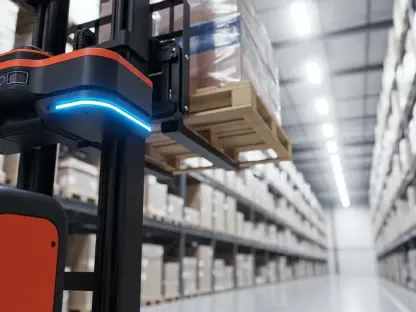
Managing a hybrid ecosystem is a complex orchestration task that requires balancing the availability of human-driven cars with the deployment of autonomous units. One of the primary logistical challenges is ensuring that the transition remains seamless for the end-user, regardless of whether a human or a robot picks them up. To solve this, companies are leaning heavily on predictive modeling and AI infrastructure to optimize millions of daily rides in real-time. By using advanced algorithms like the RAPIDS Accelerator, platforms can process massive datasets to predict demand spikes and match riders with the most efficient vehicle type available. This high-performance computing reduces wait times and operational costs, ensuring that the marketplace remains balanced even as we scale toward a future where autonomous fleets take on a larger share of the workload.
Autonomous vehicles depend heavily on standardized infrastructure, clear signage, and consistent road maintenance. In what ways should construction professionals and urban planners change their approach to road design today, and how could data from autonomous fleets eventually inform future infrastructure investment decisions?
Urban planners and construction professionals need to start viewing roads not just as physical asphalt, but as digital interfaces that must be readable by both humans and machines. This means moving toward standardized signage and embedded sensors that provide consistent data points for autonomous systems, especially in complex construction zones. In the near future, the data generated by autonomous fleets will provide unprecedented visibility into infrastructure performance, highlighting areas with frequent potholes or poorly timed traffic lights. This wealth of information will allow city officials to make smarter, data-driven investment decisions, focusing maintenance efforts where they are most needed. Ultimately, roads will be built with digital connectivity in mind, creating a self-optimizing transport network that bridges the gap between physical construction and digital intelligence.
What is your forecast for global mobility?
I believe we are on the verge of seeing mobility transform from a fragmented service into a fully integrated, AI-driven infrastructure layer that defines how cities function. By 2028, with Uber and Lyft scaling autonomous operations across 28 cities worldwide, the “robotaxi” will no longer be a novelty but a core component of the urban fabric. We will see a shift where transport networks become self-optimizing, using real-time data to solve congestion before it even happens. This evolution will not just replace drivers; it will fundamentally redesign our urban environments, making them safer, more accessible, and significantly more efficient for everyone. The next decade will prove that the convergence of physical AI and global platforms is the most significant advancement in transportation since the invention of the internal combustion engine.