
I’m thrilled to sit down with Rohit Laila, a veteran in the logistics industry with decades of experience in supply chain and delivery systems. Rohit’s career has been defined by his knack for integrating cutting-edge technology and innovative solutions into complex industrial sectors, including rail and infrastructure. Today, we’re diving into his insights on sensor technology, particularly how tailored solutions and strategic partnerships are transforming challenges into opportunities for progress. Our conversation explores the intricacies of customizing sensor systems for high-stakes projects, the collaborative spirit behind problem-solving, and the impact of engineering excellence on industries like high-speed rail. Let’s get started with how these innovations come to life.
How did your journey in logistics and technology lead you to focus on sensor solutions for infrastructure projects like rail systems?
My career in logistics always revolved around efficiency and precision, and over the years, I saw how technology could bridge gaps in complex systems like rail infrastructure. Early on, I worked on supply chain projects where monitoring and data acquisition were critical, and I realized that sensors were the heartbeat of real-time decision-making. That curiosity led me to dive deeper into inertial and structural monitoring solutions, especially for rail, where safety and stability are non-negotiable. I remember a project from a decade ago where we struggled with inaccurate vibration data on a rail line— it was a wake-up call about the need for reliable, tailored sensor systems. Working with engineering teams to solve those issues felt like solving a puzzle, and I’ve been hooked ever since on pushing the boundaries of what sensor tech can do for industries like high-speed rail.
Can you walk us through the process of identifying specific needs for a massive project like monitoring a high-speed rail viaduct, and what challenges typically stand out?
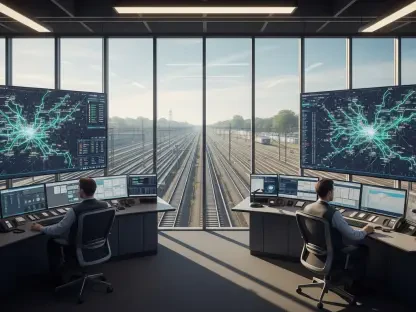
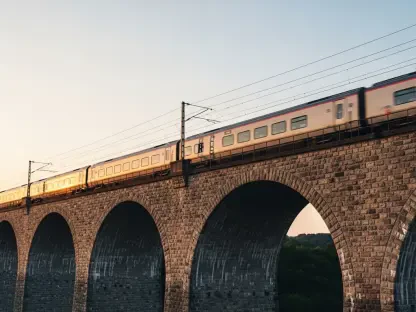
Absolutely, the process starts with a deep dive into the client’s environment and objectives. For something as massive as a 2.1-mile high-speed rail viaduct, like the one in the UK’s HS2 program, we begin by mapping out the structural stresses—think extreme loads from trains zipping by at high speeds, plus environmental factors like wind or temperature shifts. The challenge often lies in pinpointing exactly where and how to measure those stresses without disrupting construction or operation; it’s like threading a needle on a moving target. I recall a moment where we had to adjust sensor placement mid-project because initial data showed unexpected vibration patterns in certain deck segments. We overcame this by iterating designs rapidly with engineers, ultimately integrating high-precision quartz accelerometers at defined points to capture accurate data. It’s exhausting but exhilarating when you see the system ensuring smooth, safe operation under such intense conditions.
Collaboration seems to be at the core of delivering these custom solutions. Can you share a memorable project where partnership played a pivotal role in shaping the outcome?
Collaboration is everything in this field. One standout project was developing a sensor system for structural monitoring of a rail viaduct—again, tied to the HS2 initiative. We worked hand-in-hand with a distribution partner who shared our obsession with getting it right, and their on-the-ground insights from the UK market were invaluable. I remember late-night brainstorming sessions where we debated how to balance sensitivity and durability in the sensor design, eventually leading to a bespoke solution like a specialized accelerometer series. The back-and-forth wasn’t just about tech specs; it was about understanding the customer’s long-term vision for safety and maintenance. That partnership didn’t just solve a problem—it set a new benchmark for what we could achieve together, and seeing those sensors now monitor a 2.1-mile structure with precision is a point of pride.
When it comes to accountability in these joint efforts, could you describe a specific instance where stepping up made a tangible difference for a client?
Accountability is non-negotiable when you’re dealing with critical infrastructure. I recall a project in the UK where a client faced delays because a sensor system wasn’t delivering the granular data needed for a rail monitoring application. We could’ve pointed fingers, but instead, our team took ownership, diving into diagnostics and realizing the calibration was off for the specific environmental conditions of the site. We worked overtime to tweak the system, testing and retesting until it met the client’s exact needs for vibration and tilt control. I can still picture the relief on the project manager’s face during the final review when we showed stable, actionable data. That moment reinforced for me that being proactive—owning the problem and the solution—can turn a potential failure into a win, keeping a project on track and trust intact.
With your engineering-driven approach, how do you balance client input with a flexible sensor portfolio to innovate in sectors like rail and civil engineering?
It’s a bit of an art form, honestly. We start by listening—really listening—to the client to grasp their unique pain points, whether it’s monitoring a bridge or a high-speed rail line. Then, we map their needs against a versatile sensor portfolio, looking for the best fit or identifying gaps where customization is needed. A memorable case was when we tackled a complex viaduct monitoring challenge; the client needed ultra-precise data across a curving 2.1-mile structure. We blended their feedback on load points with our range of accelerometers, iterating designs to create a solution that not only worked for their project but also became a broader tool for civil engineering applications. The process felt like crafting a custom suit—every adjustment mattered, and seeing the final system ensure safety under extreme stress loads was incredibly rewarding. It’s about marrying technical options with real-world demands to spark something new.
Looking ahead, what is your forecast for the future of sensor technology in rail and infrastructure sectors?
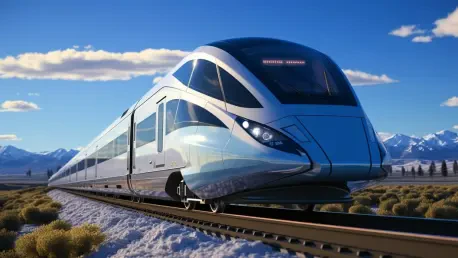
I’m incredibly optimistic about where sensor technology is headed for rail and infrastructure. We’re on the cusp of smarter, more integrated systems that not only monitor but predict issues before they arise, using AI and real-time data analytics alongside sensors like high-precision accelerometers. I envision a future where every mile of rail, every bridge, is embedded with intelligent monitoring that cuts maintenance costs by double-digit percentages while boosting safety. The challenge will be scaling these innovations affordably, but with partnerships and a shared drive for problem-solving, I believe we’ll see transformative leaps in the next five to ten years. It’s an exciting time to be in this space, and I can’t wait to see how we’ll redefine what’s possible.