
From contract to corridor change: why a 12,000 HP bet reshaped Indian freight—and what this story covers
Freight rarely grabs the spotlight, yet a 12,000 HP locomotive program quietly rebalanced capacity, speed, and reliability across India’s busiest corridors while prompting seasoned rail planners, supply chain chiefs, and industrial strategists to reassess what electric heavy haul can deliver when manufacturing, maintenance, and policy align at scale. This roundup gathers those voices to examine how the WAG-12B fleet—born of a 2015 public–private partnership between Indian Railways and Alstom under Madhepura Electric Locomotive Private Limited—moved from contract to network-level impact.
Operators point to a cluster of milestones as the hinge: the first unit entering service in 2020, certification to run at 120 km/h later that year, and deliveries crossing 550 by the program’s decade mark. Policy analysts frame these achievements as proof that domestic industrialization and long-horizon maintenance contracts can coexist. However, skeptics ask whether high-power fleets risk outpacing infrastructure upgrades. The sections below distill these converging and divergent views.
Inside the WAG-12B revolution: technology, scale, and the uptime machine
Power that moves policy: 12,000 HP, IGBT traction, regenerative braking, and the 120 km/h certification that unlocked flexibility
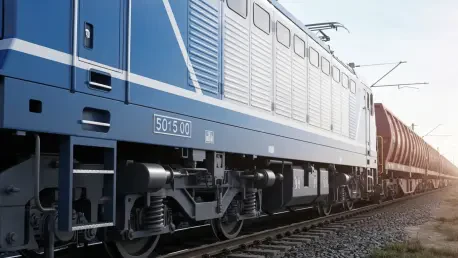
Traction engineers consistently highlight the leap from conventional electric freight to 12,000 HP, double-section, eight-axle locomotives. The use of IGBT propulsion and regenerative braking, they say, turned brute force into controllable, efficient power that returns energy to the grid. That blend impressed safety regulators and, according to several operations heads, cut energy intensity without compromising tractive effort on India’s heavy-haul routes.
Network planners go further: the 120 km/h certification became a policy tool as much as a technical stamp. With that limit, freight paths could be threaded more efficiently, and during festive peaks, some units even supported passenger movement without disrupting timetables. A few dispatchers caution that speed ratings do not automatically lift average speeds on congested lines, yet most agree the certification expanded scheduling options and resilience.
Building in India, at Indian scale: Madhepura’s 85% localization, supplier deepening, and the Make in India/Atmanirbhar flywheel
Industrial strategists praise the Madhepura plant’s reported 85% localization, calling it a flywheel that pulled in toolmakers, casting specialists, and electronics vendors. Workforce development—tens of thousands of skilled roles over time—figures prominently in this narrative. For many manufacturing leaders, the real triumph was not a one-off transfer, but a sustained supplier base that can meet a steady output near 120 locomotives per year.
There is, however, a constructive tension in the feedback. Some procurement experts warn that deep localization requires disciplined quality assurance and diversified vendor pools to avoid single-point dependence. Others counter that the program’s scale has already broadened the supplier map, anchoring India among the few countries capable of producing such high-powered electric freight locomotives end-to-end. Both sides converge on one point: consistent orders kept the ecosystem learning.
Reliability as infrastructure: Saharanpur and Nagpur depots, predictive diagnostics, and Prompt Response Teams driving high availability
Maintenance chiefs describe Saharanpur and Nagpur depots as the invisible backbone. By merging predictive analytics with condition-based schedules, teams reduced unscheduled downtime and improved component life. Drivers report a palpable shift: longer runs with fewer interruptions, aided by remote diagnostics that flag anomalies before they cascade into failures.
Field supervisors credit Prompt Response Teams for the final link. Rapid on-site support, they note, changed how incidents ripple across the network; minor issues stayed minor. A few budget watchers question lifecycle costs for such a data-heavy approach, yet the consensus view is that reliable availability functions like new infrastructure—freeing capacity without laying a single kilometer of track.
Network effects in practice: heavier trains, faster turns, festive-season passenger support, and what the PPP model made possible
Freight customers emphasize the tangible gains: heavier consist handling, quicker acceleration out of loops, and faster turnarounds in yards. These improvements, they argue, compound across corridors, translating into better asset utilization. During holiday peaks, planners leveraged the fleet’s speed certification to protect passenger throughput, a use case that surprised even some insiders by how smoothly it slotted into operations.
On the financing and governance side, infrastructure economists highlight the PPP structure as the enabler. Combining manufacturing with long-term maintenance aligned incentives around uptime rather than deliveries alone. A minority of commentators urge stronger performance benchmarking within PPP contracts, but most agree the model accelerated technology absorption and locked in service commitments that pure procurement would have struggled to secure.
What the first decade teaches: distilled takeaways and a practical playbook for scaling electric freight
Across interviews, five themes repeat: power with efficiency, localized scale, predictive maintenance, flexible deployment, and policy alignment. The WAG-12B program touched each, creating a virtuous cycle where high-availability assets justified data systems, which in turn justified deeper supplier capabilities. The delivery count passing 550 underscored that this was not a pilot but a platform.
Practitioners outline a pragmatic playbook: pair high-power traction with grid-aware features like regenerative braking; sustain domestic orders to stabilize supplier learning curves; build depots early to shape operating habits; and keep certification pathways open to unlock flexibility. Critics remain wary of uneven corridor upgrades, yet even they concede that reliable locomotives reduce friction and make every minute of track time count.
Where the rails lead next: keeping momentum on green logistics, domestic capability, and PPP-led modernization
Sustainability advisors view the fleet as a lever for greener logistics, most effective when matched with electrified corridors and energy management that captures regenerative gains at scale. They advocate transparent metrics on carbon intensity per ton-kilometer, arguing that shared baselines will drive continuous improvement across operators and depots.
Industry voices press for the next tranche of capability building: inverter manufacturing depth, advanced bogie components, and workforce upskilling tied to analytics and cybersecurity. Contract specialists, meanwhile, suggest PPP 2.0 terms that sharpen outcome-based incentives, encourage interoperable data standards, and plan midlife upgrades from day one. For readers tracking the space, adjacent topics included depot digital twins, power quality on high-density routes, and financing models that bundle rolling stock with grid-side enhancements.
In closing, the roundup pointed to a simple conclusion framed by varied stakeholders: a high-power electric platform, localized at scale and supported by predictive maintenance within a PPP structure, had raised freight productivity while bolstering industrial capability. The next steps were to codify data-sharing norms, anchor supplier diversification, and align corridor upgrades with fleet potential—so the gains achieved on paper and in depots traveled farther across India’s rails.