
The strategic partnership between GOFO and QLS represents a significant shift in the Dutch e-commerce landscape, merging specialized last-mile delivery with large-scale fulfillment expertise. Rohit Laila, a seasoned veteran in supply chain management and a vocal advocate for logistics innovation, joins us to break down how this collaboration addresses the modern demands of over 3,000 webshops. In this discussion, we explore the complexities of regional hub expansion, the operational weight of managing a massive workforce across international borders, and how technical integrations like photo-based proof of delivery are reshaping consumer trust.
With new delivery hubs opening in Boxtel and Rotterdam to complement existing Amsterdam operations, what logistical challenges arise during such rapid expansion?
Expanding a footprint into Boxtel and Rotterdam by Q3 2025 is an aggressive move that requires more than just signing leases; it demands a total synchronization of the sorting logic. When you integrate these new hubs with the existing Amsterdam center, the primary hurdle is maintaining the “first-time right” delivery rate for the thousands of webshops relying on the network. We track success through rigorous transit-time metrics, ensuring that the hand-off from the central sort to regional hubs doesn’t add even an hour of latency. There is a specific tension in the air when a new hub goes live, as teams work to ensure the specialized last-mile network remains as agile as it was when it only served the capital.
Operating 20,000 square meters of warehouse space across Dordrecht and Alblasserdam requires immense precision. As operations scale into Belgium and the United Kingdom, how do you adjust fulfillment workflows to handle international nuances while keeping labor costs manageable for a large workforce?
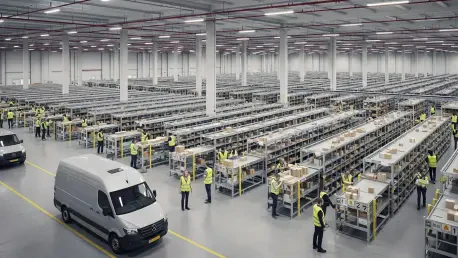
Managing a workforce of over 1,000 employees across 20,000 square meters of high-tech space is a balancing act of human energy and automated precision. As we push into Belgium via ShopWeDo and the UK through J&J Global Fulfilment, we have to localize our workflows to meet specific regional expectations while maintaining the core QLS efficiency. The complexity of international logistics often shows up in the small details, like the different labeling requirements or the unique “last-mile” habits of a British consumer compared to someone in Alblasserdam. To keep costs manageable, we focus on picking optimization that reduces the physical strain on our teams, ensuring that despite our growth, the operational heart of the company remains lean and responsive.
Integrating API-driven tracking and photo-based Proof of Delivery can significantly reduce delivery disputes. What specific data points demonstrate the impact of these technologies on the end-customer experience, and what technical steps should retailers take to ensure their storefronts are fully synced with these real-time updates?
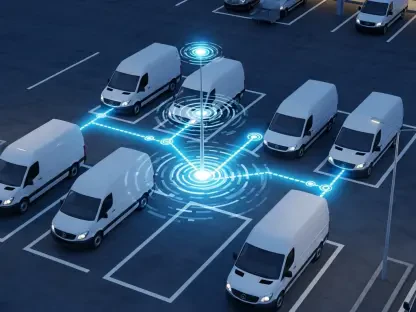
The implementation of photo-based Proof of Delivery (PoD) has been a game-changer for transparency, providing a visual confirmation that immediately settles the “where is my package” anxiety. By offering real-time track-and-trace via seamless API integration, we see a measurable drop in customer service inquiries, which allows webshops to focus on growth rather than dispute resolution. Retailers need to ensure their back-end systems are talking to our APIs in real-time, moving away from batch processing to live data streams. There is a palpable sense of relief for a consumer when they receive a notification featuring a clear photo of their parcel at their doorstep, and that emotional security is what drives brand loyalty in a competitive market.
Diversifying a carrier network is a common strategy for risk management and cost control. How does adding specialized last-mile providers impact pricing structures for growing retailers, and what criteria should be used to balance delivery speed against the need for scalable, high-volume solutions during peak seasons?
When we bring a specialized provider like GOFO into the mix, it allows us to offer more competitive last-mile pricing by optimizing the routes that standard carriers might find less efficient. For a growing retailer, this diversification means they aren’t vulnerable to a single point of failure during the frantic peak seasons when volumes skyrocket. We evaluate our partners based on their ability to maintain service quality under pressure, ensuring that the “last-mile” doesn’t become a bottleneck for the 3,000 webshops we support. It’s about creating a flexible grid where cost and speed are balanced, allowing a shop in Dordrecht to ship to a customer in the UK with the same confidence as a local delivery.
What is your forecast for e-commerce logistics?
I believe the future of this industry lies in the complete erasure of the “seams” between warehouse fulfillment and the final doorstep delivery. We are moving toward a reality where predictive logistics will allow us to move inventory closer to the customer before they even click “buy,” powered by the kind of deep API integrations we are seeing today. The collaboration between fulfillment giants and specialized last-mile networks will become the gold standard, as no single company can master every link in the chain alone. Expect to see a massive emphasis on “green” last-mile solutions and even more sophisticated transparency tools, as the modern consumer will no longer accept anything less than total visibility and carbon-conscious delivery options.