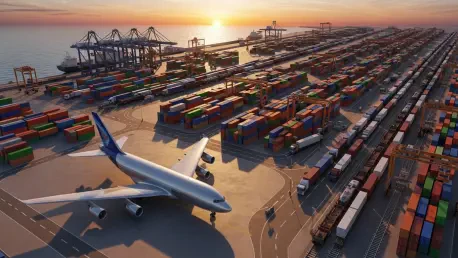

In a world defined by rapid economic shifts and increasingly fragmented supply chains, the global air cargo industry has evolved from a mere logistics service into a vital artery of international commerce, indispensable for navigating the complexities of modern trade. Once operating in the background, this sector has been thrust into the spotlight, proving its resilience amidst geopolitical tensions and policy uncertainties that demand unprecedented levels of speed and reliability. The consensus across the industry is clear: reactive adaptation is no longer sufficient. To secure its future and continue enabling global economic activity, the air cargo sector must embark on a proactive journey of transformation. This involves a collective commitment to strengthening its foundational pillars, ensuring it becomes not only faster and more efficient but also significantly more sustainable. This shift from discussion to decisive action marks a pivotal moment, as industry leaders gather to implement the strategies that will define the next era of air freight.
Navigating a New Regulatory and Digital Landscape
A foundational element of the industry’s evolution lies in the urgent need for modernized, globally harmonized regulations capable of keeping pace with the ever-increasing complexity of transported goods. The rise of special shipments, including time-sensitive pharmaceuticals, volatile lithium batteries, and the sheer volume of e-commerce parcels, has placed immense strain on existing regulatory frameworks. These outdated systems often create bottlenecks, reduce predictability, and introduce unnecessary risks. The objective is to collaboratively design and implement well-conceived regulations that enhance efficiency and transparency across international borders without compromising the rigorous safety and security standards that are the bedrock of aviation. Such a modernized approach would streamline processes, reduce delays, and create a more predictable environment for shippers and forwarders, ultimately strengthening the entire supply chain and enabling smoother global trade flows.
Parallel to regulatory reform, the push for accelerated digitalization has transitioned from a long-term aspiration to an immediate operational imperative. The era of paper-based processes and siloed data systems is rapidly drawing to a close, replaced by a demand for end-to-end visibility and seamless information exchange. Initiatives like ONE Record are at the forefront of this transformation, establishing a standardized protocol for data sharing across the entire logistics chain, from shipper to consignee. The tangible implementation of these digital solutions is crucial for unlocking new efficiencies, reducing the high cost of human error, and enabling smarter, data-driven decision-making. By creating a single, verifiable record for each shipment, the industry can significantly improve tracking, enhance security, and provide customers with the real-time insights they now expect, solidifying air cargo’s position as a premium, high-value logistics solution.
The Imperative of Sustainability and Strategic Growth
Beyond operational efficiency, the air cargo sector is facing a critical inflection point regarding its environmental responsibilities. The industry must proactively address its carbon footprint by aggressively pursuing pathways to reduce emissions and integrate new, greener technologies into its operations. This commitment to sustainability is no longer a peripheral concern but a central component of long-term business strategy, driven by both regulatory pressures and growing customer demand for environmentally conscious supply chain partners. The challenge lies in enhancing environmental performance and operational resilience without compromising the core value proposition of speed and reliability that defines air cargo. This involves investing in sustainable aviation fuels (SAF), optimizing flight routes to reduce fuel burn, and exploring innovations in aircraft and ground support equipment. Success in this domain will not only secure the industry’s social license to operate but also unlock new avenues for growth and innovation.
This forward-looking agenda is gaining momentum in new and dynamic markets, as evidenced by the focus on regions like South America. The continent’s growing importance in global trade, particularly for its exports of time-sensitive and high-value goods such as fresh produce and pharmaceuticals, underscores the expanding geographic scope of the air cargo network. By fostering growth and implementing modern standards in emerging markets, the industry can build a more robust and diversified global system. This strategic expansion is not merely about adding new routes but about integrating these regions into a cohesive, efficient, and sustainable network. In a world where standing still is equivalent to moving backward, the industry’s future prosperity depends on a unified commitment to advancing these key pillars—regulation, digitalization, and sustainability—in a coordinated and collaborative fashion across the globe.
A Blueprint Forged for the Future
The collective recognition of these challenges culminated in a clear and decisive path forward. The industry acknowledged that its continued relevance and success were contingent not on isolated efforts but on a shared, global commitment to fundamental transformation. The focus shifted from identifying problems to implementing concrete solutions across the three critical pillars of modernization. The path laid out was one of proactive advancement, where modernized regulations, accelerated digitalization, and a deep commitment to sustainability were not seen as separate objectives but as interconnected components of a single, unified strategy. This consensus represented a pivotal moment, marking the transition from an era of adaptation to one of intentional, collaborative construction of a more resilient, efficient, and responsible air cargo ecosystem for the future.